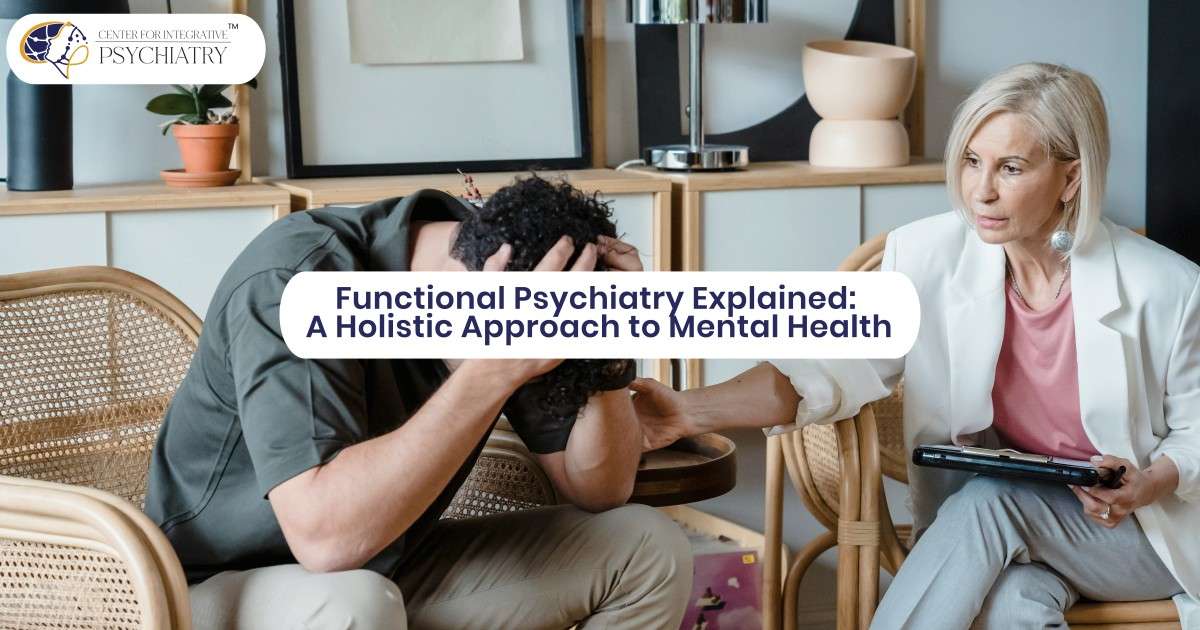

Functional psychiatry is emerging as a vital approach to mental health, bridging the gap between traditional psychiatric care and holistic wellness. By addressing the root causes of mental health issues rather than merely managing symptoms, functional psychiatry offers a comprehensive and personalized treatment plan that considers the whole person—body, mind, and spirit.
In this article, we’ll delve into the principles of functional psychiatry, how it differs from conventional psychiatry, and why it’s becoming a popular choice for those seeking long-term mental health solutions. We’ll also explore how a functional psychiatrist works, the connection between functional medicine and anxiety, and what you can expect from functional medicine psychiatry.
What Is Functional Psychiatry?
Functional psychiatry is a branch of functional medicine that focuses on identifying and addressing the root causes of mental health disorders. Unlike conventional psychiatry, which often relies heavily on medication to manage symptoms, functional psychiatry takes a more integrative approach. It considers the interaction between an individual’s genetic make up and the influence of the environment such as diet and lifestyle choices.
The core of functional psychiatry is the belief that all symptoms are interconnected and are not isolated incidents. By addressing these root causes, functional psychiatry aims to restore overall health from the inside out, rather than simply masking symptoms.
How Does a Functional Psychiatrist Work?
A functional psychiatrist uses a patient-centered approach, taking the time to understand each individual’s unique circumstances and health history. This often involves a detailed assessment, including advanced lab tests, to identify any underlying biological factors contributing to mental health issues.
Treatment plans in functional medicine psychiatry are highly personalized and may include a combination of:
- Nutritional interventions, such as dietary changes or supplementation
- Lifestyle modifications, including exercise and stress management techniques
- Psychotherapy to address emotional and psychological factors
- Integrative therapies like acupuncture, meditation, or yoga
This holistic approach ensures that all aspects of a person’s health are considered, leading to more effective and sustainable outcomes.
The Connection Between Functional Medicine and Anxiety
Anxiety is one of the most common mental health conditions, affecting millions of people worldwide. Traditional treatment typically involves medication, cognitive-behavioral therapy and some lifestyle modifications, which can be effective but may not address the underlying causes of anxiety.
Functional medicine for anxiety offers a different perspective. By looking at the root causes, such as nutritional deficiencies (not just vitamin D!), hormonal imbalances, or chronic inflammation, a functional medicine psychiatrist can develop a more personalized treatment plan. For example, research has shown that deficiencies in certain nutrients, like magnesium or omega-3 fatty acids (1,2), can contribute to anxiety. By correcting these deficiencies through diet or supplements, anxiety symptoms can be significantly reduced.
Moreover, gut health is increasingly recognized as a key player in mental health. The gut-brain axis, a communication network between the gut and the brain, plays a crucial role in regulating mood and emotional well-being. Dysbiosis, an imbalance in gut bacteria, has been linked to anxiety and depression. A functional medicine psychiatrist might recommend probiotics or dietary changes to restore gut health, thereby alleviating anxiety symptoms.
Why Choose Functional Medicine Psychiatry?
Functional medicine psychiatry offers several advantages over traditional psychiatric approaches, especially for those seeking a more holistic and personalized form of care. Here are some key benefits:
- Personalized Treatment: Every individual is unique, and so is their mental health. Functional psychiatry tailors treatment plans to the specific needs and conditions of the patient, ensuring a more effective approach.
- Focus on Root Causes: Rather than just managing symptoms, functional psychiatry seeks to uncover and address the root causes of mental health disorders, leading to more sustainable outcomes.
- Holistic Approach: Functional psychiatry considers the whole person—mind, body, and spirit—ensuring that all aspects of health are addressed.
- Integration of Modern and Traditional Therapies: Functional psychiatrists often incorporate a range of treatments, from modern medical interventions to traditional practices like meditation and herbal medicine, providing a well-rounded approach to mental health.
- Long-Term Wellness: By addressing the underlying issues contributing to mental health problems, functional psychiatry aims to promote long-term wellness and prevent future issues.
What to Expect from a Functional Medicine Psychiatrist?
When you visit a functional medicine psychiatrist, you can expect a thorough and holistic assessment of your mental health. This typically includes:
- A comprehensive medical history review, including past and current symptoms
- Advanced laboratory testing to identify any biochemical imbalances or deficiencies
- Nutritional and lifestyle assessments to determine contributing factors
- A personalized treatment plan that may include dietary changes, supplements, lifestyle modifications, and therapy
Functional medicine psychiatry is not a quick fix. It requires commitment and a willingness to explore all aspects of health, but the results can be transformative. Many patients experience not only relief from their symptoms but also an overall improvement in their quality of life.
The Role of Functional Medicine and Anxiety Treatment
Anxiety treatment within functional medicine psychiatry is unique in its comprehensive approach. While conventional treatments focus on symptom management, functional medicine for anxiety delves into the physiological and biochemical factors that may be contributing to anxiety. This might involve:
- Nutritional Interventions: Addressing deficiencies in nutrients like magnesium (1), B vitamins (3), and omega-3 fatty acids (2)
- Hormonal Balance: Evaluating and treating imbalances in hormones such as cortisol, thyroid, and sex hormones
- Gut Health: Restoring balance in gut bacteria through diet, probiotics, and lifestyle changes
- Detoxification: Supporting the body’s natural detoxification processes to eliminate toxins that may affect mental health
These interventions not only help alleviate anxiety but also improve overall well-being, making functional medicine an effective approach for those struggling with chronic anxiety.
Conclusion
Functional psychiatry represents a significant shift in how mental health is understood and treated. By focusing on the root causes of mental health disorders and employing a holistic, personalized approach, functional psychiatry offers hope for lasting mental wellness. Whether you’re struggling with anxiety, depression, or another mental health issue, a functional medicine psychiatrist can help you find the right path to healing.
Contact Us
If you’re interested in learning more about functional psychiatry or want to explore how it can help you, please contact the Center for Integrative Psychiatry™ today at 1-877-283-5336. Our team of experienced functional psychiatrists is here to guide you on your journey to better mental health.
Medical Disclaimer
The information provided in this article is for educational purposes only and is not intended as medical advice. Please consult with a qualified healthcare provider or reach out to the Center for Integrative Psychiatry™ before starting any new treatment or therapy.
Frequently Asked Questions (FAQ)
Q1: What is the difference between functional psychiatry and traditional psychiatry?
A: Traditional psychiatry often emphasizes symptom management, primarily through medication and some lifestyle modification strategies while functional psychiatry takes a deeper approach. It focuses on identifying and addressing the root causes of mental health disorders by looking at the whole person rather than just treating the symptoms., .
Q2: How can functional medicine psychiatry help with anxiety?
A: Functional medicine psychiatry addresses anxiety by examining and treating underlying factors like nutritional deficiencies, hormonal imbalances, and gut health issues, leading to a more comprehensive and effective treatment plan. For example, in women anxiety could be secondary to polycstic ovarian syndrome, also known as PCOS and in men it could be testosterone deficiency.
Q3: Is functional psychiatry suitable for everyone?
A: Functional psychiatry is suitable for most individuals, especially those seeking a more personalized and holistic approach to mental health. However, it’s essential to consult with a healthcare provider to determine if it’s the right choice for you.
Q4: How long does it take to see results with functional psychiatry?
A: The timeline for seeing results can vary depending on the individual and the underlying issues being addressed. Some patients may notice improvements within a few weeks, while others may take several months.
- Eby GA 3rd, Eby KL. Magnesium for treatment-resistant depression: a review and hypothesis. Med Hypotheses. 2010;74(4):649-660. doi:10.1016/j.mehy.2009.10.051
- Liao Y, Xie B, Zhang H, et al. Efficacy of omega-3 PUFAs in depression: A meta-analysis [published correction appears in Transl Psychiatry. 2021 Sep 7;11(1):465. doi: 10.1038/s41398-021-01582-6]. Transl Psychiatry. 2019;9(1):190. Published 2019 Aug 5. doi:10.1038/s41398-019-0515-5
- Tsujita N, Akamatsu Y, Nishida MM, Hayashi T, Moritani T. Effect of Tryptophan, Vitamin B6, and Nicotinamide-Containing Supplement Loading between Meals on Mood and Autonomic Nervous System Activity in Young Adults with Subclinical Depression: A Randomized, Double-Blind, and Placebo-Controlled Study. J Nutr Sci Vitaminol (Tokyo). 2019;65(6):507-514. doi:10.3177/jnsv.65.507
This article is for education and general information. It isn't a substitute for individual medical advice, diagnosis, or treatment from a qualified clinician.
Webmaster
Articles on this blog are educational resources from the Center for Integrative Psychiatry, a multidisciplinary clinic offering evidence-based psychiatry, therapy, TMS, and integrative care for Texans since 2015. They are not medical advice — always talk with your own clinician about your care.
Meet the CIP team