
Emotional overwhelm can affect anyone, but many women face unique pressures related to work, caregiving, family responsibilities, and personal expectations. When stress builds to an unmanageable point, it may lead to what many refer to as a “nervous breakdown.” While not a clinical diagnosis, the term describes a period when someone feels unable to function normally due to emotional overload.
In this blog, we’ll explore the signs of a nervous breakdown in a woman, what may cause it, common symptoms, stages of a nervous breakdown, and how nervous breakdown therapy or professional support can help. You’ll also learn what recovery looks like, how to regain balance, and where to find help in Texas.
What Causes a Nervous Breakdown?
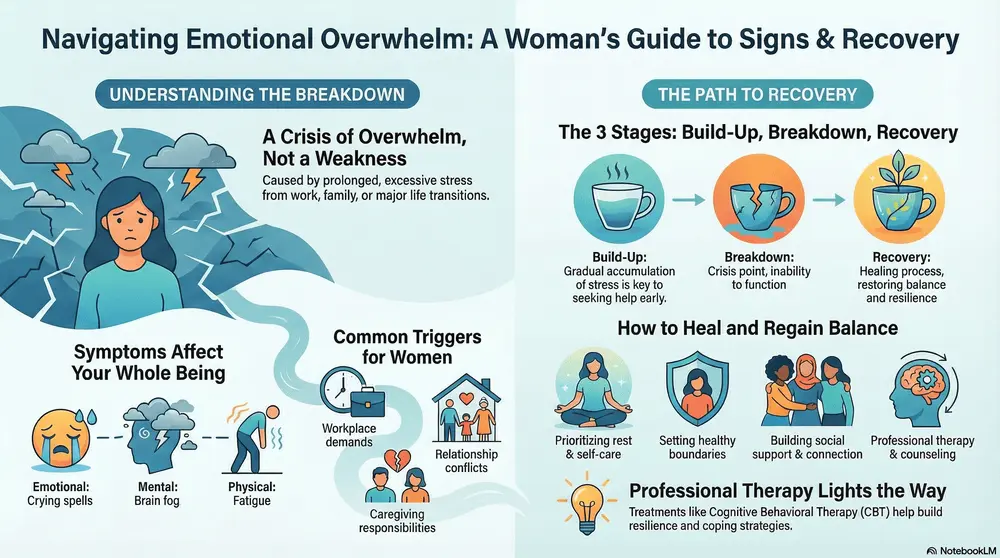
A nervous breakdown is often the result of prolonged, excessive stress. Many women experience pressure in several areas of life at the same time, such as:
- Workplace demands
- Family responsibilities
- Caregiving for aging parents
- Relationship conflicts
- Major life transitions
- Chronic emotional strain
- Unresolved trauma or anxiety
These stressors can build until the mind and body need a pause, leading to overwhelming exhaustion or emotional shutdown. Understanding what causes nervous breakdown moments helps in recognizing early warning signs.
What Are the Symptoms of a Nervous Breakdown?
People often search for what is the symptoms of a nervous breakdown, and while experiences vary, many symptoms fall into emotional, mental, and physical categories.
Emotional Symptoms
- Feeling hopeless, numb, or emotionally exhausted
- Sudden crying spells
- Heightened irritability or frustration
- Feeling disconnected or overwhelmed
Mental Symptoms
- Trouble concentrating
- Racing thoughts
- Brain fog
- Feeling unable to cope
Physical Symptoms
- Fatigue
- Sleep disruptions
- Muscle tension
- Headaches or stomach discomfort
These symptoms collectively make daily functioning incredibly difficult.
Signs of a Nervous Breakdown in a Woman
Women may experience specific behaviors or emotional patterns that suggest high levels of stress:
- Loss of interest in activities previously enjoyed
- Social withdrawal
- Difficulty managing work or home responsibilities
- Feeling emotionally “checked out”
- Panic, fear, or intense worry
- Increased sensitivity to stress or conflict
Understanding the signs of a nervous breakdown in a woman helps in recognizing when support may be needed.
What Are the 12 Signs of a Nervous Breakdown?
While not an official checklist, many mental health professionals observe these common indicators:
- Extreme fatigue
- Overwhelming anxiety
- Persistent sadness
- Loss of appetite or overeating
- Difficulty sleeping
- Feeling detached or numb
- Memory issues or concentration problems
- Withdrawal from responsibilities
- Social isolation
- Irritability or mood swings
- Trouble making decisions
- Feeling unable to cope
These 12 signs of a nervous breakdown signal that the mind and body are under significant stress.
Stages of a Nervous Breakdown
Many people go through predictable stages of a nervous breakdown, although each person’s experience is unique.
1. Build-Up Stage
Stress accumulates gradually. You may feel tired, overwhelmed, or irritable, but still functioning.
2. Breakdown Stage
Daily responsibilities feel impossible, emotional stability is disrupted, and physical symptoms intensify.
3. Recovery Stage
With support, rest, and therapy, individuals begin regaining emotional strength, clarity, and functionality.
Recognizing these stages early can help prevent worsening distress.
Nervous Breakdown at Work
Work-related stress is one of the most common contributors to emotional overwhelm. A nervous breakdown from work may look like:
- Struggling to complete tasks
- Feeling panic before workplace responsibilities
- Difficulty managing deadlines
- Crying easily or feeling emotionally overloaded
- Loss of motivation or interest
A nervous breakdown at work doesn’t mean someone is weak, it often means they have been handling too much for too long.
Nervous Breakdown Therapy & Treatment Options
The good news is that emotional overwhelm is treatable. Nervous breakdown therapy helps individuals rebuild emotional resilience, process stress, and regain a sense of stability.
Types of Treatment for Nervous Breakdown
1. Cognitive Behavioral Therapy (CBT)
Helps identify and manage overwhelming thoughts.
2. Stress-Management Therapy
Builds healthy coping strategies for daily pressures.
3. Trauma-Informed Therapy
Supports individuals who have past emotional wounds contributing to their breakdown.
4. Medication (When Appropriate)
A mental health provider may recommend medication to manage symptoms such as anxiety or depression.
Professional treatment for nervous breakdown focuses on rebalancing emotional health, improving coping skills, and supporting the recovery process.
How to Recover From a Nervous Breakdown
Nervous breakdown recovery looks different for everyone, but supportive steps often include:
1. Rest and Emotional Reset
Allowing the body to rest and decompress is essential.
2. Professional Therapy
Therapy provides tools to manage stress, rebuild confidence, and process emotional overwhelm.
3. Healthy Lifestyle Support
Balanced sleep, nutrition, and gentle movement can encourage emotional healing.
4. Setting Boundaries
Reducing overload and prioritizing mental well-being is key.
5. Social Support
Trusted friends, family, or support groups help create a safe emotional environment.
Healing is a gradual process, but with the right tools, individuals can regain clarity, balance, and emotional strength.
Getting Professional Help in Texas
If you’re looking for emotional support and guidance, working with a licensed professional can make a powerful difference. At the Center for Integrative Psychiatry in the Dallas–Fort Worth area, Dr. Tahir Khawaja offers compassionate care for individuals recovering from emotional overwhelm and stress-related conditions. The clinic provides in-person appointments in DFW and virtual therapy for individuals across Texas.
If you’re ready to regain emotional balance, consider reaching out to begin your recovery journey.
FAQs
1. How do you know if you’re having a nervous breakdown?
You may feel emotionally overwhelmed, unable to cope, or unable to function normally. Symptoms often include exhaustion, anxiety, withdrawal, and difficulty completing daily tasks.
2. What to do after a nervous breakdown?
Rest, professional therapy, reducing stressors, and building healthy coping habits are important first steps. Emotional support from trusted people can also help.
3. How long does a nervous breakdown last?
The duration varies based on stress levels, support systems, and treatment. With proper care, many people gradually recover and regain emotional stability.
4. What does a nervous breakdown feel like?
It may feel like emotional overload, intense stress, exhaustion, panic, or feeling disconnected from yourself or your surroundings.
5. What does a nervous breakdown look like?
It often appears as withdrawal, emotional exhaustion, difficulty functioning, frequent crying, anxiety, or overwhelming stress.
Medical Disclaimer
This blog is for educational purposes only and should not be used for diagnosis or treatment. If you are experiencing emotional distress or symptoms similar to a nervous breakdown, please consult a qualified mental health professional. For personalized care, contact a licensed provider or seek support from a trusted healthcare resource.
This article is for education and general information. It isn't a substitute for individual medical advice, diagnosis, or treatment from a qualified clinician.
Webmaster
Articles on this blog are educational resources from the Center for Integrative Psychiatry, a multidisciplinary clinic offering evidence-based psychiatry, therapy, TMS, and integrative care for Texans since 2015. They are not medical advice — always talk with your own clinician about your care.
Meet the CIP team