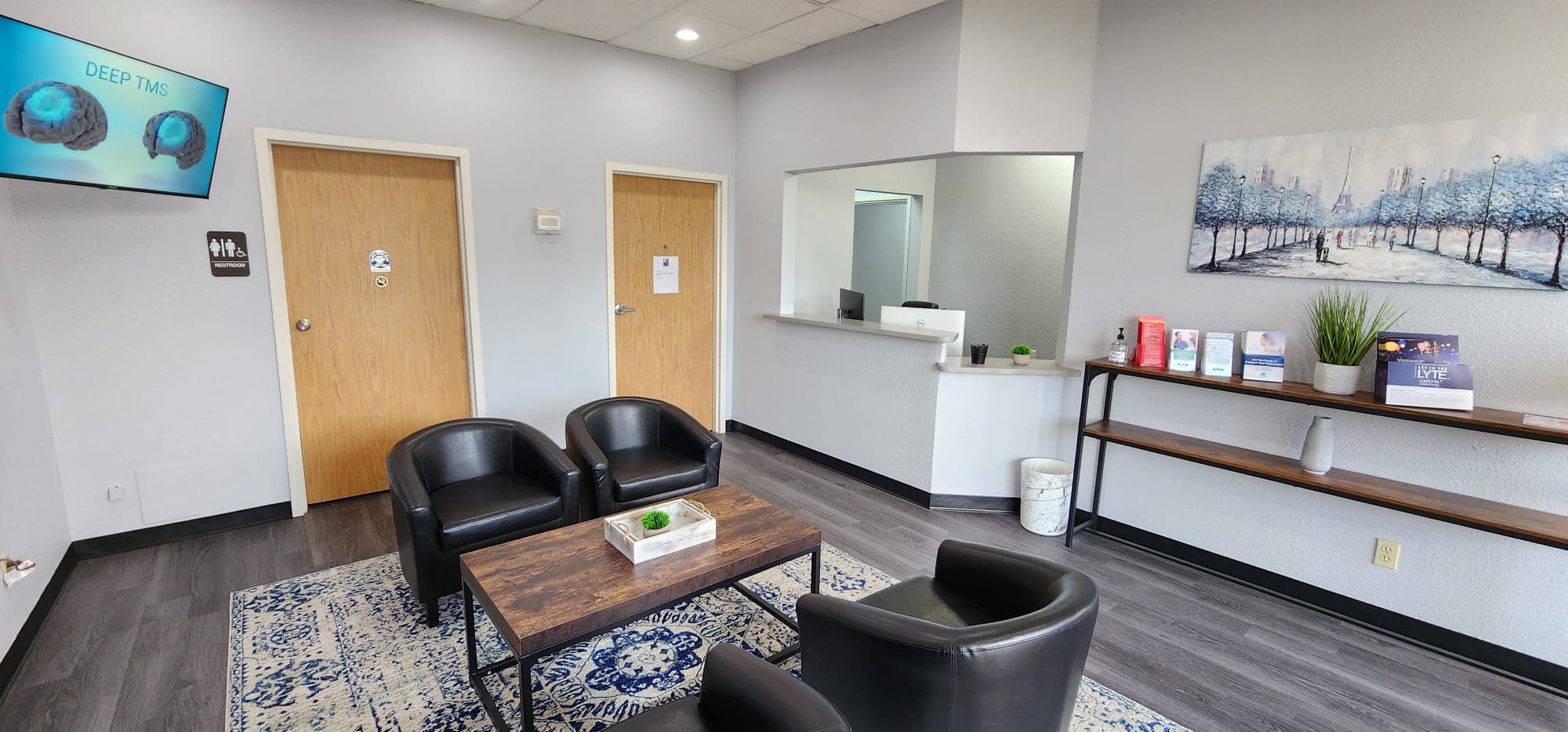
A non-drug, FDA-cleared treatment for depression and OCD — magnetic pulses that stimulate the brain areas involved in mood, without medication's body-wide effects.
What is TMS therapy?
TMS — transcranial magnetic stimulation — is a non-drug treatment for depression. A device placed gently against your head delivers magnetic pulses that stimulate the areas of the brain involved in mood regulation. It's the same type of magnetic field an MRI uses, focused on a small area.
TMS is FDA-cleared for major depressive disorder and for OCD. It's non-invasive: no surgery, no anesthesia, no sedation. You're awake in a chair during treatment and can typically return to your normal day — work, driving, errands — as soon as a session ends.
It is not electroconvulsive therapy (ECT), and it isn't medication, so it doesn't carry medication's body-wide side effects. For people whose depression hasn't responded adequately to antidepressants, TMS is one of the most established next steps in psychiatry.
Who is a candidate for TMS?
TMS is a targeted treatment with clear candidacy criteria — here's who it's typically for, and who it isn't.
Depression that hasn't lifted
Adults whose depression hasn't responded adequately to one or more antidepressants — what clinicians call treatment-resistant depression.
Adults with OCD
TMS is FDA-cleared for OCD as well as depression, for adults evaluated and found to be candidates.
After honest screening
Candidacy is always an individual medical decision. Screening covers things like metal implants in or near the head and any history of seizures.
Adults only
We provide TMS to adults — not children or adolescents — and only for the conditions it's FDA-cleared to treat.
What does a course of TMS look like?

Consultation
You meet with our team to review your history, prior treatments, and whether TMS fits.
No obligation follows a consult.

Insurance authorization
If TMS is recommended, our team assembles the documentation and handles prior authorization with your insurer.
You'll know what's covered before treatment starts.
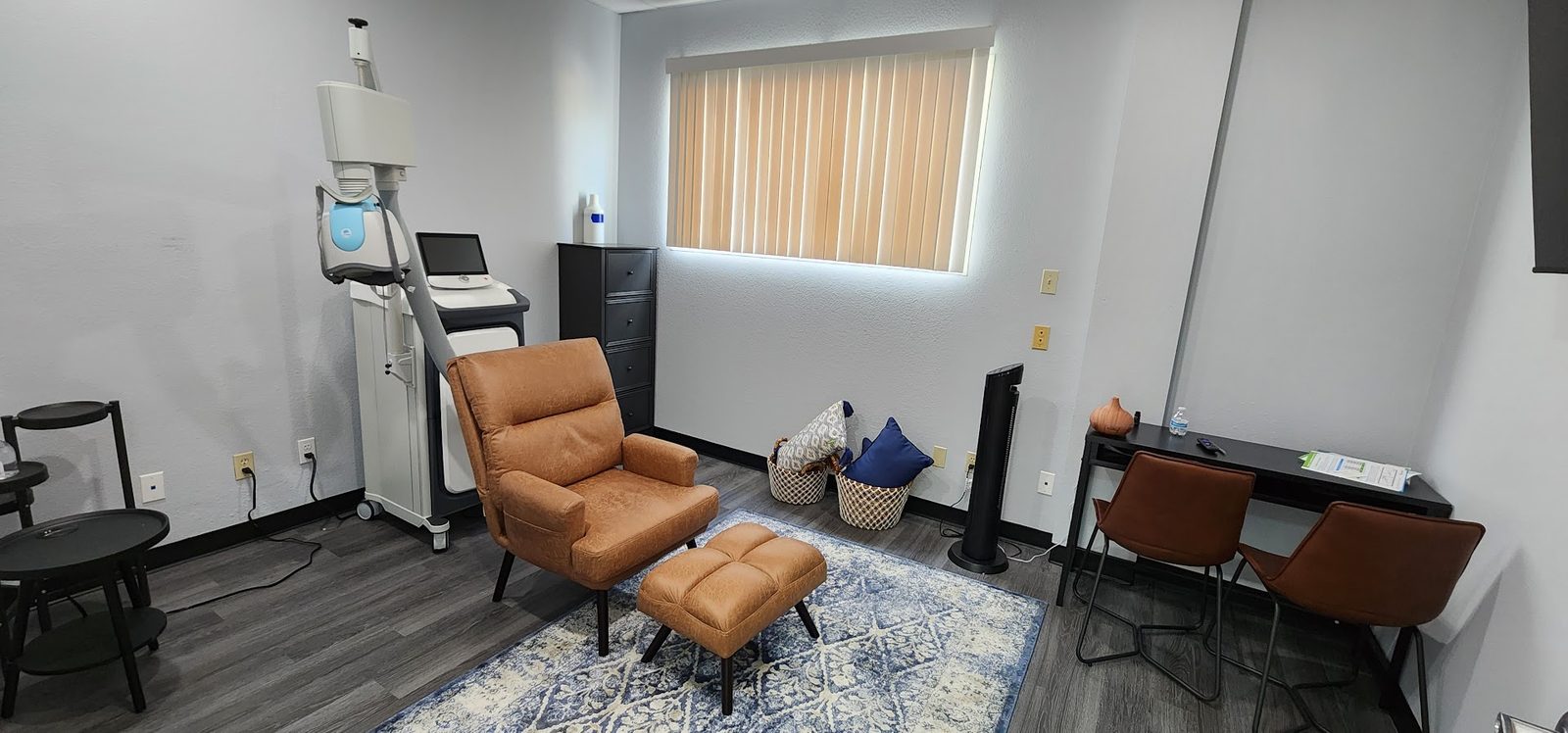
Mapping
Your first appointment calibrates the device to you — finding the right spot and the right pulse strength for your brain.
Physician oversight guides these settings.
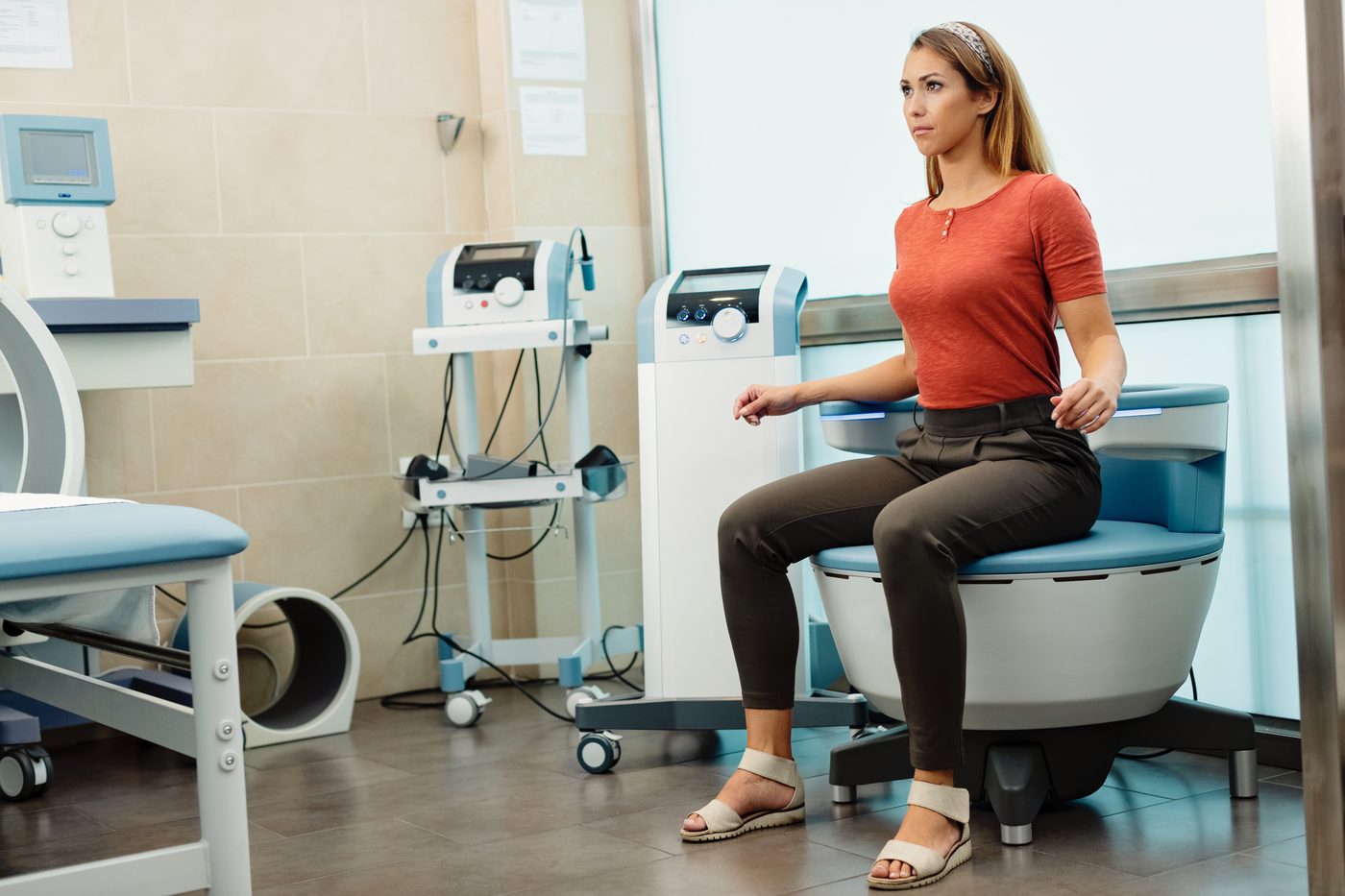
Treatment sessions
TMS is delivered in short sessions repeated over several weeks, on a schedule our team builds with you.
Beware any clinic quoting one number to everyone. Throughout the course, the TMS team tracks your symptoms so you and Dr. Khwaja can see objectively how you're responding.
Why choose CIP for TMS?
A dedicated TMS program, physician-led, and integrated with the rest of your care.

A dedicated TMS team
Justin Gammill, TMS Director, and Janeicia Moten, TMS Technician, run the program day to day — you'll see the same faces at every session.
Physician oversight
Treatment happens under the supervision of Dr. Tahir Khwaja, psychiatrist and Chief Medical Officer.
Whole care under one roof
Your prescriber, your therapist, and your TMS team share one chart — TMS integrates with the rest of your treatment instead of running parallel to it.
Prior auth handled
We do the insurance legwork so criteria and coverage are settled before your first session.
Related services & reading
Common questions about TMS
Pain, driving, safety and side effects, how TMS compares with medication, and who it's for.