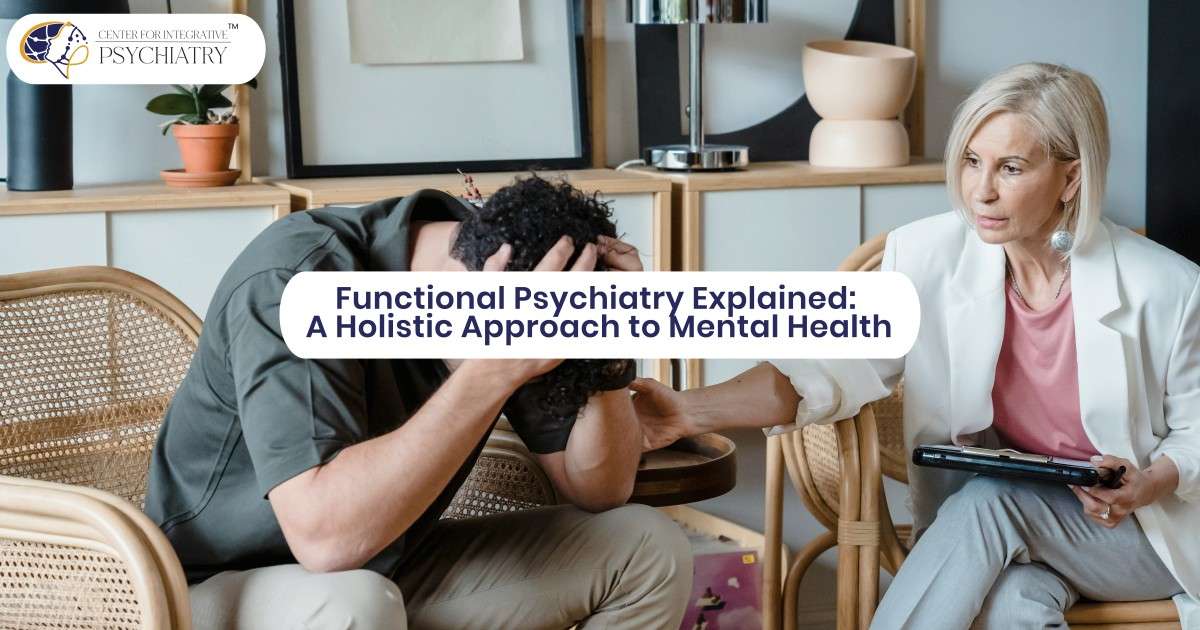

Mental health isn’t one-size-fits-all, and neither should your treatment be. While traditional psychiatry often leans on medication as the first (and sometimes only) approach, there’s a growing demand for something more comprehensive: integrative psychiatry.
But what is an integrative psychiatrist, and what makes their approach truly holistic?
Let’s break down what this means, what makes these professionals different, and how holistic psychiatric care may be exactly what you’ve been looking for.
What Is an Integrative Psychiatrist?
An integrative psychiatrist is a board-certified psychiatrist who combines traditional psychiatric methods (like medication and therapy) with evidence-based holistic practices to treat the whole person, not just the symptoms.
This can include:
- Nutritional interventions
- Functional lab testing
- Mind-body techniques (meditation, breathwork, yoga)
- Sleep optimization
- Supplementation or herbal therapies
- Trauma-informed care
- Psychotherapy or talk therapy
The goal? To get to the root cause of mental health challenges, not just to mask symptoms.
How Is a Holistic Psychiatrist Different?
The term holistic psychiatrist often overlaps with “integrative psychiatrist,” but there’s a key distinction:
- Traditional psychiatrists may focus primarily on diagnosing mental health conditions and prescribing medications.
- Integrative psychiatrists use a more personalized and functional psychiatry approach, asking why symptoms are occurring and treating the mind-body system as interconnected.
For example, instead of just treating anxiety with anti-anxiety medications, an integrative mental health doctor might explore gut health, hormonal imbalances, past trauma, or lifestyle factors that contribute to the condition.
Benefits of Integrative Psychiatry
So why are more patients and professionals turning to this approach? Here are a few standout integrative psychiatry benefits:
Root-Cause Focus
Rather than just treating surface-level symptoms, integrative psychiatrists dig deeper to find and address underlying causes.
Whole-Person Healing
You’re more than a brain with chemical imbalances. Integrative care includes mental, emotional, physical, and spiritual health.
Fewer or Smarter Medications
While medications are still used when needed, many patients benefit from a reduced reliance on them by optimizing other areas of health.
Personalized, Evidence-Based Care
Using evidence-based integrative psychiatry, practitioners tailor treatment plans based on science, labs, and individual history.
Conditions That Benefit from Holistic Psychiatric Care
Many mental health conditions respond well to integrative care, including:
- Depression
- Anxiety disorders
- PTSD
- ADHD
- Bipolar disorder
- Sleep disturbances
- Chronic stress or burnout
- Mood disorders
The functional psychiatry approach is especially helpful when symptoms persist despite medication, or when patients prefer a more natural route.
How to Find an Integrative Psychiatrist Near You
Looking for a board-certified integrative psychiatrist near me?
Here are a few tips:
- Check directories like the Integrative Psychiatry Institute or Psychology Today
- Look for certifications in functional medicine or integrative medicine
- Read reviews for a focus on collaboration, patient education, and personalized care
FAQs
What does an integrative psychiatrist do differently than a regular psychiatrist?
An integrative psychiatrist blends traditional psychiatry with holistic, evidence-based approaches such as nutrition, mindfulness, functional testing, and lifestyle medicine, focusing on root causes and whole-person wellness.
How can integrative psychiatry improve mental health outcomes?
By addressing underlying contributors like gut health, nutrient deficiencies, trauma, and sleep issues, patients often see deeper, more lasting improvements than with medications alone.
Is integrative psychiatry supported by scientific research?
Yes. Many aspects, including mindfulness, nutrition, exercise, and gut-brain connection, are backed by a growing body of research supporting their role in improving mental health.
How do I find a board-certified integrative psychiatrist near me?
Start with reputable directories or professional organizations. You can also ask local mental health clinics or functional medicine providers for referrals.
What conditions benefit most from holistic psychiatric treatment?
Conditions like depression, anxiety, PTSD, ADHD, and even bipolar disorder respond well to integrative approaches, especially when lifestyle or biological factors are contributing.
Final Thoughts
In a world where mental health challenges are on the rise, integrative psychiatry offers a refreshing, compassionate, and effective way forward.
Whether you’re navigating long-term anxiety or feeling burnt out with traditional care, a holistic psychiatrist may help you reconnect with your mind, body, and emotional balance, and truly heal.
This article is for education and general information. It isn't a substitute for individual medical advice, diagnosis, or treatment from a qualified clinician.
Webmaster
Articles on this blog are educational resources from the Center for Integrative Psychiatry, a multidisciplinary clinic offering evidence-based psychiatry, therapy, TMS, and integrative care for Texans since 2015. They are not medical advice — always talk with your own clinician about your care.
Meet the CIP team