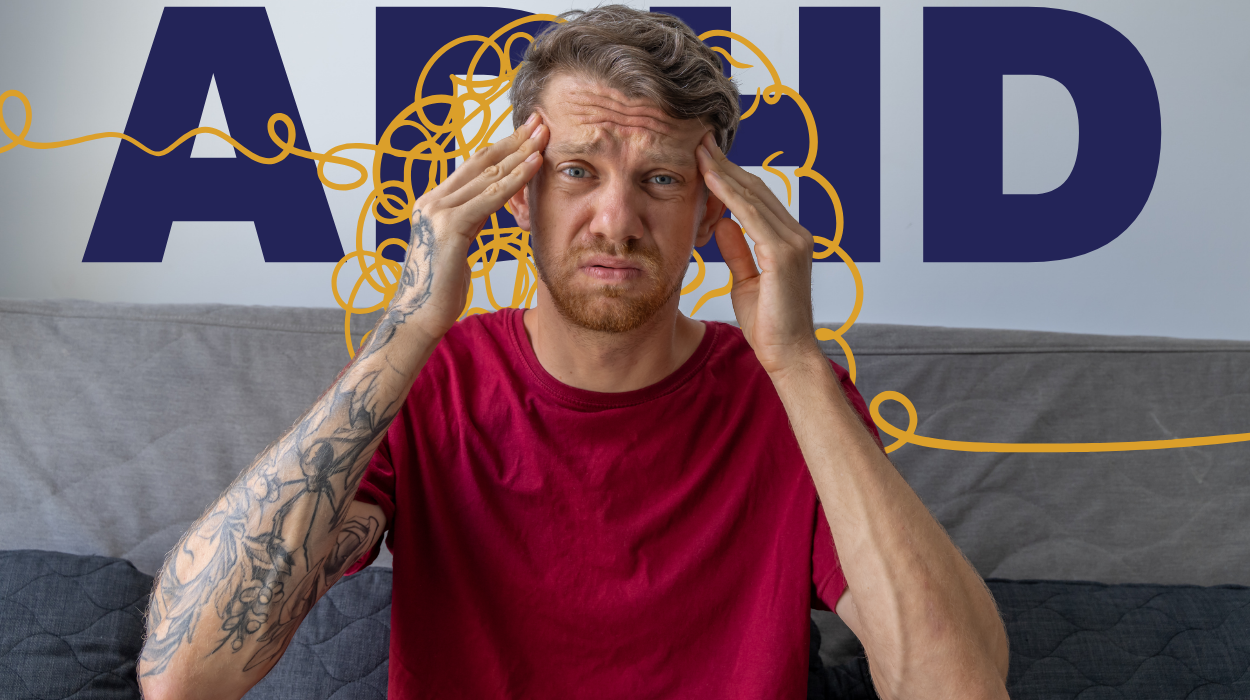

Many people struggle to focus or feel constantly overwhelmed and restless daily. Is it a concentration issue, or is it deep-seated worry causing these challenges? Determining the difference between ADHD vs anxiety is critical for your mental health. Do you know how to identify the true source of your daily struggles?
At Texas CIP, we specialize in helping individuals untangle complex mental health conditions. We provide comprehensive services such as mental health therapy, medication management, and functional psychiatry. For patients seeking holistic care, we offer naturopathy, nutritional psychiatry, life coaching, and advanced treatments like TMS. Our dedicated team is highly experienced in treating anxiety disorders, ADHD, depression, OCD, bipolar disorder, PTSD, schizophrenia and psychosis, and grief and loss. Through personalized virtual telehealth or in-person care, we help you find clarity and achieve lasting wellness.
Understanding Adult ADHD And Anxiety Symptoms
Many adults go through life feeling constantly exhausted by their own minds. They might find themselves unable to finish tasks, sitting at a desk with a racing mind, or feeling physically restless. It is incredibly common to mistake one condition for the other because their outward expressions look almost identical.
To understand why these conditions are so easily confused, we must look at how they affect daily functioning. The overlap between adult ADHD and anxiety symptoms often manifests in high stress environments. Here are the most common ways these symptoms present in daily adult life:
- Chronic restlessness and an inability to sit still during quiet tasks.
- Difficulty organizing projects, managing time, and meeting work deadlines.
- Persistent sleep disturbances, including trouble falling asleep due to a racing mind.
- Extreme mental fatigue from constantly trying to compensate for focus issues.
- Irritability and emotional sensitivity when feeling overwhelmed by tasks.
Key Differences In ADHD Vs Anxiety Clinical Profiles
Distinguishing ADHD vs anxiety is vital because treating one without addressing the other can sometimes worsen the untreated condition. For example, some stimulant medications used to treat focus issues can elevate physical heart rates, potentially mimicking or worsening panic feelings. Conversely, treating only the worry might leave the underlying focus issues unresolved, continuing the cycle of stress.
To truly understand which condition is driving your struggles, it helps to examine the core drivers of each issue. While they share behavioral traits, their internal root causes are fundamentally different:
- The motivation factor: Individuals with attention deficits struggle with task initiation because of a lack of dopamine. Individuals with chronic worry avoid tasks because they are afraid of failing or making mistakes.
- The focus trigger: Attention deficits cause the mind to wander because of external distractions or a craving for novelty. Worry causes the mind to lose focus because it is entirely consumed by internal fears and what-if scenarios.
- Behavioral history: Attention deficits are developmental and almost always date back to early childhood. General worry can develop at any stage of life, often triggered by trauma, chronic stress, or life transitions.
Why An ADHD Anxiety Evaluation Dallas Session Is Essential
Because of the high rate of co-occurrence, receiving a professional assessment is the only reliable way to find the right path forward. Attempting to self-diagnose through online quizzes often leads to frustration and ineffective self-treatment. A professional evaluation looks beyond the surface behaviors to find the neurological and emotional patterns unique to your life.
Scheduling an ADHD anxiety evaluation Dallas appointment helps clarify the core issue. Experienced clinicians use targeted diagnostic criteria to identify exactly where your struggles originate. During this detailed assessment, your provider will look at your developmental history, sleep habits, genetic factors, and cognitive processing patterns to build a highly personalized treatment map.
What To Expect During An Adult Psychiatry Evaluation Dallas Session
Taking the first step toward a professional assessment can feel intimidating, but understanding the process can ease your mind. Clinical assessments are not test-like environments where you are graded. Instead, they are collaborative conversations designed to explore your history, daily challenges, and physical health.
If you are an adult seeking clarity, booking an adult psychiatry evaluation Dallas session can give you the answers you need. This process looks at your personal and developmental history to build an accurate clinical profile. During a comprehensive evaluation, you can expect to walk through several developmental and clinical phases:
- A detailed review of your childhood behavior, academic history, and early family life.
- Structured diagnostic questionnaires designed to measure attention, executive function, and worry levels.
- An analysis of your physical health, lifestyle habits, diet, and sleep patterns.
- An open discussion about how your current challenges impact your relationships and career goals.
- A collaborative goal-setting conversation to align your treatment preferences with your clinical needs.
Designing A Comprehensive Treatment Plan For Lasting Relief
Once a proper diagnosis is established, the focus shifts to creating a tailored recovery plan. Effective treatment rarely relies on a single approach. Instead, combining clinical therapies with holistic practices ensures that both your mind and body receive the support they need to heal.
Finding The Best Psychiatrist For Focus And Anxiety
To find relief, search for the best psychiatrist for focus and anxiety who understands how these conditions interact. A skilled provider will look at your overall brain health and lifestyle factors. At Texas CIP, our clinical team combines traditional medication management with functional psychiatry and nutritional psychiatry. This integrative approach helps regulate your nervous system naturally, reducing the need for heavy dosages while improving your daily focus and emotional stability.
Exploring The Best Medication For Child With ADHD And Anxiety
Children face unique challenges when dealing with co-occurring attention and worry issues. Finding the best medication for child with ADHD and anxiety is a highly delicate task. Pediatric specialists must carefully balance stimulant and non-stimulant options to avoid increasing internal tension. Our clinicians work closely with parents to monitor symptoms, adjust dosages safely, and incorporate supportive mental health therapy to help children develop healthy coping mechanisms from an early age.
Conclusion
Untangling the differences between ADHD vs anxiety is a journey that requires professional expertise, patience, and a comprehensive care model. Whether your struggles stem from executive dysfunction, chronic worry, or a combination of both, a clear diagnosis is the key to regaining control of your life. You do not have to navigate this overwhelming process alone.
At Texas CIP, we are committed to walking with you every step of the way. Our team offers a diverse range of services, including virtual telehealth, medication management, functional psychiatry, and naturopathy, to treat conditions like anxiety disorders, ADHD, depression, and PTSD. Contact Texas CIP today to schedule your comprehensive evaluation and take the first step toward a balanced, focused, and peaceful future.
Schedule your depression consultation in Texas today and take the first step toward lasting mental wellness. Contact our Texas mental health specialists today and let us help you build a path forward.
Texas CIP – Child and Individual Psychiatry Physician: Dr. Tahir Khwaja, MD Phone: (469) 557-2646 Email: info@texascip.com
Frequently Asked Questions
What is the primary difference between ADHD vs anxiety in daily life?
The primary difference lies in the root cause of the behavior. ADHD is a neurodevelopmental condition characterized by dopamine deficits and executive dysfunction, while anxiety is an overactive nervous system response driven by fear, worry, and perceived threats.
How do clinicians perform an adult psychiatry evaluation Dallas parents and adults trust?
Clinicians perform this evaluation by conducting detailed clinical interviews, reviewing childhood and family history, using standardized diagnostic rating scales, and analyzing lifestyle, sleep, and physical health factors to rule out other medical issues.
Why is a professional ADHD anxiety evaluation Dallas based assessment better than self-diagnosis?
A professional assessment is crucial because the symptoms of both conditions overlap heavily. An expert can determine if your focus issues are caused by attention deficits or if they are a byproduct of chronic worry, preventing incorrect treatment choices.
Who is the best psychiatrist for focus and anxiety treatments in Texas?
The best psychiatrist for these complex issues is an integrative provider who looks at the whole person. At Texas CIP, our experts combine functional psychiatry, traditional medication management, and lifestyle medicine to treat both focus issues and worry effectively.
When should parents ask about the best medication for child with ADHD and anxiety struggles?
Parents should seek a consultation when a child’s symptoms interfere with school performance, social relationships, or emotional well-being. A specialist can help determine if medication, behavioral therapy, or a combined approach is safest.
Where can I access reliable adult ADHD and anxiety symptoms diagnosis and treatment?
You can access expert diagnostic evaluations and personalized treatment plans through Texas CIP. We offer virtual telehealth services across the state of Texas as well as in-person options, making comprehensive care highly accessible.
Disclaimer
The information provided in this article is for educational and informational purposes only and is not intended as medical advice. It should not be used as a substitute for professional diagnostic, psychiatric, or therapeutic evaluation. Always consult with a qualified healthcare professional regarding any mental health concerns.
This article is for education and general information. It isn't a substitute for individual medical advice, diagnosis, or treatment from a qualified clinician.
Webmaster
Articles on this blog are educational resources from the Center for Integrative Psychiatry, a multidisciplinary clinic offering evidence-based psychiatry, therapy, TMS, and integrative care for Texans since 2015. They are not medical advice — always talk with your own clinician about your care.
Meet the CIP team