Experiencing profound heartbreak disrupts your entire emotional and physical world. Intense sadness often leaves you questioning your mental well-being. Do you wonder about grief vs depression when processing a painful loss? Understanding these crucial emotional distinctions provides clarity on your healing journey.
At Texas CIP, we provide compassionate and evidence-based clinical support for individuals navigating Grief and Loss and clinical Depression. Bereavement and mood disorders impact neurobiology, endocrine regulation, and daily functioning differently. Through specialized Mental Health Therapy, Functional Psychiatry, Medication Management, Nutritional Psychiatry, and accessible Telehealth services across Texas, our dedicated team helps you untangle complex emotional sorrow, restore neurochemical balance, and reclaim your vitality.
Understanding Grief vs Depression: Core Clinical Distinctions
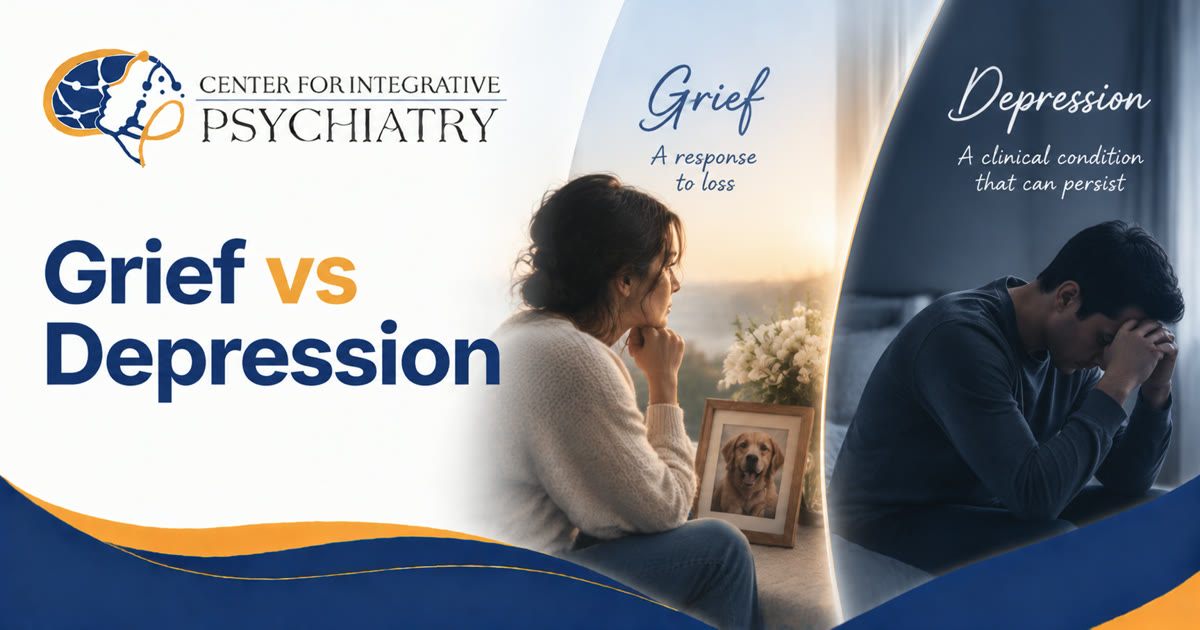
Distinguishing between natural mourning and a clinical mood disorder is vital for seeking appropriate support. When evaluating grief vs depression, clinicians evaluate emotional dynamics, self-esteem, and temporal patterns. Grief is an instinctive, universal reaction to the loss of a loved one, job, or identity. Major depressive disorder, by contrast, is a systemic psychiatric condition that alters baseline neurochemistry regardless of external circumstances.
In natural bereavement, sorrow arrives in fluctuating waves often triggered by memories, sights, or special dates. Positive feelings and warmth can still punctuate the mourning process. In clinical depression, emotional heaviness is constant, unyielding, and largely disconnected from specific memories. Mourners usually maintain their sense of personal value, whereas individuals enduring depression struggle with pervasive feelings of worthlessness and self-hatred.
Difference Between Grief and Depression in Daily Experience
To understand the difference between grief and depression in daily life, one must observe how thoughts and energy unfold. Grief centers primarily on an external absence, while depression reflects an internal collapse of vitality and hope. Individuals can access specialized grief treatment in Dallas for navigating the effects of loss.
A grieving individual feels empty because the external world has lost someone precious. A depressed individual feels empty because their internal capacity to experience pleasure, known as anhedonia, has shut down.
Key clinical contrasts between the two experiences include:
- Emotional Waves vs Flatline: Grief features sudden emotional surges interspersed with calm moments. Depression creates a persistent, flat state of despair with little variation.
- Preservation of Self-Worth: Grieving individuals generally retain their self-esteem and identity. Depressed individuals frequently battle intense shame, self-blame, and feelings of failure.
- Focus of Longing: Mourners direct their painful yearning toward the deceased loved one. Depressed patients experience generalized despair that colors every aspect of life.
- Response to Comfort: Grievers frequently experience comfort from empathetic friends and family. Individuals with depression often feel entirely isolated and unresponsive to social support.
- Cognitive Outlook: Grieving individuals can imagine eventual happiness even while mourning. Depressed individuals often believe recovery is fundamentally impossible.
Can Grief Cause Depression or Trigger Chronic Mood Episodes?
The short answer is yes. While grief is a natural response, severe bereavement serves as a massive physiological and emotional stressor. For individuals carrying genetic vulnerabilities or previous trauma, the acute strain of mourning can trigger a full major depressive episode.
Clinicians frequently explore whether can grief lead to depression when emotional processing becomes stuck. When bereavement disrupts normal sleep architecture, triggers chronic cortisol production, and depletes serotonin and dopamine stores, the brain can slide into a depressive state. Preexisting challenges like ADHD, PTSD, and Bipolar Disorder can intensify this transition, causing mood destabilization that requires targeted stabilization.
Recognizing When Grief Becomes Depression
Determining when grief becomes depression involves tracking functional impairment over time. Natural grief gradually shifts from sharp distress toward quiet remembrance and acceptance. When symptoms persist, the emotional trajectory may stall and begin impairing daily self-care.
Warning signs that bereavement has transitioned into clinical depression include:
- Pervasive inability to experience joy or pleasure lasting continuously for months.
- Severe psychomotor slowing, where speaking, walking, and thinking feel exhausting.
- Persistent beliefs that you are worthless, broken, or a burden to your household.
- Complete withdrawal from friends, family, and supportive communities.
- Continuous, intrusive thoughts of suicide or a desire to end your life.
Can Grief Cause Anxiety and Somatic Complications?
A common yet overlooked reality of bereavement is that emotional trauma shakes physical equilibrium. Patients often ask: can grief cause anxiety alongside deep sorrow? Yes, the sudden disruption of a primary attachment bond triggers the sympathetic nervous system, creating acute panic, hypervigilance, and restless tension.
Grief floods the bloodstream with adrenaline and cortisol, mimicking the physiological state of severe Anxiety Disorders. Individuals may develop intrusive obsessive rituals around health or safety, worsening underlying Obsessive Compulsive Disorder (OCD). These neurobiological surges cause rapid heart rates, digestive distress, and profound insomnia, leaving the body in an exhausted survival state.
Severe Depression From Grief: Risks and Complications
Experiencing severe grief and memory loss can strain every major organ system. Prolonged psychological trauma elevates systemic inflammation, dampens immune defenses, and accelerates cardiovascular stress. Many terrified family members quietly ask: can you die from depression itself? While depression is technically classified as a mental health diagnosis, its severe physical consequences can be life-threatening without intervention.
Severe clinical depression suppresses immune activity, exacerbates cardiovascular disease, and can trigger takotsubo cardiomyopathy, colloquially called broken heart syndrome. Furthermore, chronic neglect of nutrition, hydration, and prescribed medications during deep depressive paralysis creates critical medical emergencies. Most urgently, untreated severe depression dramatically elevates the risk of suicide, demanding immediate, comprehensive depression treatment in Dallas and safety planning.
Comprehensive Treatment for Grief and Depression at Texas CIP
Navigating emotional pain requires targeted, compassionate clinical interventions. Finding effective treatment for grief and depression begins with a detailed evaluation of your unique neurobiology, emotional trauma, and physical vitality. At Texas CIP, our psychiatric team in Dallas understands that emotional healing cannot occur without stabilizing the physical brain. Severe bereavement stress can also destabilize underlying conditions like Schizophrenia & Psychosis or major mood swings.
Our multidisciplinary clinical services include:
- Mental Health Therapy: Specialized cognitive behavioral and trauma-informed therapies to untangle complicated bereavement, resolve irrational guilt, and develop healthy coping mechanisms.
- Medication Management: Comprehensive laboratory assessments evaluating hormone balance, nutrient deficiencies, and neurotransmitter levels, paired with targeted psychiatric medications.
- Nutritional Psychiatry: Tailored nutritional plans, adaptogenic herbs, and gut-restorative protocols to reduce neuroinflammation and replenish biological reserves.
- Transcranial Magnetic Stimulation (TMS): FDA-cleared, non-invasive neurostimulation targeting deep brain circuits impacted by treatment-resistant depression when medication alone is insufficient.
- Life Coaching: Compassionate, practical accountability to help you rebuild daily routines, practice sleep hygiene, and set manageable goals.
- Statewide Telehealth Visits: Accessible, confidential virtual psychiatric and therapy appointments delivered straight to your home across Texas.
Final Thoughts
Understanding the distinctions of grief vs depression offers profound reassurance when navigating the darkest seasons of life. While grief represents a natural, fluid process of honoring a severed bond, depression is a treatable medical condition that requires targeted clinical attention. You do not have to endure debilitating emotional paralysis or physical exhaustion on your own. If you or a loved one is struggling to determine whether sorrow has crossed into clinical depression, compassionate help is within reach. Contact Texas CIP today to schedule a confidential consultation. Through our comprehensive Mental Health Therapy, Functional Psychiatry, TMS, and convenient Telehealth services across Texas, our dedicated team will guide you toward renewed resilience, physical vitality, and lasting emotional peace.
Frequently asked questions
- Who is most vulnerable to developing clinical depression following bereavement?
- Individuals with a personal or family history of major Depression, Bipolar Disorder, unresolved trauma, or limited social support face significantly higher risks of developing clinical depression following a major loss.
- What is the primary difference between grief and depression?
- The primary difference is that grief comes in waves and maintains self-esteem while focusing on a specific loss, whereas depression creates persistent, unyielding feelings of worthlessness, generalized despair, and anhedonia.
- When grief becomes depression, what are the first warning signs?
- The earliest indicators include persistent feelings of total worthlessness, unremitting flat despair, inability to feel any positive emotion, and severe functional withdrawal lasting continuously for several weeks.
- Where can Texas residents access specialized care for severe depression from grief?
- Individuals can access integrative psychiatric evaluations, counseling, and advanced treatments at Texas CIP locations or through secure statewide Telehealth services.
- Why can grief cause anxiety and panic symptoms alongside sadness?
- Grief activates the body's acute fight-or-flight stress response, flooding the autonomic nervous system with cortisol and adrenaline, which accelerates heart rate, disrupts breathing, and induces intense panic.
- How does integrative treatment for grief and depression support full recovery?
- Integrative treatment combines psychological therapy with biological stabilization, using functional psychiatry, nutrient repletion, and neuromodulation to heal both emotional trauma and underlying neurochemical depletion simultaneously.
This article is for education and general information. It isn't a substitute for individual medical advice, diagnosis, or treatment from a qualified clinician.
Webmaster
Articles on this blog are educational resources from the Center for Integrative Psychiatry, a multidisciplinary clinic offering evidence-based psychiatry, therapy, TMS, and integrative care for Texans since 2015. They are not medical advice — always talk with your own clinician about your care.
Meet the CIP team