
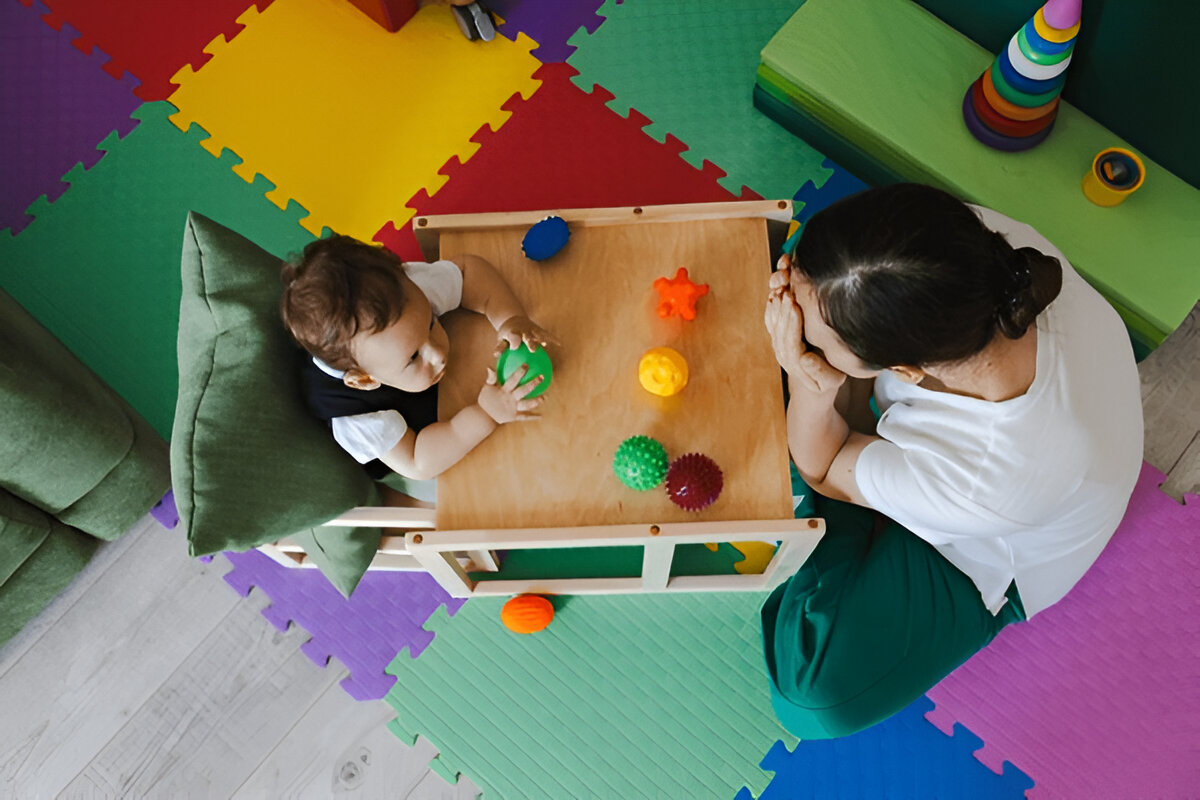
Play therapy fir children is a type of therapy that uses play to help children with their mental health. Unlike traditional talk therapy, play therapy meets children where they are most comfortable—through play. It uses toys, storytelling, and imagination to help kids express their emotions and understand difficult situations.
This method allows children to communicate their feelings in a way that feels safe and natural. With increasing mental health issues among children, like anxiety and depression, play therapy is becoming an important way to improve their overall well-being.
Play therapy is more than just an activity; it’s a therapeutic method that allows children to explore their thoughts and emotions in an age-appropriate and supportive environment. By giving children a safe space to act out their inner feelings and fears, therapists can help children process what they are going through, develop coping strategies, and build resilience.
Play therapy also helps children understand their emotions better, promoting both emotional intelligence and social well-being.
There is a growing concern about the mental health needs of children, as almost 20% of kids between ages 3 and 17 in the United States experience mental or developmental disorders. These statistics show why early interventions, like play therapy, are crucial in addressing emotional and behavioral problems at a young age.
Early support and treatment are vital in helping children build healthy emotional foundations, and play therapy is an effective method to provide that early support.
Key Benefits of Play Therapy for Mental Health
Supports Emotional Expression and Healing
One of the main benefits of play therapy is that it helps children express their emotions. Many young children do not have the words to describe their feelings. Play therapy helps by using toys, a sandbox, or dollhouses to let children act out what they feel. For example, a child might use a dollhouse to show what is happening at home, which allows them to explore difficult emotions in a safe way.
Children who might be feeling overwhelmed by changes at home or who are struggling with difficult emotions like anger or sadness often find it easier to communicate these feelings through play. The therapist observes these play activities to understand what might be troubling the child and helps guide them toward processing these emotions.
This therapeutic environment provides a safe outlet, giving children the space to openly express feelings without judgment.
Research suggests that play therapy can help reduce sadness, anxiety, and behavioral issues, making it easier for children to manage their emotions and build healthier coping skills. When children feel understood and validated during play therapy, they start to develop trust, which is critical to their emotional growth.
This sense of trust helps children open up even more and encourages them to face challenges with more resilience.
Fosters Social Skills and Reduces Isolation
Play therapy also helps children improve their social skills. Group play therapy is especially useful for children and teenagers who may feel isolated.
Group sessions offer a safe space where children can practice talking with others, share experiences, and learn how to build relationships. This helps reduce social anxiety and boosts self-esteem.
Social skills are a crucial part of a child’s development, and play therapy helps children learn how to interact with others in a positive way. When children participate in group play therapy, they get a chance to work on teamwork, empathy, and conflict resolution.
They learn how to express their needs, listen to others, and develop better ways of communicating. For children who have experienced trauma or isolation, these social interactions help them reintegrate into a community environment and build a sense of belonging.
Group play therapy can also help children learn how to handle disagreements and practice sharing and cooperating with others. For children who have had difficulties forming friendships or who have been socially withdrawn, play therapy gives them an opportunity to practice these essential social skills in a guided and supportive setting.
By developing positive relationships with their peers, children are better equipped to handle social situations in school and other environments.
Promotes Cognitive and Behavioral Development
Play therapy helps children grow in other ways too. It encourages problem-solving and builds self-confidence. Through activities like sandtray play or role-playing, children can explore new ways of handling situations. This helps them practice coping with challenges in a safe environment.
Play therapy for children is developmentally appropriate, meaning it matches the child’s level of understanding, helping them learn at their own pace.
Cognitive development is supported through play therapy as children learn to think creatively and solve problems. For example, when a child uses role-playing to explore different outcomes of a situation, they learn to think ahead, anticipate consequences, and make better decisions.
This type of problem-solving is fundamental to their cognitive growth and helps build resilience. Children who may struggle academically or have difficulty focusing can benefit from the way play therapy encourages them to think critically and find solutions.
Behavioral development is also a focus of play therapy. By allowing children to practice new behaviors in a non-judgmental environment, they can learn to change negative habits. For example, children with anger management issues can practice calming techniques through role-play, helping them respond more appropriately in real-life situations.
Play therapy also helps children who struggle with impulse control, as they learn to pause and reflect on their actions during play, which can translate to better behavior outside of therapy.
Types and Approaches of Play Therapy
Non-Directive Play Therapy (NDPT) and Child-Centered Play Therapy (CCPT)
Non-Directive Play Therapy (NDPT), also known as child-led therapy, allows children to explore their emotions without much direction from the therapist. This approach is particularly helpful for children dealing with trauma, anxiety, or grief. The therapist follows the child’s lead, letting them be in control, which is very important for children who feel overwhelmed.
Child-Centered Play Therapy (CCPT) is a specific form of NDPT developed by Virginia Axline. In CCPT, the child leads the session while the therapist provides support and understanding. This helps create a caring environment where the child feels free to share what they are experiencing.
CCPT has been shown to help reduce symptoms of depression and behavioral issues in children, making it a valuable tool for use in schools and clinics.
The goal of both NDPT and CCPT is to create an environment where children feel they are in control. This is particularly important for children who have experienced situations where they felt powerless. By letting the child lead the session, they gain a sense of autonomy, which is an important part of healing and emotional growth.
These approaches also focus on building a trusting relationship between the child and therapist, which forms the foundation for meaningful progress.
Filial Play Therapy
Filial play therapy involves parents in the process. Parents are trained to use play therapy techniques at home, which helps strengthen emotional bonds and creates a supportive family environment.
his approach has shown significant improvements in parent-child relationships, especially when there are behavioral issues.
Filial therapy empowers parents to take an active role in their child’s healing process. By using play as a form of communication, parents can gain a better understanding of their child’s needs and feelings.
This type of therapy is especially beneficial for families where there has been conflict or misunderstanding. When parents engage in play therapy techniques, they learn to see things from their child’s perspective, which can lead to more empathy and improved family dynamics.
Conditions Play Therapy Can Address
Behavioral Disorders and Emotional Regulation
Play therapy can be helpful in addressing behavioral issues associated with disorders like ADHD, aggression, and social withdrawal. It gives children a safe way to express their feelings, making it easier for them to manage emotions. Children facing significant stress, such as family conflicts or changes, often find it easier to express their fears through play.
For children with ADHD, play therapy helps by providing a structured yet flexible environment where they can practice focus and self-control. Activities that require taking turns, following rules, and completing tasks help children with ADHD develop better impulse control.
For children with aggressive behaviors, play therapy offers a safe outlet for them to release anger and frustration in a controlled way, allowing them to develop healthier responses to anger triggers.
Emotional regulation is another major benefit of play therapy. By practicing how to respond to different scenarios in the therapy room, children learn skills that help them stay calm and manage their emotions better in real-life situations. This can be particularly useful for children who experience frequent outbursts or who struggle to cope with strong emotions.
Anxiety and Depression
Play therapy also helps children dealing with anxiety or depression. It offers a non-threatening way to process intense emotions. Studies show that children who participate in play therapy experience less anxiety and fewer depressive symptoms. It also helps improve social skills, reduce fears, and build resilience, which is crucial for their overall emotional health.
Children with anxiety often feel overwhelmed by their thoughts and fears. Play therapy provides a supportive space where these fears can be expressed without pressure. The use of calming activities, like sand play or drawing, can help soothe anxious thoughts.
Children learn coping strategies that help them manage anxiety in a more positive way. They also practice facing their fears in the safe environment of the therapy room, which helps reduce avoidance behaviors.
For children experiencing depression, play therapy can help lift their mood by engaging them in enjoyable activities that promote self-expression. It allows them to process feelings of sadness or hopelessness in a constructive way.
The therapeutic relationship with the therapist also provides children with a sense of connection, which is essential in overcoming feelings of isolation and hopelessness.
How Play Therapy Sessions Work
The Therapy Space and Tools Used
Play therapy usually takes place in a room specifically designed to be welcoming and safe. The room is filled with toys, including miniature figures, sandtrays, puppets, and building blocks, which all help children express themselves. These toys act as tools that help the therapist understand what the child is feeling and thinking.
The therapy room is a critical part of the process. It is a space where the child can feel free to express themselves without any limitations. The selection of toys and materials is deliberate, ensuring that children have a range of options that appeal to different emotions and experiences.
The therapist carefully observes the choices the child makes, how they interact with the toys, and the stories they create, all of which provide valuable insights into their internal world.
Examples of Play Therapy Techniques
Different techniques are used during play therapy to help children express their emotions. Sandtray therapy lets children use figurines and sand to create scenes that represent their feelings, giving them a chance to reflect and discuss their inner world.
Expressive arts, like drawing or painting, are also used to help children show their emotions in a creative way without needing words.
Sandtray therapy is especially helpful for children who have experienced trauma. By creating scenes in the sand, children can symbolically work through events that are too painful or complex to verbalize. The therapist may ask questions about the scene or simply observe, allowing the child to express themselves at their own pace.
This process helps children process and make sense of their experiences in a non-verbal, therapeutic way.
Art-based activities are also common in play therapy. Children are encouraged to draw, paint, or build something that represents their feelings. These activities are not about making something perfect; instead, they provide an emotional outlet.
The therapist might ask the child to explain their artwork, which often leads to discussions that reveal deeper emotions and concerns. This approach allows children to explore their feelings creatively, promoting both healing and understanding.
Case Studies and Success Stories
Real-World Examples of Play Therapy Success
One example of play therapy success involves a nine-year-old girl who had severe anxiety and refused to go to school after her grandfather passed away. Through non-directive play therapy, she used art to express her grief, which eventually helped her overcome her fears and return to school.
Another case is a six-year-old boy with trichotillomania (hair-pulling), who improved significantly after using play therapy to act out his fears about family problems with dollhouses.
These examples are composite cases that illustrate how play therapy can be effective in addressing a range of emotional challenges. They are meant to represent the types of outcomes that many children can achieve with consistent and supportive therapy.
Statistical Insights
Reviews of many studies have shown that play therapy is effective for a wide range of emotional and behavioral issues. A large review of 93 studies found that play therapy had a significant positive impact on children, showing that it is an evidence-based way to help with mental health.
These reviews have shown that play therapy can lead to improvements in areas such as emotional regulation, social skills, and overall behavior.
Children who participate in play therapy tend to show more resilience and are better able to cope with challenges in their everyday lives. These findings support the use of play therapy as a valuable tool in promoting mental health and well-being in children.
Holistic Impact of Play Therapy
Improving Mental Health Across Various Domains
Play therapy is a holistic approach that not only helps with emotional and behavioral issues but also improves social skills, academic performance, and overall well-being. It gives children a space where they feel heard and understood, helping them build resilience and develop healthy coping skills.
The impact of play therapy extends beyond the therapy room. As children learn to express themselves, solve problems, and manage their emotions, they carry these skills into other parts of their lives.
This can lead to improved performance in school, better relationships with family and friends, and increased confidence. By addressing the whole child—emotionally, socially, and cognitively—play therapy promotes a balanced approach to mental health.
Parents and teachers often notice positive changes in children who participate in play therapy. These children may become more engaged in school, have fewer behavioral problems, and develop stronger friendships.
The holistic benefits of play therapy make it a valuable intervention for helping children navigate the challenges they face while building a strong foundation for future well-being.
Conclusion
Play therapy is a powerful way to support the mental health of children and teens. By meeting children where they are developmentally and providing a safe space for them to express themselves, play therapy can lead to significant improvements in their mental health.
Whether it’s helping a child deal with anxiety, process grief, or develop better social skills, play therapy offers a unique and effective way to promote well-being. If you think your child could benefit from play therapy, consider looking into options at the Center for Integrative Psychiatry™ to begin their journey toward better mental health.
Play therapy also provides a way for children to build resilience and develop the skills they need to cope with life’s challenges.
As children learn to understand their emotions, communicate more effectively, and solve problems, they become better equipped to handle difficult situations in the future.
This proactive approach helps children not only overcome current issues but also prepares them for a healthier and happier life.
FAQs Section
What Ages Are Suitable for Play Therapy?
Play therapy is suitable for children as young as three years old and can also be effective for teenagers. The techniques can be adapted to fit the developmental needs of children across various ages.
How Does Play Therapy Differ from Talk Therapy?
Play therapy uses play as a way to communicate, which works well for young children who may not have the words to describe their feelings. Talk therapy is more verbal, whereas play therapy uses toys, activities, and creative expression to help children share their thoughts.
How Long Does Play Therapy Take to Show Results?
Results can vary, but many children start to show improvements after a few weeks of regular sessions. The length of time depends on the individual child and the nature of the issues they are facing.
Is Play Therapy Effective for Teens as Well as Young Children?
Yes, play therapy can be adapted for teens, especially through group play therapy, which helps with social skills and self-esteem. Activities may be adjusted to be age-appropriate and relevant to their experiences.
Can Parents Be Involved in Play Therapy?
Yes, parents can be involved, especially in filial play therapy. Involving parents can help reinforce the progress made in therapy and strengthen the parent-child relationship.
References
- Agency for Healthcare Research and Quality. National Healthcare Quality and Disparities Report. Rockville, MD: Agency for Healthcare Research and Quality.
- Bratton, S. C., & Ray, D. C. The efficacy of play therapy with children: A meta-analytic review of treatment outcomes. Professional Psychology: Research and Practice, 36(4), 376-390.
- Burgin, E. E., & Ray, D. C. Child-centered play therapy and childhood depression: An effectiveness study in schools. Journal of Child and Family Studies. https://doi.org/10.1007/s10826-021-02198-6
- Gupta, N., Chaudhary, R., Gupta, M., Ikehara, L.-H., Zubiar, F., & Madabushi, J. S. Play therapy as effective options for school-age children with emotional and behavioral problems: A case series. Cureus, 15(6). https://doi.org/10.7759/cureus.40093
- Homeyer, L. E., & Morrison, M. O. Play therapy: Practice, issues, and trends. American Journal of Play, 1(2), 210-214.
- Koukourikos, K., Tsaloglidou, A., Tzeha, L., Iliadis, C., Frantzana, A., Katsimbeli, A., & Kourkouta, L. An overview of play therapy. Mater Sociomed, 33(4), 293-297. https://doi.org/10.5455/msm.2021.33.293-297
- Nazri, E. N., Ahmad, N., Ahmad, N. K., & Bakar, A. Y. A. The role of group play therapy in improving adolescents’ social interaction. Creative Education, 13, 3364-3373. https://doi.org/10.4236/ce.2022.1310215
Disclaimer
This content is for informational purposes only and is not a substitute for professional medical advice, diagnosis, or treatment. Always seek the guidance of a licensed medical professional for any concerns you may have regarding a medical condition. The Center for Integrative Psychiatry™ is not liable for any decisions made based on the information provided in this article, and all responsibility lies with the reader to consult with healthcare professionals before taking any action.
This article is for education and general information. It isn't a substitute for individual medical advice, diagnosis, or treatment from a qualified clinician.
Webmaster
Articles on this blog are educational resources from the Center for Integrative Psychiatry, a multidisciplinary clinic offering evidence-based psychiatry, therapy, TMS, and integrative care for Texans since 2015. They are not medical advice — always talk with your own clinician about your care.
Meet the CIP team