Living with a harsh inner critic can make daily life feel like an uphill battle. Many people search for effective ways to silence their constant feelings of shame. Are you curious about the clinical compassion focused therapy pros and cons for mental wellness? Understanding both sides of this therapy helps you make the best choice for your health.
At Texas CIP, we help you navigate your healing journey through integrative psychiatric and neurological care. Our experienced clinical team offers specialized mental health therapy to help you overcome deep-seated self-criticism and emotional distress. We combine evidence-based approaches like CFT with modern therapeutic interventions, including TMS, Medication Management, and secure Telehealth services.
Under our clinical supervision, you can also access Functional Psychiatry, Naturopathy, and Nutritional Psychiatry. If you are struggling with Bipolar Disorder, Depression, ADHD, PTSD, or severe Anxiety Disorders, our team is ready to design a personalized treatment path just for you.
Is Compassion Focused Therapy Effective For Mental Health Recovery?
Before diving into the specific advantages and disadvantages, it is important to address a fundamental question. Clinical research demonstrates that this evolutionary based therapeutic approach is highly valuable for individuals who experience deep shame. Traditional cognitive therapies can help you understand that your negative thoughts are logically incorrect. However, many people still feel deeply flawed on an emotional level despite this logical understanding.
This is where CFT bridges the gap between logic and emotion. By focusing on emotional regulation systems in the brain, it teaches you how to generate feelings of reassurance and inner safety. Clinical trials show that this modality is highly effective at reducing symptoms of chronic Depression, PTSD, and generalized Anxiety Disorders. It helps patients shift from a state of constant self-defense to a state of calm self-acceptance.
Analyzing The Compassion Focused Therapy Pros And Cons
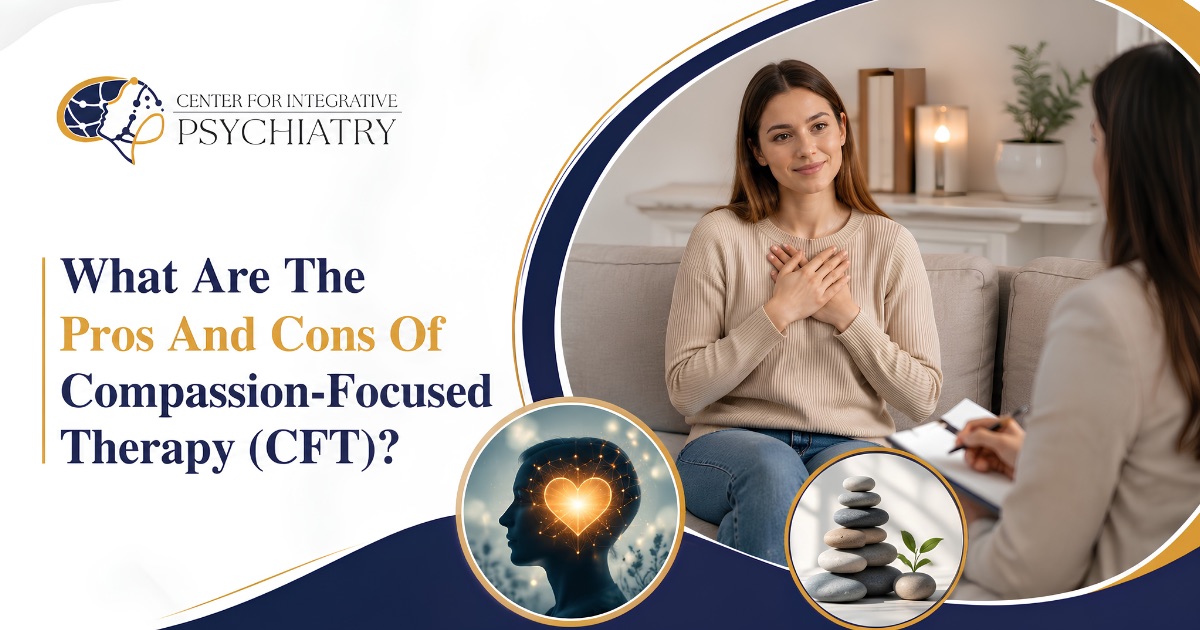
Every psychological treatment has unique strengths and potential drawbacks depending on your personal mental health goals. To determine if this modality matches your clinical needs, it is helpful to look at its direct benefits. Understanding the compassion focused therapy pros and cons allows you to enter your first session with realistic expectations.
When you work with a trained professional, this therapy offers several clinical advantages for your overall well-being. Here are the primary pros associated with this specialized treatment:
- Regulates the Threat System: It actively calms an overstimulated threat system, which reduces the physiological symptoms of panic and chronic stress.
- Fosters Self-Acceptance: It helps you develop a kind, supportive inner voice to replace a relentless, destructive inner critic.
- Improves Emotional Coping: It teaches you how to tolerate painful emotions such as Grief and Loss without spiraling into unhealthy coping behaviors.
- Integrates with Holistic Tools: It pairs exceptionally well with other physical interventions like Nutritional Psychiatry, Naturopathy, and body-based therapeutic approaches that support nervous system regulation to promote emotional healing.
- Supports Complex Conditions: It provides an effective framework for managing shame-based symptoms in Obsessive Compulsive Disorder (OCD) and Bipolar Disorder.
Understanding The Real Limitations Of Compassion Focused Therapy
While the benefits of this therapy are extensive, it is equally important to examine its potential challenges. No single therapeutic style works perfectly for every individual. Recognizing these factors ensures that you and your clinical provider can adjust your treatment plan accordingly.
Certain clinical situations or personal barriers can impact how easily you progress through your sessions. Here are the primary limitations of compassion focused therapy that you should consider:
- The Fear of Compassion: Some individuals view self-kindness as a sign of weakness, which can trigger intense resistance or anxiety during early sessions.
- Requires Active Daily Practice: It is not a passive treatment, meaning you must consistently practice emotional exercises outside of your scheduled appointments.
- Requires Strong Emotional Processing: Exploring deep-seated shame can occasionally feel overwhelming for individuals with severe, unresolved trauma.
- Focuses on Relationship with Self: It may require supplementary therapies like Life Coaching to help you address external, practical life goals and boundaries.
How Compassionate Mind Training Reshapes Your Neurobiology
The cornerstone of this therapeutic modality is a structured system of exercises known as compassionate mind training. These clinical tools are designed to help you physically stimulate the soothing system in your brain. Just as physical therapy strengthens a weak muscle, these exercises build the neural pathways responsible for feelings of safety and connection.
At Texas CIP, we maximize the impact of your clinical sessions by supporting your physical brain health. We combine brain exercises with functional psychiatry and nutritional psychiatry to check for underlying biochemical or hormonal imbalances. Providing your body with the right nutritional support ensures your brain has the chemical resources needed to build new, healthy neural pathways.
During your clinical sessions, your therapist will guide you through several essential exercises. These specific techniques are designed to help you master self-soothing in your daily life:
- Soothing Rhythm Breathing: Slowing your breathing pattern to calm your physical nervous system and reduce immediate panic.
- Compassionate Imagery: Visualizing a safe, wise, and deeply accepting figure to help you process feelings of isolation.
- Compassionate Self-Letter Writing: Practicing writing to yourself with the same kindness and understanding you would show to a beloved friend.
- Mindful Attention Shifting: Learning to recognize when your threat system is active and consciously directing your mind toward safety.
Finding A Qualified Compassion-Focused Therapist Texas Residents Can Trust
To navigate the complex emotions of shame and self-criticism safely, you must work with a licensed clinician. A certified compassion-focused therapist possesses the specialized training required to guide you through emotional blocks. Attempting these exercises without professional guidance can sometimes trigger unexpected emotional distress or panic.
At Texas CIP, we serve as your centralized home for expert psychiatric and neurological care. Our experienced compassion-focused therapist Texas team designs highly customized protocols that match your unique neurobiology. Through our secure telehealth platform, we make it easy to access these life-changing tools from the comfort of your own home.
We also recognize that severe self-criticism often co-occurs with complex conditions like ADHD, Schizophrenia and Psychosis, and PTSD. By treating your mind and body under one roof, we help you build true cognitive resilience and lasting mental wellness.
Achieving Lasting Peace With Texas CIP
When deciding on a treatment plan, understanding the compassion focused therapy pros and cons helps you make an empowered choice. This evidence-based therapy offers a gentle, science-backed way to quiet your inner critic and calm your nervous system. At Texas CIP, our team is committed to providing the highly personalized, integrative care you deserve to restore your mental well-being.
Are you ready to silence your inner critic and live your life with authentic confidence and peace? Contact Texas CIP today to schedule your comprehensive clinical consultation.
Frequently asked questions
- Who should consider working with a compassion-focused therapist Texas has to offer?
- Anyone who struggles with a harsh inner critic, chronic shame, self-blame, or mental health conditions like Depression, PTSD, and Anxiety Disorders can benefit from this specialized therapy.
- What is compassionate mind training used for in daily life?
- It is used to retrain your brain to shift away from survival mode and activate your soothing system, helping you manage daily stress and self-doubt with ease.
- When do the limitations of compassion focused therapy usually arise?
- These limitations typically arise during early sessions if a patient experiences a fear of self-kindness or struggles with the active homework and daily visualization exercises.
- Why is compassion focused therapy effective for treating severe shame?
- It is highly effective because it directly targets the evolutionary threat system in the brain, helping patients feel physically safe rather than just logically understanding their thoughts.
- How do the compassion focused therapy pros and cons affect my treatment plan?
- They help your clinician customize your care by identifying your personal emotional barriers, allowing us to combine therapy with supportive tools like Medication Management or TMS.
This article is for education and general information. It isn't a substitute for individual medical advice, diagnosis, or treatment from a qualified clinician.
Webmaster
Articles on this blog are educational resources from the Center for Integrative Psychiatry, a multidisciplinary clinic offering evidence-based psychiatry, therapy, TMS, and integrative care for Texans since 2015. They are not medical advice — always talk with your own clinician about your care.
Meet the CIP team