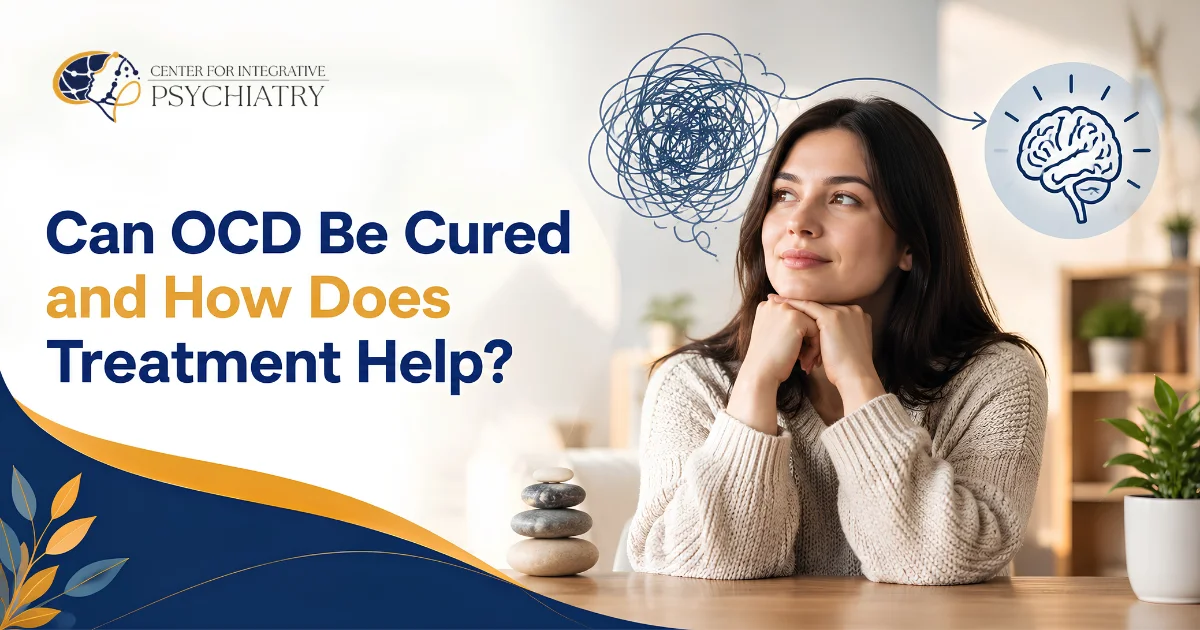
Living with obsessive-compulsive disorder can make your mind feel like an exhausting environment where intrusive thoughts replay without interruption. Performing repetitive rituals may provide brief relief, but the cycle inevitably returns and demands more time, mental energy, and emotional peace. Many people trapped in this relentless loop wonder: can ocd be cured permanently, or will these symptoms dictate the rest of their lives? Understanding the medical reality of recovery and how evidence-based treatment works provides a clear path forward toward lasting peace of mind.
Can OCD Be Cured Permanently or Is It Chronic?
OCD cannot be cured in the medical sense of permanently eliminating the underlying biological vulnerability, but it can be resolved into complete, lasting remission. With evidence-based psychotherapy, behavioral interventions, and psychiatric care, individuals can stop the compulsive cycle, quiet intrusive thoughts, and regain full daily functioning. Learning about specialized treatment for obsessive-compulsive disorder can help individuals understand the clinical approaches available to manage symptoms and work toward lasting improvement.
In clinical psychiatry, conditions involving complex neurobiological circuitry and neurotransmitter pathways are classified as chronic. Much like hypertension or asthma, obsessive-compulsive disorder involves a biological predisposition that does not completely vanish. However, living with a chronic condition does not mean you are destined to suffer from debilitating symptoms every day.
Achieving clinical remission means that symptoms decrease to sub-clinical levels where they no longer disrupt your career, relationships, or mental health. Patients learn to experience intrusive thoughts without interpreting them as catastrophic emergencies or feeling compelled to perform rituals. In this state, the brain reclaims its natural cognitive flexibility, and the disorder ceases to govern daily decisions.
How to Get Tested and Diagnosed with OCD
Learning how to get diagnosed with ocd is essential because symptoms are frequently misidentified as generalized anxiety, clinical depression, or attention deficits. A comprehensive evaluation by a specialized psychiatric professional helps distinguish intrusive obsessions from standard everyday worries. Individuals seeking a professional assessment can review the psychiatric services in Dallas to understand the support options available for their mental health needs.
Understanding how to get tested for ocd involves a structured clinical assessment rather than a single lab test or brain scan. Psychiatric providers utilize several diagnostic benchmarks to confirm the condition:
- Detailed clinical interviews that trace the onset, frequency, and severity of obsessive themes and compulsive actions.
- Standardized rating instruments, such as the Yale-Brown Obsessive Compulsive Scale (Y-BOCS), to measure symptom intensity and functional disruption.
- Differential diagnostic screening to rule out conditions such as autism spectrum traits, eating disorders, or panic disorder.
- Medical history reviews to identify co-occurring conditions, previous treatment responses, and potential metabolic or neurological contributors.
An accurate diagnosis ensures that treatment targets the specific neurological cycle fueling your distress. A psychiatric clinic in Dallas can be a starting point for individuals seeking professional psychiatric assessment and personalized care.
Is OCD a Disability Under Legal and Workplace Standards?
Yes, OCD qualifies as a disability under the Americans with Disabilities Act when symptoms substantially impair major life activities such as working, concentrating, or sleeping. Individuals with severe, treatment-resistant impairment may also qualify for federal disability benefits through the Social Security Administration if they meet rigorous medical criteria.
Under federal law, the Americans with Disabilities Act protects employees who require workplace modifications to perform their duties effectively. Recognizing that is ocd a disability allows individuals to request reasonable accommodations, such as designated quiet workspaces, flexible scheduling for medical appointments, or broken-down task workflows.
For severe cases where symptoms prevent substantial gainful employment, the Social Security Administration evaluates applications under Listing 12.06. Securing disability benefits requires extensive psychiatric documentation demonstrating that persistent obsessions and compulsions significantly restrict cognitive, social, or adaptive functioning despite ongoing clinical treatment.
Evidence-Based OCD Therapy Techniques and Clinical Care
Mastering how to deal with ocd requires structured clinical guidance that teaches the brain to tolerate uncertainty without relying on compulsive safety behaviors. Gold-standard treatment combines targeted psychotherapy with psychiatric medicine to weaken the brain's conditioned fear circuits.
Clinicians utilize several proven ocd therapy techniques to help patients dismantle the cycle of distress:
- Exposure and Response Prevention (ERP), which systematically exposes individuals to trigger situations while guiding them to resist performing compulsions.
- Cognitive Behavioral Therapy (CBT) to identify cognitive distortions, challenge overblown threats, and reframe irrational personal responsibility.
- Acceptance and Commitment Therapy (ACT) to practice observing intrusive thoughts without emotional judgment while committing to meaningful life values.
- Selective serotonin reuptake inhibitors (SSRIs) prescribed at therapeutic doses to increase serotonin availability and dampen neurological alarm signals.
Through regular exposure exercises, the nervous system undergoes habituation, learning that anxiety peaks and naturally dissipates on its own without rituals. For individuals who find that OCD symptoms affect their relationships, work, or routines, understanding how OCD affects relationships and daily life can provide additional context about the broader impact of the condition.
Severe OCD Treatment Options for Complex Cases
When standard outpatient therapy and first-line medications fail to provide adequate relief, specialized severe ocd treatment protocols offer new avenues for recovery. Treatment-resistant symptoms require intensive, multifaceted modalities designed to interrupt rigid neural patterns.
Modern psychiatric medicine offers advanced options for individuals facing treatment-resistant challenges:
- Transcranial Magnetic Stimulation (TMS), an FDA-cleared, non-invasive neuromodulation therapy that uses focused magnetic pulses to regulate hyperactivity in deeper cortical networks.
- Intensive Outpatient Programs (IOP) and Partial Hospitalization Programs (PHP) that provide daily, immersive exposure therapy and clinical oversight.
- Medication augmentation strategies combining SSRIs with atypical antipsychotics, glutamate modulators, or mood stabilizers to enhance neurochemical response.
- Residential care settings offer 24-hour therapeutic immersion for individuals unable to manage essential daily routines independently at home.
These targeted clinical interventions can help break through severe treatment plateaus and restore functional independence. A personalized treatment plan may also involve psychiatric care and medication management based on symptom severity, treatment history, and individual clinical needs.
Natural Remedies and Home Strategies for Managing Symptoms
Many individuals explore natural remedies for ocd as complementary tools to support their clinical treatment plan. While holistic methods cannot replace evidence-based psychotherapy or psychiatric medication, they strengthen the nervous system's capacity to handle stress and foster overall resilience.
Incorporating evidence-supported home remedies for ocd can help regulate daily physiology and support brain health:
- Practicing diaphragmatic breathing and mindfulness to down-regulate the sympathetic fight-or-flight response during spikes of distress.
- Maintaining a consistent sleep schedule to support prefrontal cortex functioning, which is essential for resisting compulsive impulses.
- Engaging in regular cardiovascular exercise to stimulate brain-derived neurotrophic factor (BDNF) and support serotonin regulation.
- Eating balanced meals with adequate complex carbohydrates, proteins, and omega-3 fatty acids to stabilize blood sugar and cognitive energy.
When learning how to stop ocd thoughts naturally, the key is understanding that trying to suppress thoughts creates an ironic rebound effect. Rather than fighting an intrusive thought, acknowledging its presence without analyzing it or seeking reassurance prevents the brain from treating the thought as an active emergency.
How to Help Someone with OCD Without Enabling Rituals
Watching a family member or partner suffer from obsessive fears can be painful, but learning how to help someone with OCD requires a careful balance of empathy and healthy boundaries. Well-intentioned actions, such as answering repetitive reassurance questions or sanitizing items on their behalf, often prolong the disorder.
Loved ones can provide meaningful support by implementing several constructive strategies:
- Refusing to participate in rituals or offer repeated reassurance, explaining calmly that accommodation reinforces their anxiety.
- Validating their emotional pain and distress without validating the factual accuracy of their irrational obsessions.
- Establishing consistent, predictable household routines that discourage accommodating compulsive behaviors.
- Encouraging them to attend therapy sessions and celebrate small milestones in resisting compulsive urges.
- Educating yourself about the mechanics of the disorder to foster patience and reduce household conflict.
By creating an environment that supports recovery rather than safety rituals, family members become vital allies in the healing process. When relationship difficulties involve intrusive thoughts or compulsive behaviors, learning more about the effects of OCD on relationships may help loved ones better understand the challenges involved.
Comprehensive OCD Evaluation and Treatment at Texas CIP
For individuals and families seeking dedicated, compassionate psychiatric care in Texas, the Center for Integrative Psychiatry provides an elevated standard of personalized treatment. Texas CIP recognizes that obsessive-compulsive disorder is a nuanced neurobiological condition that requires clinical precision, comprehensive diagnostic insight, and unhurried collaboration.
Patients participating in the specialized OCD treatment in Dallas receive synchronized care where psychiatric physicians and licensed psychotherapists collaborate under one medical roof. The experienced psychiatrists in Dallas work together to ensure that medication protocols, behavioral therapies, and lifestyle interventions support each other seamlessly.
The integrated clinical model at Texas CIP offers several patient-focused pillars:
- Comprehensive psychiatric diagnostic assessments that carefully distinguish obsessive-compulsive spectrum conditions from anxiety, depression, or ADHD.
- Precise, conservative medication management designed to quiet neurological hyperarousal without unnecessary overmedication.
- Coordination with specialized Exposure and Response Prevention (ERP) therapists to ensure consistent clinical progress.
- Integrative and functional psychiatry consultations evaluating sleep architecture, metabolic health, and nutritional factors that impact brain function.
- Flexible access across Texas, with modern clinic locations in Coppell and North Dallas alongside secure, HIPAA-compliant telepsychiatry statewide.
By addressing the biological, psychological, and environmental roots of the condition, Texas CIP guides patients toward sustainable stability and long-term relief.
Moving Toward Freedom and Long-Term Remission
Living under the constant demands of obsessive thoughts can feel like an unending battle, but a life defined by rituals and fear is not inevitable. While the underlying predisposition may remain, evidence-based clinical treatments provide the exact tools needed to silence compulsive urges and reclaim your daily independence. With professional guidance, patience, and targeted behavioral practice, long-term remission is an achievable reality.
If you or someone you care about is ready to break free from the exhausting cycle of obsessions, compassionate support is available right now. Connect with the psychiatric team to take your first step forward by choosing to schedule an appointment online.
Medical Disclaimer
The information provided in this article is for educational and informational purposes only and does not constitute formal medical or psychiatric advice, diagnosis, or clinical treatment. Always consult a qualified physician, psychiatrist, or licensed mental health professional regarding any psychological condition or therapeutic intervention. If you are experiencing an acute mental health crisis or thoughts of self-harm, please dial 988 for the Suicide & Crisis Lifeline or visit the nearest hospital emergency room immediately.
Frequently asked questions
- What is the clinical difference between an OCD cure and remission?
- A medical cure permanently eradicates a disease so it can never return. Clinical remission means that through evidence-based psychotherapy and medical care, symptoms are reduced to sub-clinical levels where they no longer impair daily living, work, or emotional well-being.
- How does Exposure and Response Prevention retrain the brain?
- Exposure and Response Prevention gradually presents fear-provoking triggers while preventing the execution of compulsive rituals. Over repeated sessions, the brain undergoes habituation, learning that anxiety peaks and naturally fades on its own without safety behaviors.
- Why does reassurance seeking make OCD obsessions worse?
- Asking for reassurance acts as an anxiety-neutralizing compulsion. While reassurance provides fleeting relief, it signals to the brain that the intrusive thought was a genuine danger, which strengthens the fear cycle and triggers more intense obsessions later.
- When should someone consider intensive or neuromodulation treatments for OCD?
- Intensive therapy programs or neuromodulation options like Transcranial Magnetic Stimulation (TMS) are recommended when standard outpatient therapy and multiple first-line medications fail to provide adequate symptom relief after several months.
- Where can Texas residents access specialized, integrative psychiatric care for OCD?
- Residents throughout Texas can access comprehensive diagnostic assessments and individualized psychiatric treatment at Texas CIP clinics located in Coppell and North Dallas. In addition, patients statewide can connect with the clinical team through secure telehealth visits.
This article is for education and general information. It isn't a substitute for individual medical advice, diagnosis, or treatment from a qualified clinician.
Webmaster
Articles on this blog are educational resources from the Center for Integrative Psychiatry, a multidisciplinary clinic offering evidence-based psychiatry, therapy, TMS, and integrative care for Texans since 2015. They are not medical advice — always talk with your own clinician about your care.
Meet the CIP team