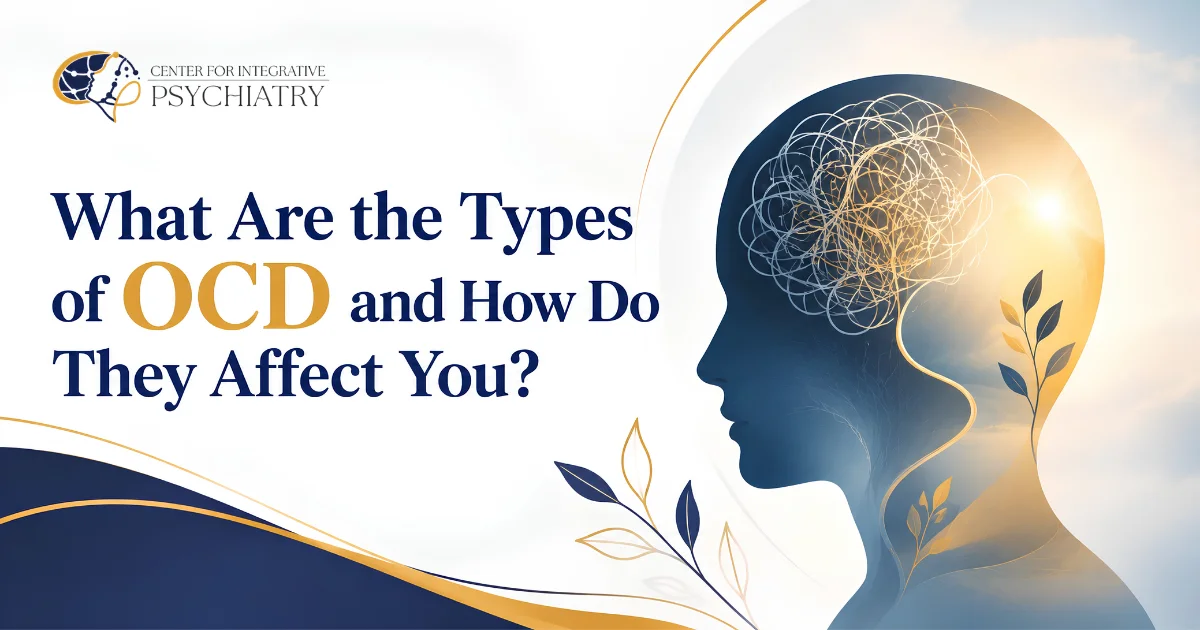
Popular media often reduces obsessive-compulsive disorder to quirky cleaning habits, color-coded closets, or hand-washing routines. In reality, the condition is far more complex, varied, and emotionally exhausting for those who live with it. Understanding the different types of ocd is an essential first step toward recognizing your own struggles and finding the right clinical support. If you find yourself trapped in loops of distressing thoughts and repetitive rituals, what type of ocd do i have, and how can real relief be achieved?
What Does OCD Look Like Beyond the Stereotypes?
What does ocd look like when stripped of cinematic misconceptions? Clinically, obsessive-compulsive disorder is characterized by a persistent cycle of intrusive, unwanted thoughts or images (obsessions) that produce intense distress, followed by mental or physical rituals (compulsions) designed to neutralize that discomfort. It functions as an internal alarm system stuck in overdrive.
Obsessive-compulsive disorder does not mean someone simply likes things tidy or orderly. True obsessions cause significant functional impairment, emotional anguish, and mental exhaustion. Individuals often recognize on a logical level that their fears are exaggerated or irrational, yet the physiological urge to perform a ritual feels impossible to ignore.
The disorder operates on a continuous feedback loop that reinforces fear pathways in the brain over time:
- An intrusive thought, image, or urge enters awareness and is perceived as dangerous or morally unacceptable.
- The individual experiences an immediate surge of anxiety, terror, disgust, or a deep sense that things are not right.
- A repetitive physical action or covert mental routine is performed to neutralize the anxiety or prevent a feared catastrophe.
- The compulsion brings temporary, fleeting relief, which inadvertently teaches the brain that the ritual was necessary for survival.
Because this cycle temporarily lowers distress, the brain demands the same behavior the next time the intrusive thought arises, trapping the person in an escalating pattern.
What Are the 4 Types of OCD Subtypes?
The clinical community commonly groups symptoms into four primary presentations based on recurring thematic patterns. What are the 4 types of ocd most frequently recognized by diagnostic specialists? They include contamination and cleaning, checking and responsibility, symmetry and ordering, and taboo intrusive thoughts. While these categories share the same neurological engine, each manifests through distinct behavioral compulsions.
Recognizing these four primary clusters helps clinicians develop targeted behavioral exposure plans that address specific internal fears.
1. Contamination and Cleaning OCD
Contamination themes involve an overwhelming dread of becoming dirty, contracting an illness, or spreading germs and toxic substances to loved ones. The fear is rarely about dirt itself; rather, it revolves around catastrophic consequences such as severe illness, poisoning, or moral responsibility for another person's death.
Individuals experiencing contamination obsessions often spend hours each day performing rigid decontamination routines:
- Washing hands, showering, or cleaning household items until skin is raw or objects are damaged.
- Developing complex decontamination stations before entering the home from work or public spaces.
- Avoiding public restrooms, doorknobs, handshakes, or medical environments entirely.
- Mentally retracing daily steps to ensure nothing toxic was accidentally touched or transferred.
2. Checking and Responsibility OCD
Checking compulsions stem from an inflated sense of personal responsibility and an intense fear of causing accidental harm or catastrophe through negligence. The core obsession focuses on preventing disastrous outcomes such as fires, burglaries, flooding, or physical injury to strangers.
To alleviate the dread that a single oversight could ruin lives, individuals engage in repetitive verifying behaviors:
- Returning to the house multiple times to check locks, stove burners, iron plugs, or windows.
- Retracing driving routes repeatedly to ensure an unseen bump in the road was not a pedestrian.
- Re-reading emails, text messages, or official forms dozens of times before pressing send to avoid catastrophic errors.
- Seeking repeated verbal reassurance from family members that everything is safe and turned off.
3. Symmetry, Exactness, and Ordering OCD
Symmetry obsessions center on the relentless urge for items to be arranged in a specific spatial orientation, balanced physically, or executed in precise numerical sequences. Unlike general neatness, this subtype is driven by intense psychological distress often described as a "not-just-right" feeling or a superstitious belief that asymmetry will trigger misfortune.
People dealing with symmetry and ordering challenges often exhibit several recognizable patterns:
- Spending hours aligning objects on desks, shelves, or countertops until they reach exact geometric balance.
- Repeating physical movements, such as tapping or stepping, with both sides of the body until sensory symmetry is felt.
- Rewriting notes, lists, or signatures until the visual presentation looks flawless.
- Counting steps, syllables, or specific items in multiples of "safe" numbers while avoiding "unlucky" numbers.
4. Taboo Intrusive Thoughts and "Pure O"
Taboo intrusive thoughts involve horrific, distressing mental imagery or impulses that directly contradict the person's core values, morals, and identity. This presentation is sometimes referred to as "Pure O" because the compulsions are largely internal and invisible to outside observers.
Because these thoughts feel shocking and repulsive, individuals often suffer in deep shame without realizing it is a classic manifestation of obsessive-compulsive disorder:
- Violent obsessions involving fears of suddenly harming oneself, family members, children, or pets.
- Sexual obsessions featuring taboo themes, such as fears of pedophilia or incest, that cause profound disgust.
- Religious or moral scrupulosity, where the person fears blasphemy, eternal damnation, or ethical failure.
- Covert mental compulsions such as mentally replaying events, repeating silent prayers, or constantly checking internal physical sensations for arousal or agreement.
Other Different Types of OCD and Clinical Themes
Beyond the four primary categories, different types of ocd can attach to almost any concept, relationship, or bodily function. Because the disorder adapts to whatever an individual values most, symptoms often manifest in specialized thematic presentations. These include relationship-focused doubts, existential dread, and heightened awareness of involuntary bodily processes.
These less publicized forms can be equally debilitating because people often mistake the obsessions for genuine lifestyle crises rather than psychiatric symptoms. For example, understanding how OCD affects relationships and everyday life can help explain how intrusive thoughts, reassurance-seeking, and compulsive behaviors may affect interactions with partners, family members, and friends.
- Relationship OCD (ROCD): Continuous, obsessive doubts about a partner's suitability, physical attractiveness, or loyalty, leading to constant reassurance seeking and relationship instability.
- Sensorimotor or Somatic OCD: Hyper-fixation on automatic bodily functions, such as breathing, blinking, swallowing, or heartbeats, creating difficulty focusing on external conversations or work.
- Existential OCD: Incessant philosophical questioning regarding the nature of reality, consciousness, or the purpose of existence that induces panic and depersonalization.
- Emotional Contamination: Fears of absorbing the negative personality traits, bad luck, or emotional distress of another person through physical proximity or shared belongings.
How to Know If You Have OCD
Learning how to know if you have ocd requires evaluating the time, mental energy, and functional impairment caused by your repetitive thoughts and behaviors. A clinical diagnosis does not depend on which specific subtype you experience, but rather on how significantly the cycle disrupts your daily life, relationships, and well-being.
Clinicians rely on established diagnostic benchmarks to differentiate typical worries from clinical obsessions:
- Your intrusive thoughts and accompanying rituals consume more than one hour per day.
- You experience marked emotional distress, panic, or physical anxiety when prevented from performing a compulsion.
- Your rituals cause noticeable interference with work productivity, school performance, social relationships, or self-care.
- You consistently avoid specific locations, objects, conversations, or media to prevent triggering obsessive thoughts.
If you recognize these patterns in your life, consulting a licensed mental health professional who specializes in obsessive-compulsive spectrum disorders is the most reliable way to obtain clarity. A professional assessment can help distinguish OCD from other conditions and determine whether specialized OCD treatment in Dallas and psychiatric care may be appropriate.
Are You Born with OCD or Does It Develop Over Time?
Are you born with ocd, or is it acquired through life experience? Research indicates that individuals are not born with active symptoms, but they can inherit a genetic predisposition that makes developing the condition significantly more likely. The disorder typically emerges through an interaction between genetic vulnerabilities, neurobiological brain circuitry, and environmental stressors.
Neuroimaging studies show that people with obsessive-compulsive conditions exhibit altered functional connectivity in the cortico-striato-thalamo-cortical (CSTC) brain circuitry. This network manages communication between the orbitofrontal cortex, which identifies threats, and the basal ganglia, which regulates habitual physical responses. When this circuit misfires, the brain struggles to apply the cognitive brakes that signal when an action is complete and safety has been achieved.
Environmental factors, including childhood trauma, major life changes, and chronic interpersonal stress, often act as catalysts that trigger symptoms in genetically vulnerable individuals.
What Causes OCD to Get Worse?
Symptoms can remain relatively stable for months before experiencing a sudden, debilitating flare-up. Major escalations are typically driven by acute life stress, sleep deprivation, hormonal fluctuations, and most importantly, increasing engagement with compulsions. Performing rituals provides temporary relief while systematically strengthening the underlying neurological loop.
Identifying common aggravating factors helps individuals protect their emotional stability during high-risk periods:
- Major life transitions, such as starting college, relocating, changing careers, marriage, or welcoming a new child.
- Chronic physical exhaustion and fragmented sleep patterns, which impair prefrontal cortex emotional regulation.
- Co-occurring mental health challenges, particularly untreated major depression or generalized anxiety disorder.
- Family accommodation, where well-meaning loved ones participate in rituals or provide reassurance, inadvertently validating the fear.
- Engaging in mental debates with obsessions, which signals to the amygdala that the intrusive thought represents an active emergency.
When it begins affecting relationships, work, or daily routines, learning how obsessive-compulsive symptoms can interfere with everyday life may help individuals and their families recognize the need for appropriate support.
Can OCD Go Away on Its Own Without Treatment?
Can ocd go away without professional medical intervention? While symptom severity can fluctuate naturally over a person's lifespan, established obsessive-compulsive disorder rarely resolves completely on its own. Without evidence-based care, symptoms tend to follow a chronic, waxing and waning course that progressively narrows an individual's personal and professional life.
Fortunately, modern clinical treatments offer exceptional rates of recovery and symptom remission. The gold-standard psychotherapy is Exposure and Response Prevention (ERP), a specialized cognitive behavioral therapy that helps patients systematically confront their feared thoughts without engaging in compulsive rituals. Over time, the brain undergoes habituation, learning that anxiety naturally dissipates without performing actions to escape it.
When combined with judicious psychiatric medication management, such as selective serotonin reuptake inhibitors (SSRIs), patients can quiet neurological hyperarousal and regain control of their daily lives.
Comprehensive OCD Treatment and Support at Texas CIP
For individuals seeking specialized, compassionate psychiatric care in Texas, the Center for Integrative Psychiatry offers a synchronized, whole-person approach to treating obsessive-compulsive spectrum disorders. Texas CIP recognizes that real healing requires looking beyond surface symptoms to address the biological, cognitive, and functional roots of the disorder.
Navigating obsessive thoughts requires a provider who truly understands how these conditions operate. At Texas CIP, patients participating in the OCD treatment program receive comprehensive, individualized support that coordinates psychiatric evaluation with specialized psychological care under one roof. The psychiatrists in Dallas work collaboratively to ensure that medical therapies and behavioral techniques align seamlessly.
The integrated model at Texas CIP includes several evidence-based clinical pillars:
- Thorough psychiatric evaluations to accurately differentiate obsessive-compulsive symptoms from generalized anxiety, ADHD, or trauma.
- Targeted medication management to reduce the intense biological distress that makes behavioral therapy challenging.
- Coordination with specialized Exposure and Response Prevention (ERP) methods designed to break the cycle of obsessions and compulsions safely.
- Integrative and lifestyle evaluations that optimize sleep quality, nutrition, and stress hormone balance to support neurochemical health.
- Flexible accessibility across the state of Texas, with welcoming physical clinic locations in Coppell and North Dallas alongside secure telepsychiatry options.
People seeking in-person support, a psychiatric clinic in Dallas offers professional mental health services depending on individual needs.
By treating the complete individual rather than just managing isolated behaviors, Texas CIP helps patients develop sustainable resilience and lasting freedom from internal loops of fear.
Breaking Free from the Cycle of Obsessions
Living with obsessive-compulsive disorder can leave you feeling isolated inside your own mind, but you do not have to battle these exhausting thoughts by yourself. Knowing which subtype you experience provides a clear blueprint for evidence-based recovery. With the right clinical support, practical behavioral tools, and comprehensive medical care, it is entirely possible to quiet intrusive thoughts and reclaim your peace of mind.
If you or someone you care about is struggling with distressing obsessions and compulsions, compassionate help is within reach. You can reach out directly to schedule an appointment online to begin your journey toward clinical remission.
Medical Disclaimer
The information provided in this article is for educational and informational purposes only and does not constitute medical advice, psychiatric diagnosis, or professional treatment. Always seek the direct guidance of a qualified physician, psychiatrist, or licensed mental health professional regarding any medical or mental health condition. If you are experiencing a psychiatric crisis, dial 988 for the Suicide & Crisis Lifeline or visit your nearest emergency room immediately.
Frequently asked questions
- What is the most effective therapy for treating all types of OCD?
- Exposure and Response Prevention (ERP) is considered the first-line, gold-standard psychotherapy for all forms of obsessive-compulsive disorder. ERP works by gradually exposing individuals to situations or thoughts that provoke obsession-related anxiety while supporting them in resisting the urge to perform compulsions, ultimately retraining the brain's threat-detection network.
- How do psychiatrists distinguish between high stress, generalized anxiety, and OCD?
- While generalized anxiety disorder involves pervasive, excessive worry about real-life circumstances like finances or family health, OCD centers on specific, irrational intrusive thoughts that provoke repetitive physical or mental rituals. An integrative psychiatric evaluation assesses whether physical or covert compulsions are being used to alleviate emotional distress.
- Why do OCD symptoms sometimes shift from one theme to another?
- Because obsessive-compulsive disorder is an underlying neurological mechanism rather than a fear of one specific subject, it is common for the condition to latch onto new themes throughout life. When a person resolves one fear through avoidance or adaptation, the disorder often targets another deeply held personal value.
- Can children and teenagers develop different subtypes of OCD?
- Children and adolescents can develop any subtype of the disorder, with contamination and symmetry themes being especially common in younger demographics. Pediatric presentations often involve asking parents for constant reassurance or requiring family members to participate in bedtime or organizing rituals.
- Where can Texas residents receive integrative psychiatric care for OCD?
- Residents throughout Texas can access comprehensive psychiatric evaluations and treatment at Texas CIP clinic locations in Coppell and North Dallas. Additionally, individuals across the state can connect with the same multidisciplinary clinical team through secure, HIPAA-compliant telehealth appointments.
This article is for education and general information. It isn't a substitute for individual medical advice, diagnosis, or treatment from a qualified clinician.
Webmaster
Articles on this blog are educational resources from the Center for Integrative Psychiatry, a multidisciplinary clinic offering evidence-based psychiatry, therapy, TMS, and integrative care for Texans since 2015. They are not medical advice — always talk with your own clinician about your care.
Meet the CIP team