
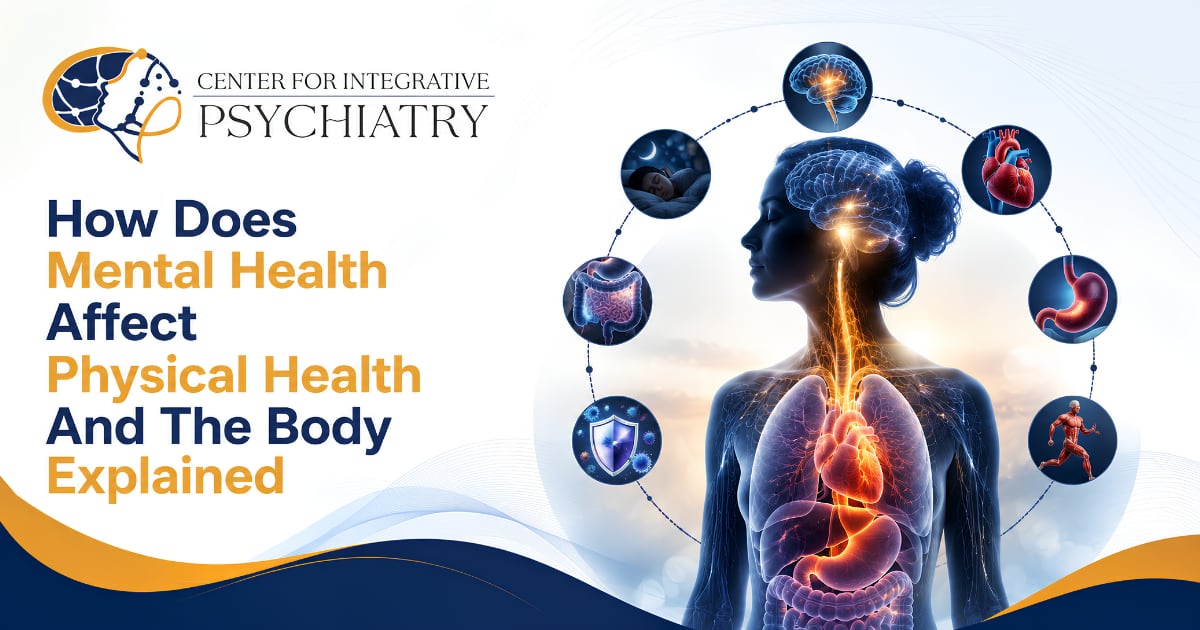
Managing persistent stress or emotional overwhelm frequently creates real physical symptoms throughout your body. Have you wondered how does mental health affect physical health during periods of intense anxiety or depression? Your brain and physical body communicate continuously through complex neural pathways and hormone signaling. Recognizing this mind-body link allows you to address the root causes of systemic health challenges.
At Texas CIP, we deliver compassionate, integrated psychiatric care designed to treat both mind and body. Our comprehensive services include Telehealth, Mental Health Therapy, TMS (Transcranial Magnetic Stimulation), Medication Management, Functional Psychiatry, Life Coaching, Nutritional Psychiatry, and Naturopathy. Whether you are living with Anxiety Disorders, Depression, PTSD, Obsessive Compulsive Disorder (OCD), Bipolar Disorder, Grief and Loss, ADHD, or Schizophrenia and Psychosis, our multidisciplinary psychiatric team in Dallas builds personalized care plans that restore physical vitality and emotional health.
Understanding The Biological Connection Between Physical And Mental Health
When evaluating how psychological distress influences the human frame, neuroscientists look at biological signaling networks. The mental health and physical health connection relies heavily on the nervous system, endocrine glands, and immune pathways.
When you experience severe emotional distress, your hypothalamus triggers the sympathetic nervous system. This response floods your bloodstream with stress hormones like cortisol and adrenaline. While short-term spikes in cortisol help you react to temporary danger, chronic elevation causes widespread inflammation and tissue strain.
Understanding this biological connection between physical and mental health clarifies why chronic psychological distress rarely remains confined to your thoughts:
- Autonomic Nervous System Overload: Chronic anxiety keeps your autonomic nervous system stuck in a fight-or-flight state, increasing resting heart rate and blood pressure.
- Hormonal Dysregulation: Continuous release of cortisol disrupts metabolic functions, thyroid signaling, and natural insulin sensitivity across major organs.
- Systemic Inflammatory Response: Prolonged psychological strain triggers pro-inflammatory cytokines, accelerating joint discomfort, cardiovascular strain, and tissue breakdown.
- Vagus Nerve Suppression: High stress reduces vagal tone, impairing digestion, heart rate variability, and your body's natural relaxation mechanisms.
Examining The Primary Effects Of Mental Health On Physical Health
Many patients are surprised to learn that persistent fatigue, digestive trouble, and chronic pain often stem from psychological strain. The widespread effects of mental health on physical health manifest differently depending on your genetic background and baseline lifestyle habits.
Unmanaged stress disrupts your internal homeostasis, altering how your body processes energy and repairs tissue. Over time, emotional exhaustion drains biological reserves, leaving your physical organs vulnerable to functional decline and secondary medical conditions.
Evaluating these physical indicators helps clinicians identify when emotional distress is damaging your biological systems:
- Chronic Fatigue And Exhaustion: Persistent anxiety and depression deplete cellular energy production, leaving you feeling physically drained regardless of sleep duration.
- Gastrointestinal Distress: The gut-brain axis causes emotional stress to trigger irritable bowel symptoms, nausea, acid reflux, and chronic gut inflammation.
- Musculoskeletal Tension: Prolonged panic or worry leads to involuntary muscle guarding, causing tension headaches, back pain, and jaw clenching.
- Compromised Immune Defense: Elevated cortisol levels suppress white blood cell activity, making your body more susceptible to frequent infections and slow wound healing.
How Does Mental Health Affect Physical Health Throughout The Human Body?
Patients seeking clinical clarity often ask directly: does mental health affect physical health across all major body systems? The short answer is yes. Because every organ system communicates with the central nervous system, untreated psychiatric conditions create systemic physical repercussions.
During periods of depression or severe trauma, reduced neurotransmitter activity impacts peripheral pain receptors and organ regulation. When exploring how does mental health affect physical health, doctors examine four primary anatomical areas that experience significant physical decline under chronic psychological stress.
Analyzing these four vital bodily systems reveals the extensive reach of psychiatric conditions:
- Cardiovascular System: Chronic panic and anxiety increase arterial stiffness, raise resting blood pressure, and elevate the long-term risk of heart disease and stroke.
- Digestive System: Emotional turmoil alters the gut microbiome, reduces nutrient absorption, and exacerbates chronic conditions like inflammatory bowel disease.
- Endocrine System: Untreated mood disorders impair glucose metabolism, disrupt thyroid functioning, and cause sudden fluctuations in appetite and body weight.
- Immune System: Prolonged emotional distress impairs natural killer cell function, increasing susceptibility to autoimmune flare-ups and chronic systemic inflammation.
Physical Vs Mental Health: Why Both Require Equal Clinical Attention
In traditional medical settings, care is frequently split between physical vs mental health. However, modern psychiatric neuroscience proves that physical and psychological health are completely inseparable dimensions of human wellness.
When addressing whether is mental health more important than physical health, clinicians emphasize that neither operates in isolation. A chronic physical illness can trigger deep depression, while severe anxiety can cause debilitating physical weakness. Understanding why is mental health just as important as physical health enables individuals to pursue comprehensive medical interventions that treat the entire biological system.
Recognizing the continuous feedback loop between mind and body highlights the necessity of whole-person medical strategies:
- Bi-Directional Disease Progression: Physical pain worsens emotional distress, while severe depression increases physical pain perception and sensitivity.
- Shared Neurochemical Pathways: Neurotransmitters like serotonin and norepinephrine regulate both mood in the brain and pain perception throughout the spine.
- Treatment Compliance Impact: Untreated psychological conditions make it harder for patients to maintain physical exercise, healthy nutrition, and medical schedules.
- Unified Healing Outcomes: Addressing psychiatric distress simultaneously accelerates physical recovery, immune function, and overall metabolic vitality.
How Texas CIP Restores Physical Vitality Through Whole-Person Psychiatric Care
Healing from chronic psychological strain and physical exhaustion requires a care model that addresses all dimensions of health. At Texas CIP, our clinical team combines advanced neuroscience with integrative medical strategies to repair damaged biological pathways.
We evaluate your metabolic health, hormonal balance, gut microbiome, and central nervous system signaling to build targeted treatment plans. By pairing traditional therapies with cutting-edge interventions, we help patients overcome physical exhaustion and regain daily energy.
Our multidisciplinary clinical services work together to restore complete physical and mental balance:
- Nutritional Psychiatry: Identifying metabolic imbalances, gut health disruptions, and micronutrient deficiencies that deplete cellular energy and alter brain signaling.
- Non-Invasive TMS Therapy: Utilizing Transcranial Magnetic Stimulation to rebalance neural circuits responsible for mood, stress regulation, and physical energy.
- Targeted Medication Management: Prescribing and calibrating advanced psychiatric medications to regulate central nervous system arousal and reduce pain sensitivity.
- Naturopathy: Integrating evidence-based psychotherapy with natural stress-reduction modalities to calm hyperactive fight-or-flight responses.
- Life Coaching: Offering structured lifestyle guidance to build sustainable habits that protect long-term physical stamina.
Final Thoughts
Understanding how does mental health affect physical health empowers you to treat emotional distress with the urgency it deserves. From cardiovascular strain to digestive disruption, psychological health directly dictates your physical stamina and biological vitality.
At Texas CIP, our multidisciplinary team is dedicated to helping you achieve lasting mind-body wellness. Contact Texas CIP today to schedule a comprehensive consultation and explore how our personalized TMS, therapy, functional psychiatry, and naturopathic programs can help you restore your physical energy and emotional balance.
Frequently asked questions
- Who Is Most At Risk For Physical Symptoms Caused By Mental Distress?
- Individuals experiencing chronic unmanaged stress, untreated Depression, Anxiety Disorders, PTSD, or severe life transitions face the highest risk of developing physical symptoms.
- What Is The Biological Connection Between Physical And Mental Health?
- The primary biological connection is the autonomic nervous system and gut-brain axis, which send stress signals, inflammatory markers, and neurotransmitters between the brain and physical organs.
- When Should You Consult A Specialist About Mind-Body Health Concerns?
- You should consult a medical specialist as soon as emotional strain causes persistent physical issues like chronic fatigue, digestive distress, sleep loss, or unexplained bodily pain.
- Where Can You Access Integrated Psychiatric And Physical Care In Texas?
- Texas CIP provides comprehensive in-person and virtual Telehealth care across Texas, combining functional psychiatry, therapy, TMS, medication management, and naturopathy.
- Why Is Mental Health Just As Important As Physical Health For Recovery?
- Mental health directly controls hormone balance, immune function, and cardiovascular regulation, making psychological balance essential for overall physical healing and stamina.
- How Does Texas CIP Combine Physical Wellness And Mental Health Care?
- Texas CIP conducts functional medical evaluations, optimizes gut and metabolic health through Nutritional Psychiatry, and utilizes TMS and therapy to restore complete nervous system balance.
This article is for education and general information. It isn't a substitute for individual medical advice, diagnosis, or treatment from a qualified clinician.
Webmaster
Articles on this blog are educational resources from the Center for Integrative Psychiatry, a multidisciplinary clinic offering evidence-based psychiatry, therapy, TMS, and integrative care for Texans since 2015. They are not medical advice — always talk with your own clinician about your care.
Meet the CIP team