Overwhelming worry and sudden panic can disrupt your daily routine without warning. Many people wonder how long can an anxiety attack last during severe emotional distress. Understanding typical physical symptoms helps you manage emotional surges and regain stability. Have you ever felt stuck in intense apprehension and questioned when relief would arrive?
At Texas CIP, we deliver compassionate, evidence-based care to help individuals navigate complex emotional health challenges. Our comprehensive services include Telehealth, Mental Health Therapy, TMS (Transcranial Magnetic Stimulation), Medication Management, Functional Psychiatry, Life Coaching, Nutritional Psychiatry, and Naturopathy. Whether you are living with Anxiety Disorders, Depression, PTSD, Obsessive Compulsive Disorder (OCD), Bipolar Disorder, ADHD, Grief and Loss, or Schizophrenia and Psychosis, our multidisciplinary psychiatric team in Dallas creates personalized care plans designed to calm your nervous system and restore balance.
Understanding How Long Can An Anxiety Attack Last By Episode Type
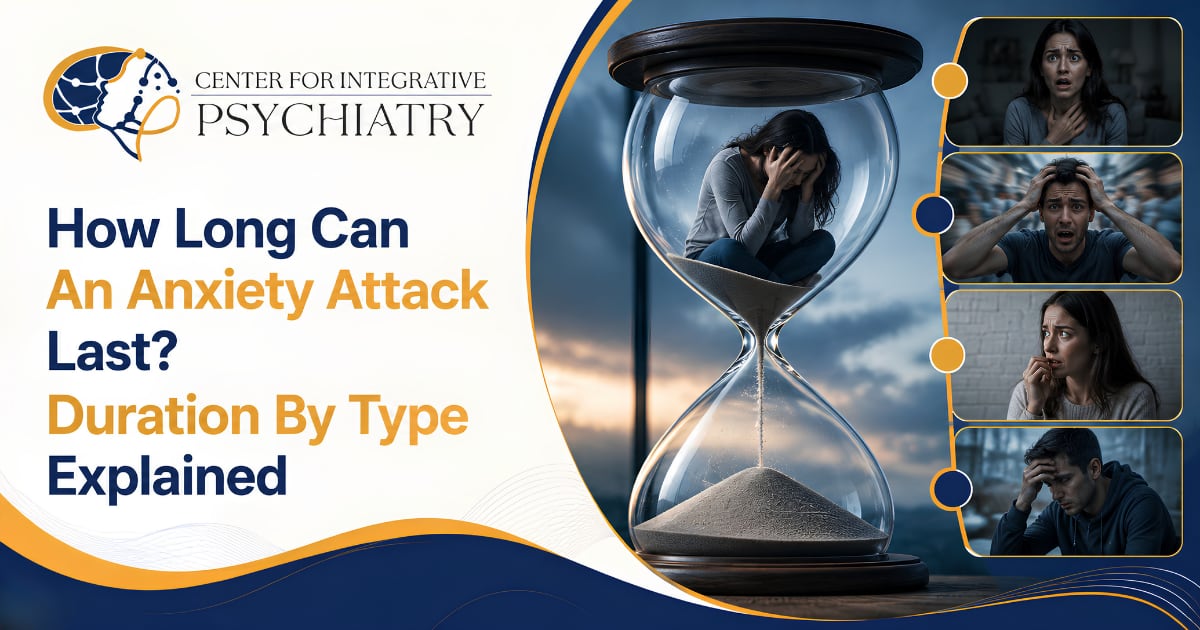
When evaluating how long can an anxiety attack last, clinicians distinguish between acute panic spikes and prolonged anxious states. The term anxiety attack usually describes an intense build-up of worry that reaches a high emotional threshold.
An acute episode typically reaches its maximum intensity within 10 to 30 minutes before gradually subsiding. However, the physical exhaustion and residual nervous system arousal following an episode can linger for several hours. When stress remains unmanaged, high baseline tension can make it feel as though a single episode never fully resolves.
Recognizing the key factors that influence anxiety attack duration helps clarify your body's physiological timeline:
- Severity Of The Stressor: Sudden traumatic triggers create rapid spikes in adrenaline, whereas ongoing financial or personal worries sustain mild arousal over longer periods.
- Central Nervous System Sensitivity: An overactive sympathetic nervous system takes longer to return to a calm baseline state after experiencing intense fear.
- Coping Interventions Used: Utilizing deep breathing, grounding techniques, or therapeutic tools can shorten the overall length of an emotional escalation.
- Substance Exposure: High caffeine intake, nicotine, or stimulant medications can prolong heart racing and heighten nervous system reactivity.
Understanding these changes can also help you recognize the signs of anxiety recovery as your symptoms gradually decrease and your nervous system returns to a calmer baseline.
Can An Anxiety Attack Last For Days Or Prolong Stress?
A common question among individuals navigating anxiety attacks lasts for days without stopping. From a medical standpoint, a single acute panic surge rarely lasts continuously for days because the body runs out of adrenaline.
However, continuous high-level worry can cause lingering symptoms, leading people to ask can anxiety last for days in a row. When your nervous system remains stuck in fight-or-flight mode, you may experience waves of physical distress that feel like an unbroken, multi-day episode. Knowing how long can an anxiety attack last in these extended scenarios requires evaluating your background stress levels. Managing ongoing anxiety through practical coping strategies can help reduce persistent worry and make prolonged symptoms easier to manage.
The following factors explain why anxious feelings can persist across multiple days:
- Persistent Cortisol Levels: Chronic emotional strain keeps stress hormones elevated, preventing your physiological systems from resetting.
- Anticipatory Apprehension: Fearing the arrival of another sudden surge creates a continuous feedback loop of anxiety that spans several days.
- Sleep Deprivation: Lack of restorative sleep impairs the prefrontal cortex, reducing your brain's ability to regulate emotional responses effectively.
- Physical Exhaustion: Prolonged muscle guarding and elevated heart rates leave the body feeling continuously depleted and vulnerable to continuous fear.
What Causes Anxiety Attacks At Night And Nighttime Symptoms?
Waking up suddenly with a pounding heart and shortness of breath can be a deeply frightening experience. Many patients wonder what causes anxiety attacks at night when their surroundings are quiet and restful.
Nocturnal anxiety episodes often occur during transitions between non-REM and REM sleep cycles. During quiet evening hours, the brain has fewer external sensory distractions to process, allowing subconscious worries and physiological stress signals to surface. Additionally, natural shifts in nighttime cortisol and blood sugar levels can trigger sudden autonomic arousal.
Several physiological and environmental factors contribute to nighttime distress:
- Unprocessed Daily Stress: Accumulating emotional pressure throughout the day without adequate relaxation time can trigger involuntary nighttime fear responses.
- Circadian Hormone Shifts: Involuntary fluctuations in nighttime hormone levels can cause sudden spikes in heart rate during deep sleep.
- Sleep Apnea Disruptions: Brief interruptions in breathing during sleep cause sudden oxygen drops, prompting your brain to release adrenaline to wake you up.
- Environmental Quietness: Dark, quiet rooms eliminate daytime auditory distractions, causing individuals to hyper-fixate on internal body sensations like heartbeats.
Can Anxiety Cause Not Eating And Appetite Loss?
The physical manifestations of intense fear extend far beyond racing thoughts and rapid breathing. Individuals struggling with severe distress frequently ask can anxiety cause not eating during periods of heightened tension.
When your body senses a threat, your sympathetic nervous system diverts blood flow away from the gastrointestinal tract toward major muscle groups. This primitive fight-or-flight response slows down digestion, triggers stomach tightness, and produces severe nausea. Consequently, prolonged emotional distress often suppresses hunger cues and makes consuming solid food feel nearly impossible.
Understanding how emotional distress impairs digestive function highlights the strong connection between mind and body:
- Gastrointestinal Shutdown: Stress hormones slow stomach motility, causing bloating, nausea, and a complete loss of appetite.
- Swallowing Difficulty: High muscle tension in the throat, known as globus sensation, makes swallowing food feel uncomfortable or difficult.
- Metabolic Depletion: Skipping meals due to severe anxiety leads to low blood sugar, which further exacerbates dizziness, trembling, and panic.
- Gut-Brain Axis Strain: Altered central nervous signaling disrupts communication with the gut microbiome, triggering long-term digestive discomfort.
Comprehensive Care At Texas CIP For Lasting Relief
Overcoming persistent fear and physical exhaustion requires a holistic treatment plan tailored to your nervous system. At Texas CIP, our clinical team focuses on identifying root biological and psychological drivers to deliver comprehensive recovery strategies.
We combine cutting-edge neuroscience with functional wellness to rebalance brain chemistry and promote emotional resilience. By integrating traditional therapies with advanced interventions, we help patients overcome anxiety disorder, restore healthy sleep patterns, and regain physical vitality.
Our multidisciplinary services work synergistically to provide long-term relief:
- Non-Invasive TMS Therapy: Utilizing Transcranial Magnetic Stimulation to rebalance neural circuits responsible for stress processing and emotional regulation.
- Nutritional Psychiatry: Evaluating metabolic markers, gut health, and nutrient deficiencies to support neurotransmitter balance and restore healthy appetite.
- Targeted Medication Management: Calibrating psychiatric prescriptions to calm hyperactive nervous system responses and prevent acute panic surges.
- Mental Health Therapy: Combining evidence-based psychotherapy with natural stress-reduction strategies to build long-term coping mechanisms.
- Life Coaching: Offering virtual check-ins and structured lifestyle guidance to establish daily routines that protect against chronic burnout.
Final Thoughts
Understanding how long can an anxiety attack last helps remove the fear of the unknown during acute emotional spikes. While acute episodes usually peak within 30 minutes, lingering physical stress can persist for days if left unaddressed.
At Texas CIP, our multidisciplinary clinical team is dedicated to helping you achieve lasting calm and nervous system recovery. Contact Texas CIP today to schedule a comprehensive consultation and explore how our personalized TMS, therapy, functional psychiatry, and naturopathic programs can help you restore emotional balance.
Frequently asked questions
- Who Is Most At Risk For Extended Anxiety Attack Duration?
- Individuals with high chronic stress, untreated Anxiety Disorders, PTSD, sleep deprivation, or genetic predispositions face higher risks of long-lasting symptoms.
- What Is The Typical Anxiety Attack Duration During An Acute Episode?
- An acute anxiety episode usually reaches peak physical intensity within 10 to 30 minutes before gradually subsiding over the following hour.
- When Should You Seek Professional Care For Persistent Anxiety?
- You should consult a medical professional if anxious feelings last for days, disrupt sleep, prevent you from eating, or interfere with daily activities.
- Where Can You Receive Integrated Care For Anxiety Disorders In Texas?
- Texas CIP provides comprehensive in-person and virtual Telehealth care across Texas, integrating psychiatry, TMS, therapy, functional medicine, and naturopathy.
- Why Do Anxiety Attacks Happen At Night Unexpectedly?
- Nighttime episodes occur because subconscious stress, nocturnal hormone shifts, or sleep disruptions trigger fight-or-flight responses when sensory distractions are low.
- How Does Texas CIP Help Manage Long-Lasting Panic And Stress?
- Texas CIP combines Medication Management, TMS therapy, Functional Psychiatry, Nutritional Psychiatry, and psychotherapy to treat the root biological causes of nervous system hyperarousal.
This article is for education and general information. It isn't a substitute for individual medical advice, diagnosis, or treatment from a qualified clinician.
Webmaster
Articles on this blog are educational resources from the Center for Integrative Psychiatry, a multidisciplinary clinic offering evidence-based psychiatry, therapy, TMS, and integrative care for Texans since 2015. They are not medical advice — always talk with your own clinician about your care.
Meet the CIP team