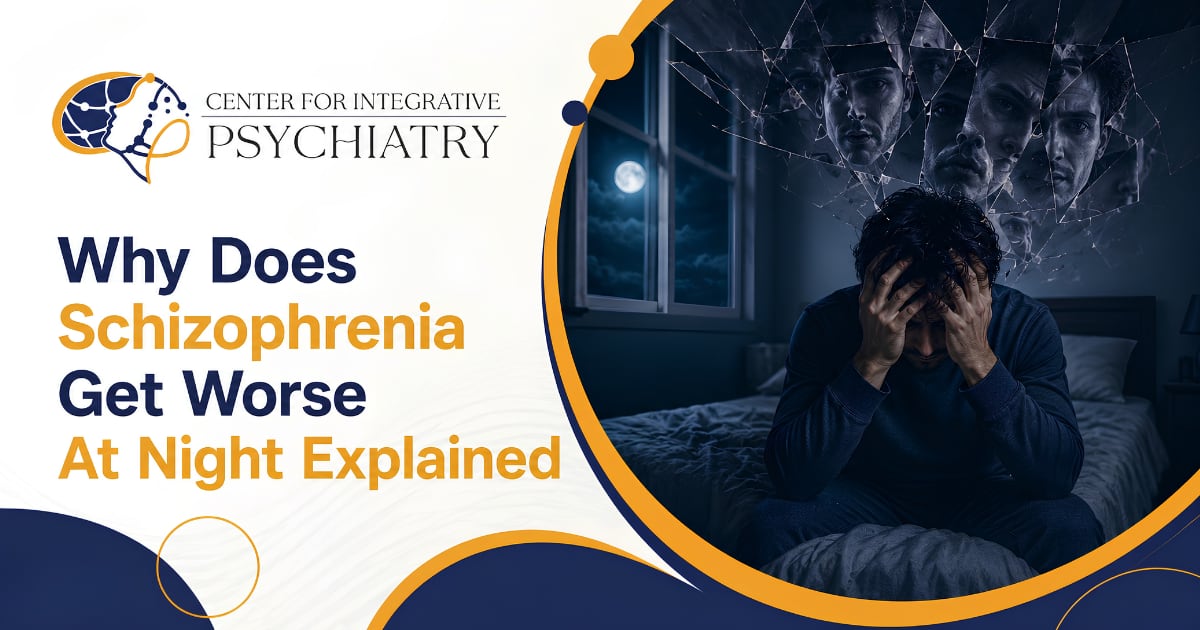
Managing complex mental health conditions becomes significantly harder during quiet evening hours. Many families notice that hallucinations, paranoia, and agitation increase after sunset. Do you wonder why does schizophrenia get worse at night for your loved one? Understanding night symptoms is crucial for restoring evening peace and healthy rest.
At Texas CIP, we deliver compassionate, evidence-based care to help individuals manage severe psychiatric challenges. Our comprehensive mental health services include Telehealth, Mental Health Therapy, TMS (Transcranial Magnetic Stimulation), Medication Management, Functional Psychiatry, Life Coaching, Nutritional Psychiatry, and Naturopathy. Whether managing Schizophrenia and Psychosis, Bipolar Disorder, Major Depression, Anxiety Disorders, OCD, PTSD, ADHD, or Grief and Loss, our multidisciplinary team builds personalized care plans designed to stabilize symptoms, improve sleep, and support long-term recovery.
Understanding Schizophrenia And Sleep Disturbances
The relationship between schizophrenia and sleep is complex and deeply interconnected. Research shows that up to eighty percent of individuals living with psychotic disorders experience chronic sleep architecture disruptions. When night falls, biological changes interact with altered brain circuits to create unique behavioral challenges.
During the day, sensory input, social interactions, and environmental background noise keep the brain occupied. At night, environmental stimuli decrease dramatically. This sudden drop in external sensory input leaves the brain without anchors, allowing auditory and visual hallucinations to feel far more prominent and distressing.
Sleep disruptions do not merely accompany psychotic conditions; they actively exacerbate biological vulnerability:
- Melatonin Dysregulation: Individuals with psychotic spectrum disorders often produce lower levels of nighttime melatonin, disrupting natural circadian rhythms.
- Reduced Sensory Masking: Silence and darkness eliminate everyday environmental distractions, intensifying inner auditory voices and paranoid thoughts.
- Circadian Misalignment: Shifted sleep-wake cycles cause individuals to stay awake during late hours when cognitive resources are already exhausted.
- Elevated Evening Cortisol: Abnormal nocturnal stress hormone levels increase systemic arousal, making relaxation and peaceful rest extremely difficult.
Why Does Schizophrenia Get Worse At Night?
When evaluating why does schizophrenia get worse at night, clinicians examine neurochemical, environmental, and psychological factors. As daylight fades, neurotransmitter imbalances become more noticeable due to natural biological fluctuations.
Dopamine activity, which plays a pivotal role in visual and auditory perception, does not regulate normally in a brain affected by psychosis. Combined with nighttime fatigue, reduced cognitive control makes it harder for individuals to reality-test intrusive thoughts or distressing sensory hallucinations.
Several key mechanisms explain why symptoms peak during nocturnal hours:
- Cognitive Fatigue: After processing a full day of overwhelming sensory input, executive functioning declines, lowering emotional resilience against paranoia.
- Sundowning Phenomenon: Similar to dementia, reduced evening light causes confusion, sensory distortion, and heightened agitation in vulnerable nervous systems.
- Dopamine Flux: Unstable evening dopamine signaling amplifies abnormal brain circuitry responsible for persecutory delusions and auditory hallucinations.
- Isolation And Anxiety: Sitting alone in the dark increases hypervigilance, prompting the mind to misinterpret harmless household shadows or nocturnal sounds.
Why Do Schizophrenics Sleep So Much Or Suffer From Insomnia?
Caregivers frequently ask why do schizophrenics sleep so much during the day while suffering severe insomnia at night. This inverted sleep pattern often stems from disrupted circadian clocks and heavy pharmacological treatments.
During acute psychotic episodes, severe insomnia is extremely common. However, during maintenance phases, individuals may sleep for twelve or more hours during daylight. Understanding whether can lack of sleep cause schizophrenia helps clarify this cycle. While sleep deprivation alone does not cause the disorder, chronic sleep debt acts as a potent trigger for acute psychotic relapses.
Recognizing the causes behind extreme daytime sedation or nocturnal wakefulness helps guide treatment:
- Sedating Antipsychotic Medications: High-dose psychiatric prescriptions can cause lingering daytime drowsiness, leading to excessive daytime sleeping.
- Fragmented Sleep Architecture: Reduced slow-wave deep sleep prevents physical and neurological restoration, leaving individuals chronically fatigued regardless of hours spent in bed.
- Negative Symptoms: Avolition and apathy associated with psychotic disorders often lead individuals to spend prolonged periods resting or lying down.
- Circadian Phase Delay: A delayed sleep phase causes the body’s internal clock to run several hours behind normal environmental cycles.
How Can You Diagnose Schizophrenia And Sleep Disorders?
Families seeking answers often ask how can you diagnose schizophrenia alongside co-occurring sleep disorders. A thorough clinical evaluation requires combining psychiatric diagnostic standards with comprehensive physical and neurobiological assessments.
At Texas CIP, our psychiatric specialists perform detailed clinical evaluations to differentiate between primary psychotic symptoms, medication side effects, and underlying sleep disorders like obstructive sleep apnea. Diagnostic clarity ensures that treatment addresses both neurochemical signaling and sleep health.
A complete diagnostic process evaluates multiple biological and psychological factors:
- Psychiatric Clinical Interviews: Utilizing standardized criteria from diagnostic manuals to track the frequency and timing of hallucinations or delusions.
- Sleep Architecture Assessments: Evaluating sleep hygiene logs and objective sleep studies to identify underlying sleep apnea or periodic limb movement disorders.
- Functional Medical Screenings: Assessing metabolic markers, thyroid function, and nutrient levels through Functional Psychiatry to identify underlying physical stressors.
- Differential Diagnostics: Distinguishing psychotic symptoms from severe Mood Disorders, Bipolar Disorder, or substance-induced psychotic states.
Does Alcohol Make Schizophrenia Worse At Night?
Substance use significantly impacts nocturnal symptom management. Patients often inquire: does alcohol make schizophrenia worse when used as a sleep aid? While alcohol may initially cause drowsiness, it severely destabilizes brain chemistry and disrupts sleep architecture.
Alcohol suppresses rapid eye movement (REM) sleep and alters GABA neurotransmitter signaling. As alcohol metabolizes during the second half of the night, it causes severe rebound arousal, intense nightmares, heightened paranoia, and morning confusion.
Avoiding alcohol and managing chemical triggers provides substantial therapeutic benefits:
- Preserved Sleep Continuity: Eliminating alcohol prevents middle-of-the-night awakenings and rebound neurological excitation.
- Enhanced Medication Efficacy: Avoiding alcohol prevents dangerous interactions with prescribed antipsychotics and mood stabilizers.
- Reduced Paranoid Spikes: Maintaining clear neurochemistry lowers the likelihood of severe nocturnal panic attacks or persecutory delusions.
- Stabilized Neurotransmitters: Supporting natural GABA and glutamate balance improves overall emotional stability and evening composure.
How To Help Someone With Psychosis Sleep
Caregivers and family members often struggle to find effective strategies when learning how to help someone with psychosis sleep peacefully. Creating a structured, low-stress evening environment is vital for reducing nocturnal agitation.
Combining behavioral modifications with professional support helps calm a hyperactive nervous system. Simple changes in lighting, noise levels, and bedtime routines can significantly reduce nighttime hallucinations and fear.
Consider implementing these practical evening strategies for your loved one:
- Establish Fixed Sleep Schedules: Encourage consistent bedtime and wake-up times to reinforce natural circadian alignment.
- Optimize Ambient Lighting: Use warm, low-level nightlights to minimize shadowy corners while avoiding bright overhead lights that suppress melatonin.
- Maintain Calming Background Noise: Utilize white noise machines or soft ambient sound to mask quiet household noises that trigger auditory hallucinations.
- Engage In Wind-Down Routines: Incorporate gentle Naturopathy practices, calming life coaching techniques, or light stretching before bedtime.
- Limit Evening Screen Time: Reduce exposure to blue light from televisions and phones at least two hours before sleep.
Finding The Best Sleep Aid For Schizophrenia And Integrated Care
Determining the best sleep aid for schizophrenia requires careful medical supervision. Standard over-the-counter sleep medications can interact negatively with psychiatric prescriptions or worsen cognitive confusion.
At Texas CIP, our medical team in Dallas combines precision medication management with evidence-based non-pharmacological therapies. For individuals experiencing severe treatment-resistant symptoms, non-invasive modalities like TMS (Transcranial Magnetic Stimulation) help rebalance mood-regulating neural networks. Pairing psychiatric care with Nutritional Psychiatry, Naturopathy, and Mental Health Therapy ensures that underlying biological and emotional triggers are fully addressed.
For individuals who need comprehensive care, schizophrenia treatment in Dallas can provide access to coordinated psychiatric evaluation and ongoing treatment.
Our comprehensive care pathways provide lasting support for evening symptom management:
- Targeted Medication Calibration: Adjusting antipsychotic dosing schedules so sedating properties align with desired sleep hours.
- TMS Therapy: Utilizing non-invasive magnetic stimulation to regulate mood pathways and improve sleep continuity without added systemic side effects.
- Nutritional Optimization: Correcting magnesium, zinc, and amino acid deficiencies to support natural neurotransmitter synthesis.
- Telehealth Support: Offering convenient virtual consultations to monitor sleep logs and make timely therapeutic adjustments from the comfort of home.
Final Thoughts
Understanding why does schizophrenia get worse at night empowers families and caregivers to take proactive, compassionate steps toward effective management. From reduced sensory distractions to circadian rhythm disruptions, nighttime challenges require specialized medical attention.
At Texas CIP, our multidisciplinary clinical team is dedicated to restoring balance and peace to your life. Contact Texas CIP today to schedule a comprehensive consultation and explore how our personalized TMS, therapy, medication management, and functional wellness programs can help you or your loved one achieve restorative sleep and daily vitality.
Frequently asked questions
- Who Is Most At Risk For Nighttime Psychotic Symptom Spikes?
- Individuals experiencing severe daily stress, irregular sleep schedules, medication non-adherence, or co-occurring alcohol use face higher risks of nighttime symptom escalation.
- What Is The Relationship Between Schizophrenia And Sleep Architecture?
- Schizophrenia significantly disrupts sleep architecture, reducing deep slow-wave sleep and REM regulation, which increases cognitive fatigue and heightens daytime and nighttime psychosis.
- When Should You Consult A Specialist About Nighttime Hallucinations?
- You should consult a psychiatric professional as soon as nighttime hallucinations disrupt sleep, cause severe distress, or lead to dangerous wandering or nocturnal agitation.
- Where Can You Receive Comprehensive Treatment For Schizophrenia In Texas?
- Texas CIP offers integrated in-person and virtual Telehealth services across Texas, providing specialized psychiatry, TMS, therapy, functional medicine, and lifestyle coaching.
- Why Do Environmental Changes At Night Increase Paranoid Delusions?
- Darkness and silence eliminate daytime sensory cues, causing the brain to misinterpret ambient sounds or shadows while executive reality-testing skills are fatigued.
- How Can Texas CIP Help Improve Sleep Quality For Individuals With Psychosis?
- Texas CIP combines targeted Medication Management, TMS therapy, Functional Psychiatry, Nutritional Psychiatry, and structured therapy to address the root biological and psychological causes of sleep disruption.
This article is for education and general information. It isn't a substitute for individual medical advice, diagnosis, or treatment from a qualified clinician.
Webmaster
Articles on this blog are educational resources from the Center for Integrative Psychiatry, a multidisciplinary clinic offering evidence-based psychiatry, therapy, TMS, and integrative care for Texans since 2015. They are not medical advice — always talk with your own clinician about your care.
Meet the CIP team