
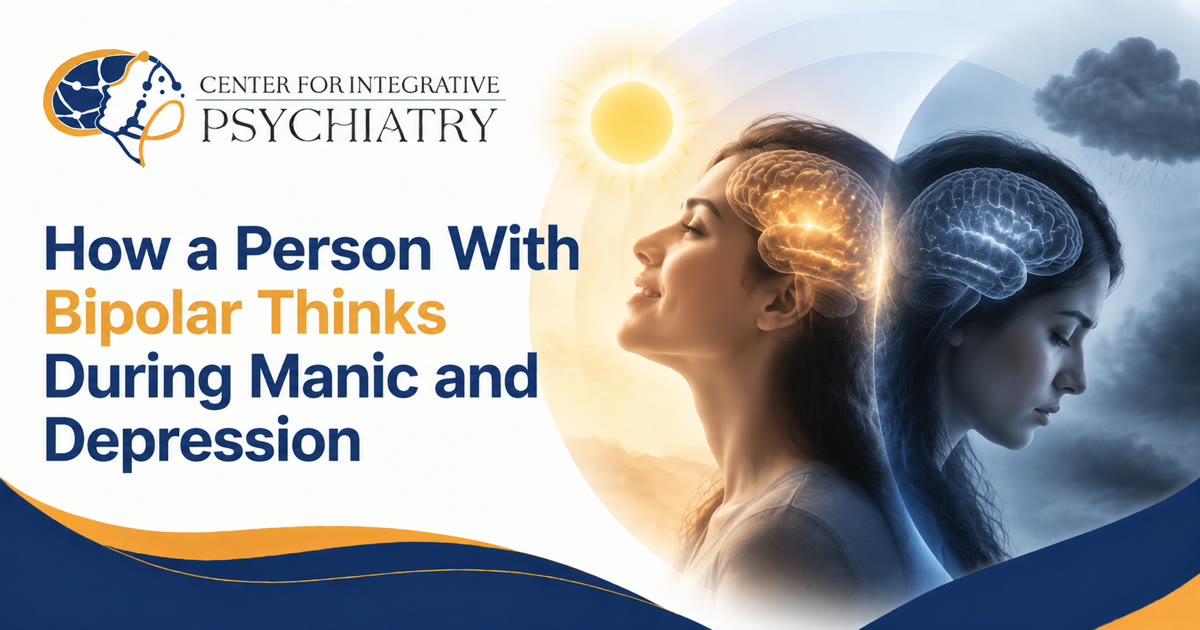
Bipolar disorder dramatically alters cognitive processing, mood stability, and daily perceptions. Have you ever wondered how a person with bipolar thinks during shifting episodes? Manic highs and depressive lows generate distinctly different internal thought patterns. Understanding these psychological shifts promotes deeper empathy and more effective clinical care.
At Texas CIP, we provide compassionate and comprehensive psychiatric care for individuals navigating Bipolar Disorder. Our multidisciplinary framework combines Mental Health Therapy, Functional Psychiatry, Medication Management, and accessible Telehealth services across Texas. We also offer advanced interventions like Transcranial Magnetic Stimulation (TMS), Nutritional Psychiatry, and Life Coaching to help stabilize mood transitions and restore emotional equilibrium.
What Are People With Bipolar Disorder Like? Unpacking Cognitive Reality
People with bipolar disorder possess diverse personalities, creative talents, and personal values that exist completely independent of their diagnosis. Bipolar disorder is not a character trait or personality defect. It is a complex neurobiological condition characterized by dramatic episodic shifts in mood, energy, and cognition.
During stable periods, individuals think, reason, and relate to others just like anyone else. However, when an acute episode begins, neurochemical changes fundamentally reshape their cognitive filter.
The brain alters how it processes risk, evaluates self-worth, and interprets environmental stimuli. Recognizing this distinction helps loved ones separate the person from the symptoms of the illness.
How A Person With Bipolar Thinks During Mania And Hypomania
Mania and hypomania accelerate internal mental activity to intense levels. To understand how a person with bipolar thinks during an elevated state, imagine thoughts racing faster than the mind can organize them. Neurotransmitters like dopamine and norepinephrine surge, creating an overwhelming sense of cognitive speed, euphoria, or intense agitation.
During manic or hypomanic states, cognitive patterns commonly display specific features:
- Racing Thoughts and Flight of Ideas: Thoughts bounce rapidly from one concept to another, making sustained focus difficult.
- Grandiosity and Inflated Confidence: Beliefs in superhuman capabilities, sudden business schemes, or divinely inspired missions often dominate thinking.
- Underestimation of Risk: The prefrontal cortex struggles to evaluate long-term consequences, leading to reckless spending, impulsive sexual choices, or unsafe driving.
- Sensory Overdrive: Lights appear brighter, sounds seem louder, and everyday experiences take on profound, symbolic significance.
- Irritability When Interrupted: When others cannot keep up with their rapid speech or question their judgment, individuals often react with sharp frustration.
Thinking Patterns During Depressive Episodes
When the pendulum swings toward depression, the cognitive landscape shifts in the opposite direction. Mental processing slows dramatically, a phenomenon known clinically as psychomotor retardation. Thoughts become heavy, sluggish, and shrouded in pervasive gloom.
During depressive phases, the inner dialogue turns severely self-critical. The mind frequently convinces the individual that they are a burden to their family, that past mistakes are unforgivable, and that future recovery is impossible. Prefrontal connectivity weakens, impairing memory, concentration, and executive decision-making. In severe cases, this deep despair can trigger suicidal ideation, requiring immediate clinical intervention and stabilization.
Do Bipolar People Feel Emotions Stronger?
Clinical research indicates that people with bipolar disorder experience emotional hyper-reactivity across both positive and negative spectrums. Their affective response systems react more intensely to relational conflict, perceived rejection, and exciting opportunities.
This emotional intensity is not an intentional overreaction. Biological differences in the amygdala and limbic networks amplify sensory and emotional inputs. When happiness hits, it feels like pure euphoria; when sorrow arrives, it feels like bottomless despair.
Integrative care approaches like naturopathy and functional psychiatry help regulate these heightened neurobiological stress responses.
Does A Bipolar Person Know Right From Wrong During Mood Episodes?
In most circumstances, individuals retain their fundamental moral framework and understand general concepts of right and wrong. However, acute mania significantly impairs impulse inhibition and executive judgment.
During severe manic episodes or secondary psychotic states, cognitive insight deteriorates substantially. A person may recognize that an action is risky in the abstract, but their manic brain rationalizes it as justified or necessary. When co-occurring conditions like Schizophrenia and Psychosis or severe PTSD emerge, reality testing can fail. Once mood stability returns, individuals frequently experience immense shame, grief, and regret regarding their manic behavior.
Can A Bipolar Person Seem Normal Between Episodes?
The answer is yes. Most individuals with bipolar disorder experience extended periods of euthymia, which is a clinical term for a balanced, baseline mood. During euthymic phases, cognitive function normalizes and emotional stability returns. Daily routines can proceed smoothly. Many people hold demanding careers, nurture thriving marriages, and raise happy families. However, maintaining this outward stability often requires effort. This may include good sleep habits, stress management, and regular symptom monitoring.
How Does Bipolar Affect Everyday Life And Functioning?
Living with cyclical mood shifts influences every aspect of an individual's personal and professional sphere. When examining how does bipolar affect everyday life, disruptions to sleep cycles, energy levels, and social relationships stand out as primary hurdles.
Understanding bipolar disorder reveals why managing everyday responsibilities can suddenly feel chaotic. During depressive dips, basic tasks like answering emails or showering feel insurmountable. Conversely, during hypomania, excessive commitments are made that become unmanageable once energy crashes. Learning about bipolar disorder and meditation techniques can provide additional insight into approaches that help manage bipolar symptoms.
Bipolar disorder also frequently co-occurs with other mental health challenges:
- Anxiety Disorders and OCD: Intrusive worries and obsessive patterns often intensify mood destabilization.
- ADHD: Overlapping executive dysfunction can complicate attention, organization, and impulse control.
- Depression and Grief and Loss: Mourning life disruptions caused by previous episodes can prolong depressive cycles.
Addressing these overlapping challenges requires a whole-person perspective that targets biological, psychological, and lifestyle factors simultaneously.
Can Bipolar Person Live A Normal Life With Proper Care?
With early intervention and consistent treatment of bipolar disorder in Dallas, individuals can lead rich, fulfilling, and productive lives. It is a lifelong condition, but it is highly treatable.
Achieving lasting stability involves a layered treatment strategy:
- Medication Management: Mood stabilizers, atypical antipsychotics, and targeted pharmaceuticals form the foundational biological safety net.
- Mental Health Therapy: Cognitive behavioral and interpersonal therapies help individuals recognize prodromal symptoms, process emotional pain, and rebuild self-esteem.
- Nutritional Psychiatry: Addressing gut health, micronutrient deficiencies, and cellular inflammation supports long-term neurochemical balance.
- Transcranial Magnetic Stimulation (TMS): Advanced, non-invasive neurostimulation provides transformative relief for persistent, treatment-resistant depressive episodes.
- Life Coaching: Practical habit engineering assists clients in establishing stable sleep routines, boundary setting, and career productivity.
Final Thoughts
Understanding how a person with bipolar thinks demystifies the dramatic shifts between mania and depression. While manic states accelerate thoughts into impulsive overdrive, depressive episodes weigh down the mind with debilitating doubt and exhaustion. Recognizing these patterns empowers individuals and families to replace judgment with compassionate, evidence-based care.
If you or someone you care about is struggling with bipolar mood swings, compassionate support is available. Contact Texas CIP today to schedule a comprehensive evaluation. Through our integrated Mental Health Therapy, Functional Psychiatry, Medication Management, and virtual Telehealth appointments, our dedicated psychiatrists in Dallas will help you achieve lasting balance, clarity, and peace of mind.
Frequently asked questions
- Who is most likely to develop bipolar disorder?
- Individuals with a first-degree relative diagnosed with the condition have a significantly higher risk, with symptoms typically emerging between late adolescence and early adulthood.
- What causes sudden changes in bipolar thinking?
- Shifts are driven by biological circadian disruptions, neurochemical fluctuations, hormonal shifts, sleep deprivation, and acute psychological stressors.
- When should someone seek immediate clinical intervention for bipolar episodes?
- You should seek immediate medical help if an individual experiences total sleeplessness for several days, displays dangerous impulsivity, exhibits psychotic hallucinations, or expresses suicidal thoughts.
- Where can individuals across Texas receive comprehensive bipolar care?
- Patients across the state can access specialized psychiatric evaluations, therapy, and medical support through Texas CIP's in-person clinics and secure Telehealth platform, including access to psychiatry in Dallas.
- Why do bipolar people feel emotions stronger than neurotypical individuals?
- Hyperactive neural pathways within the limbic system and decreased prefrontal regulatory control cause emotional stimuli to trigger amplified neurobiological responses.
- How does bipolar affect everyday life without professional treatment?
- Without clinical support, untreated bipolar disorder can lead to relationship breakdowns, career instability, financial hardship, substance dependency, and severe cognitive strain.
This article is for education and general information. It isn't a substitute for individual medical advice, diagnosis, or treatment from a qualified clinician.
Webmaster
Articles on this blog are educational resources from the Center for Integrative Psychiatry, a multidisciplinary clinic offering evidence-based psychiatry, therapy, TMS, and integrative care for Texans since 2015. They are not medical advice — always talk with your own clinician about your care.
Meet the CIP team