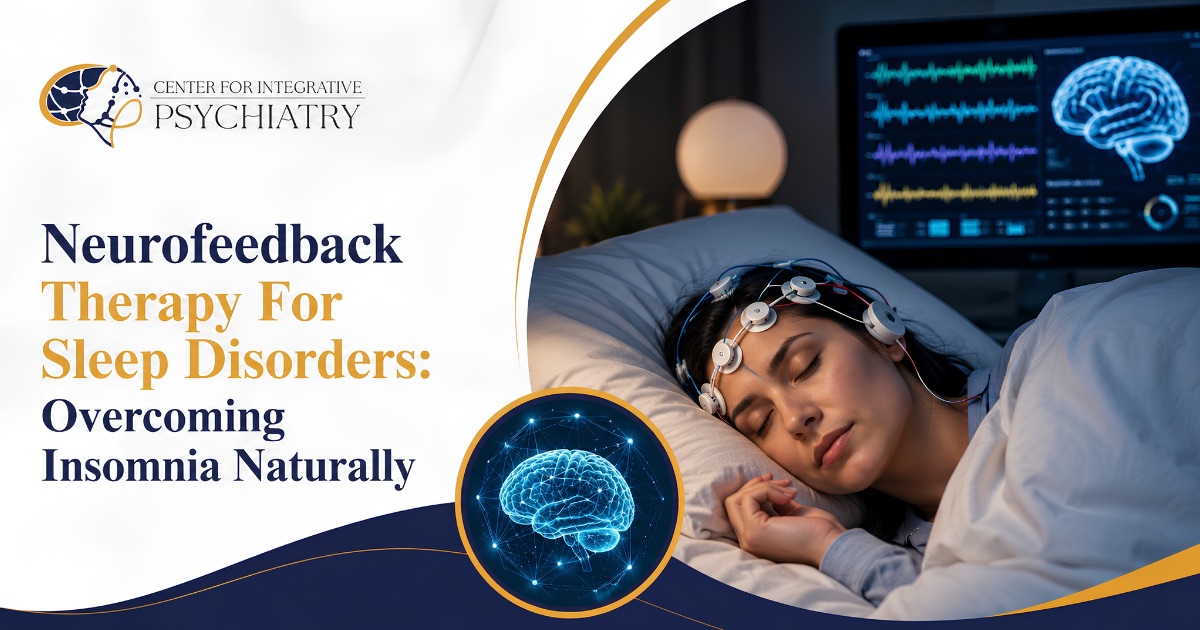
Many people lie awake at night staring at the ceiling. Chronic sleep issues can drain your energy and ruin your daily productivity. Are you wondering if neurofeedback therapy for sleep disorders can restore your natural sleep cycle? This advanced brain training method offers a safe way to quiet your mind.
At Texas CIP, we help you overcome sleep challenges through integrative neurological care. Our experienced clinical team offers expert mental health therapy to address the emotional roots of insomnia. We combine advanced therapies like Neurofeedback and TMS with supportive tools like Medication Management and secure Telehealth.
Under professional clinical supervision, we also provide Functional Psychiatry, Naturopathy, and Nutritional Psychiatry. If sleep struggles are tied to Bipolar Disorder, ADHD, Depression, or severe Anxiety Disorders, our providers will create a personalized path to help you recover.
How Neurofeedback Therapy For Sleep Disorders Restores Restful Nights
Our brains produce different electromagnetic frequencies called brainwaves depending on our level of consciousness. When these electrical frequencies become dysregulated, falling and staying asleep becomes incredibly difficult. Through targeted retraining, you can teach your central nervous system to self-regulate and enter deep states of rest. If you are unfamiliar with this approach, learning how neurofeedback therapy retrains brain activity can help you better understand why it is used to improve sleep quality.
To help you understand how this works, we must look at the different brainwaves. Your clinician will evaluate your brainwaves to see where your balance has been disrupted:
- Beta Waves: Active when you are alert but can cause racing thoughts when overstimulated.
- Alpha Waves: Help your mind bridge the gap between wakefulness and deep relaxation.
- Theta Waves: Encourage the transition into the light stages of deep restorative sleep.
- Delta Waves: Essential for deep physical recovery and deep sleep states.
The Science Behind Neurofeedback For Sleep Improvement
Clinical research shows that sleep disturbances are often caused by poor communication within neural pathways. Instead of introducing external substances into your system, neurofeedback acts like a mirror for your brain activity. This allows the brain to observe its own patterns and build healthier, more stable habits over time.
At Texas CIP, we maximize the benefits of neurofeedback for sleep improvement by looking at your biological health. We provide functional psychiatry and nutritional psychiatry to check for underlying biochemical or hormonal imbalances. Correcting nutritional deficiencies supports the brain's natural healing and makes your training sessions more effective.
When your brain waves are balanced, you will notice significant improvements in your overall rest. Retraining your neural pathways typically leads to several long-term physical changes:
- Reduced Sleep Latency: Falling asleep much faster once your head hits the pillow.
- Fewer Nighttime Wakings: Staying asleep longer without waking up in the middle of the night.
- Better Sleep Efficiency: Experiencing deeper sleep states for complete morning rejuvenation.
- Lower Daytime Fatigue: Waking up feeling genuinely rested and ready for your daily tasks.
Why Neurofeedback Insomnia Training Is Highly Effective
Chronic sleeplessness is frequently driven by an overactive threat response system. If you are struggling with neurofeedback insomnia, your brain might be stuck in a state of hyperarousal. This state makes it impossible to quiet your mind when it is time to rest.
Our specialists use neurofeedback therapy for sleep disorders to target the specific areas of the brain responsible for this hyperarousal. We naturally combine these training protocols with expert Mental Health Therapy and Life Coaching. This dual approach addresses both the physical brainwave imbalances and the emotional stressors that keep you awake.
By actively calming your central nervous system, you can break the frustrating cycle of sleepless nights. Retraining the brain helps manage various underlying causes of chronic sleep issues:
- Calming The Threat System: Rewiring the hyperactive pathways that trigger late-night panic.
- Cognitive Restructuring: Addressing the fear of not sleeping during evening hours.
- Medication Management Coordination: Safely weaning off sleep aids under expert supervision.
- Lifestyle Audits: Developing daily habits that support natural melatonin production.
What To Expect From A Professional Neurofeedback Therapist
Working with a qualified clinician is essential to ensure your training protocols are entirely safe and effective. A licensed therapist knows how to interpret complex EEG data and adjust training parameters in real time. This professional guidance protects you from overstimulation and ensures you achieve lasting clinical results.
During your sessions at Texas CIP, our expert neurofeedback therapist will guide you through a highly structured process. We prioritize your comfort and safety every step of the way to ensure a positive therapeutic experience. Your personalized clinical journey will typically include the following steps:
- Quantitative EEG Mapping: Recording your baseline brainwave activity to find specific imbalances.
- Custom Protocol Design: Adjusting the software to target your exact sleep disruption patterns.
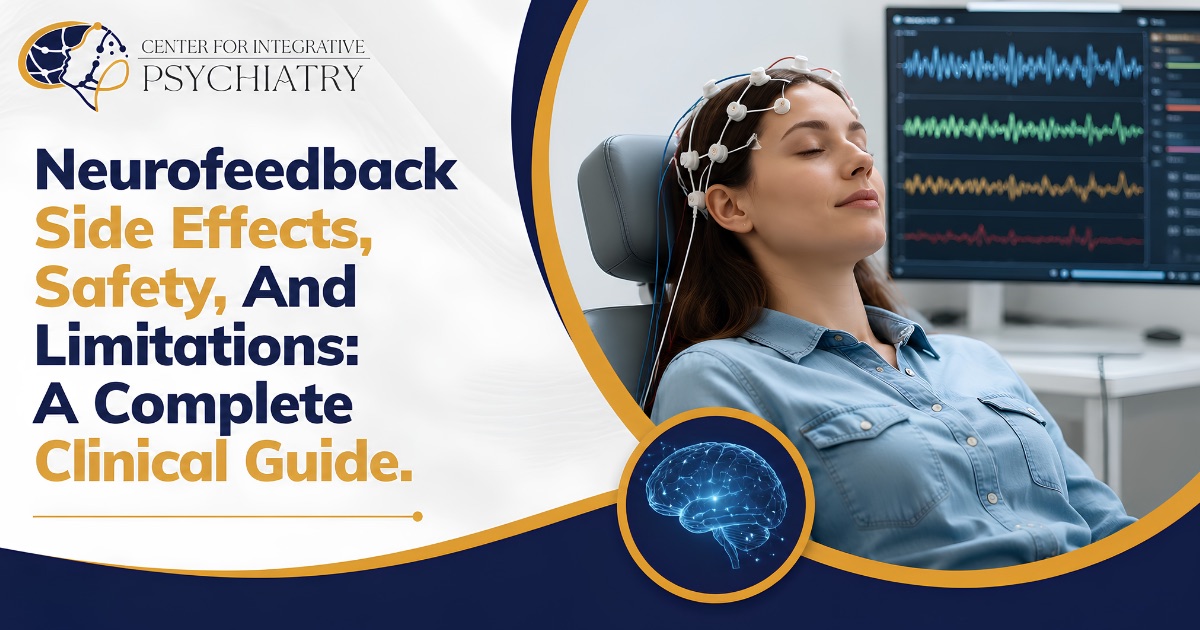
- Real-Time Sensory Feedback: Watching a screen or listening to sounds that respond to your brainwaves.
- Regular Progress Reviews: Tracking your sleep improvements over a series of training sessions.
Finding Expert Care With A Neurofeedback Therapist Texas Residents Can Trust
If you are ready to reclaim your nights, searching for neurofeedback near me is an excellent starting point. Choosing a multi-specialty clinical center ensures that your brain training is backed by a collaborative team of medical experts. This comprehensive care model addresses all facets of your physical and mental health.
At Texas CIP, we serve as your centralized home for complete neurological and psychiatric care. Our skilled neurofeedback therapist Texas team designs highly customized protocols to support your unique neurobiology. We make it easy to access these advanced tools through our secure telehealth platform and in-person consultation options.
We also recognize that sleep issues often co-occur with complex conditions like PTSD, ADHD, Depression, OCD, or Bipolar Disorder. By treating the whole person under one roof, we help you build true cognitive resilience and lasting wellness.
Restoring Your Natural Sleep Rhythms With Texas CIP
Struggling with sleep issues can make daily life feel incredibly difficult and overwhelming. Fortunately, utilizing neurofeedback therapy for sleep disorders offers a safe, science-backed way to retrain your brain for restful nights. At Texas CIP, our team is committed to providing the highly personalized, integrative care you deserve to restore your physical well-being.
Are you ready to optimize your sleep and live your life with authentic energy and focus? Contact Texas CIP today to schedule your comprehensive neurological consultation.
Frequently asked questions
- Who should consider neurofeedback therapy for sleep disorders?
- Anyone who struggles with chronic insomnia, restless sleep, frequent nighttime awakenings, or sleep disruptions caused by conditions like ADHD, PTSD, or Anxiety Disorders can benefit from this non-invasive therapy.
- What is the main benefit of neurofeedback for sleep improvement?
- The primary benefit is that it trains your brain to self-regulate naturally without relying on sedative medications, allowing you to experience deeper and more restorative sleep phases.
- When will I start noticing the effects of neurofeedback insomnia training?
- Most clients begin to notice improvements in their sleep patterns within five to ten consistent sessions, though a full protocol is recommended for permanent results.
- Where can I find a trusted neurofeedback therapist Texas has to offer?
- You can access highly specialized, board-certified clinicians and integrative psychiatric services both in-person and through secure Telehealth consultations at Texas CIP.
- Why is neurofeedback safe when combined with other psychiatric therapies?
- It is safe because it does not introduce chemicals or electrical currents into the brain, making it fully compatible with Medication Management, TMS, and traditional psychotherapy.
- How does a neurofeedback therapist customize your brain training sessions?
- A clinician utilizes a non-invasive quantitative EEG brain map to locate your specific neurological imbalances and program a custom feedback protocol tailored to your brainwaves.
This article is for education and general information. It isn't a substitute for individual medical advice, diagnosis, or treatment from a qualified clinician.
Webmaster
Articles on this blog are educational resources from the Center for Integrative Psychiatry, a multidisciplinary clinic offering evidence-based psychiatry, therapy, TMS, and integrative care for Texans since 2015. They are not medical advice — always talk with your own clinician about your care.
Meet the CIP team