When traditional antidepressant medications fail to lift the heavy fog of major depressive disorder, novel psychiatric therapies can offer renewed hope. Many patients exploring esketamine nasal spray want to know what to expect during their visits, particularly regarding potential adverse reactions and physical sensations. If you or a loved one is considering this breakthrough therapy, you may wonder: what are the most common Spravato side effects, and how can you prepare for a comfortable, safe experience? Understanding the physiological impact of esketamine helps demystify the treatment process so you can make confident, informed medical decisions.
What Does Spravato Do and How Does It Work in the Brain?
What does Spravato do to relieve persistent depression? Unlike traditional antidepressants that target monoamines like serotonin, Spravato (esketamine) acts directly on the brain's glutamate neurotransmitter system by antagonizing NMDA receptors. This rapid neurochemical action stimulates brain-derived neurotrophic factor, helping dormant mood-regulating neural circuits rebuild synaptic connections and restore emotional communication pathways within hours rather than weeks.
Understanding how does spravato work requires looking beyond conventional psychiatric models. Most selective serotonin reuptake inhibitors (SSRIs) and serotonin-norepinephrine reuptake inhibitors (SNRIs) require four to eight weeks to alter downstream gene expression and receptor sensitivity. In contrast, esketamine triggers a swift glutamate surge that binds to AMPA receptors, prompting immediate cellular repair and synaptogenesis.
The federal Food and Drug Administration (FDA) approved this medication specifically for adults facing treatment-resistant depression as well as major depressive disorder with acute suicidal thoughts. Because of its fast-acting nature, this therapy provides a vital clinical bridge for individuals who have spent years cycling through unsuccessful medication trials without finding relief. Patients can learn more about Spravato treatment for depression and the clinical assessment involved in determining whether this therapy is appropriate.
What Are the Most Common Spravato Side Effects?
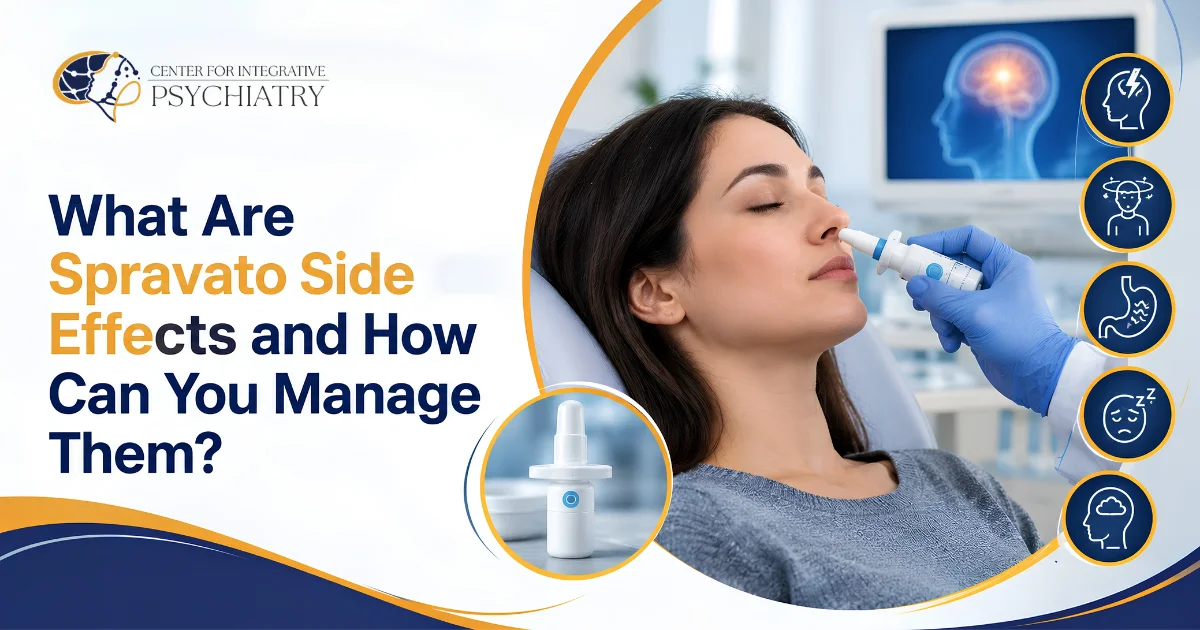
The most common Spravato side effects include temporary dissociation, dizziness, nausea, sedation, vertigo, elevated blood pressure, and headache. These reactions typically peak within forty minutes of nasal administration and subside significantly within two hours, which is why certified clinical monitoring is mandatory during every treatment session.
Clinical trials and real-world safety data highlight several predictable physiological and psychological responses that patients may experience during administration:
- Dissociation, perceptual alterations, and feeling disconnected from your body, environment, or passage of time.
- Sedation, drowsiness, and profound physical relaxation that can make standing or walking difficult initially.
- Transient blood pressure elevation, with systolic and diastolic numbers temporarily rising shortly after dosing.
- Nausea, vomiting, and a bitter, metallic taste in the back of the mouth from nasal drainage.
- Vertigo, lightheadedness, and mild unsteadiness that gradually clears as the medication metabolizes.
- Hypoesthesia, tingling sensations around the lips or fingers, and mild post-session tension headaches.
Because these symptoms follow a predictable timeline, medical staff can actively manage each response to ensure patient safety and comfort. A psychiatric provider can also explain how these effects fit into an individual's treatment plan and whether psychiatric services in Dallas may be appropriate.
How Long Does Spravato Last During and After Treatment?
Acute side effects like perceptual shifts and sedation typically peak around forty minutes and resolve within ninety to one hundred twenty minutes. Meanwhile, the therapeutic antidepressant benefits generally take effect within twenty-four hours and can last for several days or weeks.
The acute physical impact of esketamine is relatively brief because the body rapidly metabolizes the compound. Under the FDA Risk Evaluation and Mitigation Strategy (REMS) program, every patient remains in the clinic for a mandatory two-hour post-administration observation period. By the end of this window, blood pressure stabilizes, perceptual clarity returns, and sedation clears. Because subtle cognitive slowing can linger, patients cannot operate a motor vehicle or heavy machinery until the morning following their appointment.
In terms of therapeutic longevity, a full treatment course follows a structured schedule:
- An initial induction phase consisting of two sessions per week for the first four weeks.
- A transitional tapering phase with one session per week for weeks five through eight.
- An ongoing maintenance phase spaced to once every one to two weeks based on sustained clinical progress.
This strategic cadence reinforces newly formed neural pathways, helping patients maintain durable symptom reduction over the long term.
Spravato Anxiety and Emotional Shifts: Can It Make Depression Worse?
While Spravato is clinically proven to reduce depressive symptoms, some patients experience temporary Spravato anxiety or emotional vulnerability during the initial dissociative phase. These acute sensations stem from altered sensory perception rather than worsening illness and typically resolve as the medication clears the body.
The sensation of dissociation can be unfamiliar and occasionally disorienting for first-time patients. When sights, sounds, or body awareness temporarily shift, individuals who struggle with a strong need for situational control may experience an acute spike of panic. Clinical teams help patients navigate these transient moments by offering reassurance, verbal grounding, and a peaceful environment.
In rare instances, patients may experience emotional volatility or tearfulness during the days following an appointment. This reaction usually occurs because esketamine disrupts chronic emotional blunting, allowing long-repressed feelings to surface before mood stabilization fully sets in. With continuous psychiatric oversight, these temporary emotional shifts give way to improved cognitive clarity and mood resilience.
People experiencing persistent depression alongside anxiety may benefit from an individualized assessment of their symptoms and treatment history. Exploring psychiatric care options for depression and related conditions can help patients understand the types of support available.
Is Spravato Addictive or Habit-Forming?
Because esketamine is a chemical derivative of ketamine, it is classified as a Schedule III controlled substance with potential for misuse. However, the risk of chemical addiction is remarkably low under the mandatory Risk Evaluation and Mitigation Strategy program, which prohibits home use and requires strict in-office administration.
The federal REMS protocol was established specifically to prevent drug diversion, recreational abuse, and dependency. Patients cannot pick up esketamine at a retail pharmacy or self-administer the medication at home under any circumstances. Every nasal spray device is opened, administered, and disposed of directly inside a certified medical clinic under clinical supervision.
Furthermore, therapeutic esketamine dosing is carefully calibrated to induce neuroplasticity rather than continuous euphoria. Treatments occur at spaced intervals rather than daily dosing, preventing the neurochemical tolerance and physical dependence often seen with addictive substances.
Practical Strategies for Managing Spravato Side Effects
Managing side effects effectively involves thoughtful pre-treatment preparation, continuous clinical monitoring, and calming sensory adjustments. Simple interventions like avoiding solid foods before appointments, bringing noise-canceling headphones, and practicing diaphragmatic breathing significantly reduce nausea, sensory overload, and procedural anxiety during sessions.
Patients and clinical teams can implement several practical steps before, during, and after each administration to optimize physical comfort:
- Fasting from solid food for at least two hours and avoiding clear fluids for thirty minutes prior to dosing to minimize nausea.
- Asking your psychiatric provider for a pre-treatment antiemetic medication, such as ondansetron, if you have a sensitive stomach.
- Wearing loose, comfortable clothing, using an eye mask, and listening to instrumental music to create a restful sensory experience.
- Practicing slow, diaphragmatic breathing to regulate heart rate and calm nervous system tension during peak medication absorption.
- Bringing a trusted driver to transport you safely home and planning a restful, quiet evening without professional obligations.
By taking these proactive measures, patients can transform their treatment sessions into a relaxed, therapeutic retreat.
Comprehensive Spravato Treatment and Psychiatric Care at Texas CIP
For individuals seeking innovative, compassionate relief from treatment-resistant depression in Texas, the Center for Integrative Psychiatry provides an elevated standard of patient-centered care. Texas CIP recognizes that real healing requires looking beyond isolated symptoms to treat the entire person with advanced clinical expertise and individualized attention.
At Texas CIP, clinical care begins with an unhurried, comprehensive diagnostic evaluation to determine whether an individual is an appropriate candidate for esketamine therapy. Patients participating in our dedicated Spravato treatment in Dallas receive care in peaceful, private treatment rooms designed to foster relaxation and psychological safety. The multidisciplinary psychiatrists in Dallas monitor vital signs throughout every visit, ensuring you feel supported at every step of your recovery.
The integrated clinical approach at Texas CIP incorporates multiple whole-person benefits:
- Comprehensive psychiatric diagnostic assessments to evaluate whether esketamine or alternative treatments like TMS best suit your clinical history.
- Rigorous medical monitoring before, during, and after each nasal spray administration in strict accordance with federal REMS safety standards.
- Coordinated psychotherapy integration to help you process emotional insights and build practical coping tools while neuroplasticity is elevated.
- Functional and nutritional psychiatry reviews that optimize sleep architecture, metabolic health, and nutritional factors influencing brain function.
- Convenient access across Texas, with modern clinic locations in Coppell and North Dallas alongside secure telepsychiatry options for follow-up care.
Patients who prefer to visit a local practice can explore the psychiatric clinic in North Dallas to learn more about the location and available care options.
By pairing breakthrough neuropharmacology with whole-person medical support, Texas CIP helps patients overcome long-standing treatment barriers and rediscover emotional vitality.
Reclaiming Your Life Beyond Treatment-Resistant Depression
Navigating clinical depression that fails to respond to standard medications can be physically and emotionally exhausting, but you do not have to abandon hope for genuine relief. While adverse reactions like dissociation and lightheadedness can sound intimidating initially, understanding how to prepare for and manage these temporary responses allows you to approach care with confidence. With experienced clinical guidance and personalized medical attention, transformative recovery is well within reach.
If you are ready to explore whether esketamine therapy is right for your mental health journey, compassionate support is available right now. Connect with our dedicated medical team to take your first step toward healing by choosing to schedule an appointment online.
Medical Disclaimer
The information provided in this article is for educational and informational purposes only and does not constitute formal medical or psychiatric advice, diagnosis, or clinical treatment. Always consult a qualified physician, psychiatrist, or licensed healthcare provider regarding any mental health condition or therapeutic intervention. If you are experiencing an acute mental health emergency or thoughts of self-harm, please dial 988 for the Suicide & Crisis Lifeline or visit the nearest hospital emergency room immediately.
Frequently asked questions
- What should I avoid eating or drinking before a Spravato session?
- Patients must avoid eating solid food for at least two hours and refrain from drinking liquids for thirty minutes before their appointment. This fasting window significantly lowers the likelihood of experiencing nausea, acid reflux, or vomiting during peak medication absorption.
- Who is eligible to receive Spravato treatment in Texas?
- Adults diagnosed with major depressive disorder who have tried at least two different antidepressant medications at adequate doses and durations without sufficient improvement may qualify. Individuals experiencing major depression with acute suicidal ideation or behavior may also be eligible for rapid stabilization.
- Why is there a mandatory two-hour observation period after taking Spravato?
- The FDA REMS program mandates a two-hour clinical observation window to monitor patients while acute side effects peak and resolve. Clinical staff track blood pressure, verify that dissociation and sedation have cleared, and ensure patient safety before discharge.
- How soon can patients drive after an esketamine administration?
- Patients cannot drive, operate machinery, or engage in hazardous activities until the day after an administration following a full night of restful sleep. You must arrange for a trusted family member, friend, or rideshare service to transport you home from every appointment.
- Where can patients in North Texas find certified Spravato REMS centers?
- Patients throughout North Texas can access certified in-office Spravato therapy at Texas CIP clinic locations in Coppell and North Dallas. The practice provides specialized administration suites equipped with complete medical monitoring and dedicated clinical supervision.
This article is for education and general information. It isn't a substitute for individual medical advice, diagnosis, or treatment from a qualified clinician.
Webmaster
Articles on this blog are educational resources from the Center for Integrative Psychiatry, a multidisciplinary clinic offering evidence-based psychiatry, therapy, TMS, and integrative care for Texans since 2015. They are not medical advice — always talk with your own clinician about your care.
Meet the CIP team