Finding an effective depression treatment can feel overwhelming after trying multiple medications. Advanced medical innovations have transformed modern psychiatric brain stimulation over recent decades. If you are considering non-invasive care, you might ask how long has tms been around. Have you wondered if this proven technology can help you overcome treatment-resistant depression?
At Texas CIP, we deliver compassionate, integrated psychiatric care designed to restore cognitive balance and emotional health. Our comprehensive clinical services include TMS (Transcranial Magnetic Stimulation), Medication Management, Mental Health Therapy, Functional Psychiatry, Nutritional Psychiatry, Naturopathy, Life Coaching, and convenient Telehealth options. Whether you are living with Depression, Anxiety Disorders, OCD, PTSD, Bipolar Disorder, ADHD, Grief and Loss, or Schizophrenia and Psychosis, our multidisciplinary psychiatric team in Dallas builds personalized care plans that target root biological causes.
How Long Has TMS Been Around?
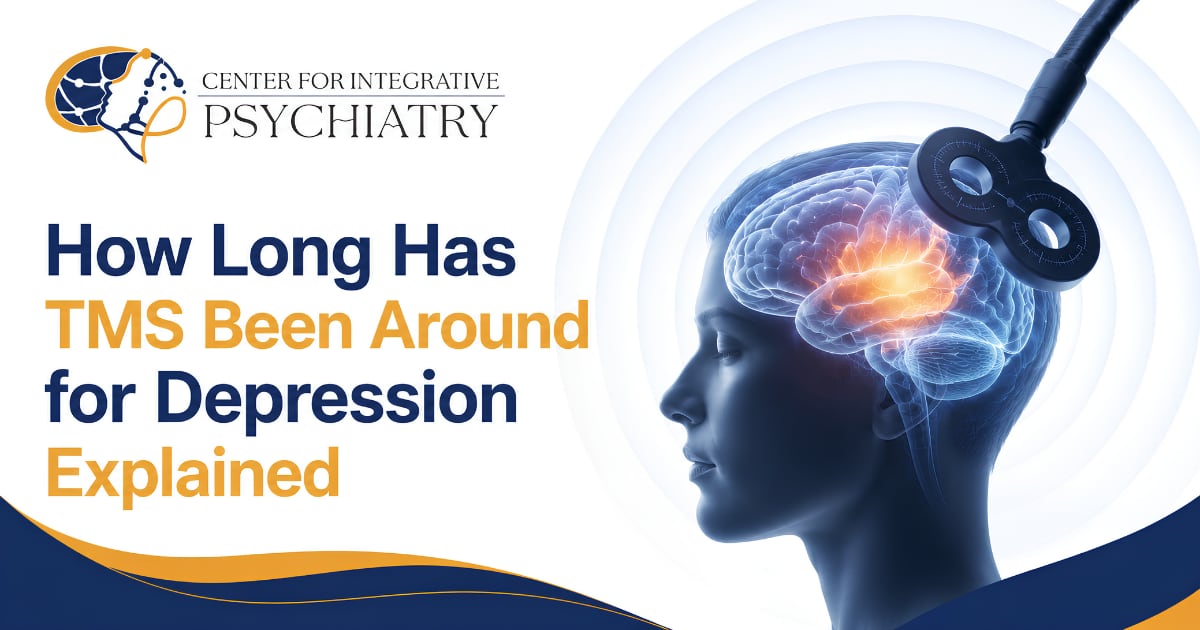
To understand how long has tms been around, it helps to examine the timeline of modern neurostimulation science. Transcranial Magnetic Stimulation was first developed in 1985 by Dr. Anthony Barker and his team at the University of Sheffield in the United Kingdom.
While the fundamental magnetic technology was created in the mid-1980s, decades of rigorous clinical trials preceded its widespread adoption. The United States Food and Drug Administration (FDA) officially cleared TMS for Major Depressive Disorder in 2008. This landmark approval established magnetic stimulation as a safe, non-invasive alternative for individuals who did not find relief through standard antidepressant medications.
Tracing the evolution of magnetic brain therapy demonstrates its long-term safety record and scientific maturation:
- 1985 Development: Dr. Anthony Barker successfully demonstrates the first non-invasive magnetic stimulation of the human cerebral cortex.
- 1990s Research Phase: Clinical researchers across the globe explore how repetitive magnetic pulses influence neural pathways and mood regulation centers.
- 2008 FDA Clearance: The FDA grants initial clearance for TMS as a safe treatment for treatment-resistant major depression in adults.
- Expanded Indications: Subsequent FDA clearances approve TMS for Obsessive-Compulsive Disorder (OCD), anxious depression, and smoking cessation.
Does TMS Work And What Is The Success Rate?
Patients exploring advanced psychiatric treatments frequently ask does tms work for severe, persistent depressive episodes. Decades of clinical research and real-world outcomes confirm that magnetic brain stimulation is highly effective for major mood disorders.
Clinical studies demonstrate an impressive tms therapy success rate in patients who have failed multiple antidepressant trials. Approximately 50% to 60% of individuals with treatment-resistant depression experience a significant reduction in symptoms, while up to one-third achieve full remission. These robust tms results show that magnetic stimulation provides tangible relief even when traditional pharmacology proves insufficient.
Understanding why magnetic stimulation delivers positive outcomes requires looking at its underlying neurological mechanism:
- Targeted Prefrontal Activation: Magnetic pulses stimulate underactive neurons in the dorsolateral prefrontal cortex, the brain region responsible for mood regulation.
- Promoting Neuroplasticity: Repetitive stimulation encourages new synaptic connections, helping the brain rebuild healthier communication networks.
- Non-Systemic Benefits: Unlike oral medications, magnetic stimulation does not circulate through the bloodstream, eliminating side effects like weight gain or sexual dysfunction.
- Durable Symptom Reduction: Clinical follow-up studies confirm that positive outcomes often persist for twelve months or longer after completing a full care cycle.
How Fast Does TMS Work And When Does It Start?
When embarking on brain stimulation therapy, patients naturally want to know how fast does TMS work to relieve emotional heaviness. Because neuroplasticity is a gradual biological process, therapeutic changes develop progressively over several weeks rather than overnight.
Many patients ask specifically when does TMS start working during their daily treatment schedule. While individual responses vary based on baseline brain chemistry, most patients notice subtle shifts in energy, sleep quality, and mental clarity between the second and fourth week of care.
Monitoring your therapeutic progression helps set realistic expectations for your recovery journey:
- Weeks 1 to 2: Initial physiological shifts occur as neural pathways react to magnetic stimulation; subtle improvements in sleep or energy may emerge.
- Weeks 3 to 4: Noticeable mood stabilization typically begins, with reductions in chronic sadness, brain fog, and emotional fatigue.
- Weeks 5 to 6: Maximum therapeutic response occurs as brain circuits consolidate new synaptic connections, leading to sustained symptom relief.
- Tapering Phase: Final sessions reinforce long-term neuroplastic gains, ensuring the brain maintains its healthy communication patterns.
Understanding what happens after TMS therapy can also help patients prepare for the next stage of their treatment journey.
How Many TMS Sessions Are Needed?
Understanding the structure of care clarifies how many TMS sessions are needed for full biological benefit. Standard clinical protocols require a structured sequence of daily sessions to induce lasting neuroplastic transformation in mood pathways.
A complete course of therapy usually involves 36 total sessions delivered over six to nine weeks. Patients often ask how long does tms treatment last during each office visit. Individual daily sessions are brief, typically lasting only 18 to 20 minutes, allowing patients to resume normal daily activities immediately afterward.
Key structural aspects of a standard neurostimulation schedule include the following details:
- Daily Frequency: Sessions take place five days per week, Monday through Friday, to maintain consistent neural activation.
- Acute Treatment Phase: The primary 30 sessions focus on active neuroplastic conditioning of underactive prefrontal brain regions.
- Tapering Phase: The final 6 sessions are gradually spaced out over two to three weeks to transition the brain into long-term maintenance.
- Zero Recovery Time: Because treatment requires no sedation or anesthesia, patients can drive themselves home or return to work right away.
Comprehensive Care At Texas CIP For Lasting Mental Health
Achieving complete recovery from major depression requires addressing both brain signaling and overall physiological health. At Texas CIP, we combine cutting-edge brain stimulation with holistic medical methodologies to optimize your long-term wellness.
Our integrative approach pairs TMS with Functional Psychiatry, Nutritional Psychiatry, and Naturopathy to evaluate gut health, hormonal balance, and cellular inflammation. Combining precise Medication Management with Mental Health Therapy and Life Coaching ensures that positive neuroplastic gains are paired with psychological resilience and healthy daily routines.
Our multidisciplinary services work together to rebuild complete biological vitality:
- Precision TMS Protocols: Delivering targeted magnetic stimulation tailored to your specific neurological mapping and symptom profile.
- Nutritional Evaluations: Correcting underlying micronutrient deficiencies and metabolic strain that deplete neurotransmitter production.
- Evidence-Based Psychotherapy: Providing structured therapy to reframe negative thought patterns while brain neuroplasticity is heightened.
- Telehealth Accessibility: Offering convenient virtual consultations to monitor progress and support ongoing medication strategies.
Final Thoughts
Understanding how long has TMS been around highlights nearly four decades of scientific development and over fifteen years of FDA-cleared clinical success. From its early scientific origins in 1985 to modern precision protocols, non-invasive magnetic stimulation has established itself as a safe, effective foundation for depression recovery.
At Texas CIP, our multidisciplinary clinical team is dedicated to helping you achieve lasting mood stability and daily energy. Contact Texas CIP today to schedule a comprehensive consultation and discover how our personalized TMS, therapy, functional psychiatry, and naturopathic programs can restore your mental health.
Frequently asked questions
- Who Is An Ideal Candidate For TMS Therapy?
- An ideal candidate is an adult diagnosed with Major Depressive Disorder or treatment-resistant depression who has not achieved satisfactory improvement from prior antidepressant medications.
- What Are The Typical TMS Results For Treatment-Resistant Depression?
- Over 50% of patients experience significant symptom reduction, and up to one-third achieve full remission, enjoying sustained improvements in mood, focus, and energy.
- When Does TMS Start Working During A Standard Treatment Cycle?
- Most patients begin noticing meaningful improvements in mood, mental clarity, and energy levels between the second and fourth week of continuous treatment.
- Where Can You Receive Personalized TMS Therapy In Texas?
- Texas CIP offers advanced TMS therapy along with integrated psychiatric care, functional medicine, and therapy across Texas through in-person and Telehealth services.
- Why Does TMS Work When Traditional Antidepressants Fail?
- TMS bypasses the digestive and systemic vascular systems, using targeted magnetic pulses to directly stimulate underactive brain circuits responsible for mood regulation.
- How Many TMS Sessions Are Needed For Long-Term Depression Relief?
- A standard treatment protocol consists of 36 sessions delivered five days a week over six to nine weeks to achieve durable neuroplastic brain changes.
This article is for education and general information. It isn't a substitute for individual medical advice, diagnosis, or treatment from a qualified clinician.
Webmaster
Articles on this blog are educational resources from the Center for Integrative Psychiatry, a multidisciplinary clinic offering evidence-based psychiatry, therapy, TMS, and integrative care for Texans since 2015. They are not medical advice — always talk with your own clinician about your care.
Meet the CIP team