When exploring advanced psychiatric treatments for stubborn depression or anxiety, worrying about potential side effects is completely natural. Many individuals who consider Transcranial Magnetic Stimulation hesitate because they mistakenly associate it with older, more invasive procedures. If you are weighing your care options, you are likely wondering: does tms cause memory loss, and is this non-invasive therapy truly safe for long-term brain health? Understanding the medical science behind magnetic neurostimulation can provide the clarity and confidence you need to make informed healthcare decisions.
Does TMS Cause Memory Loss or Cognitive Decline?
Transcranial magnetic stimulation does not cause memory loss or cognitive impairment. Unlike older electrical treatments, TMS uses gentle, focused magnetic pulses that target only mood-regulating brain circuits. Clinical research demonstrates that TMS often improves memory, mental clarity, and focus as depressive symptoms resolve, rather than causing cognitive decline.
The persistent myth connecting TMS memory loss to therapeutic neurostimulation stems almost entirely from confusion with Electroconvulsive Therapy (ECT). While both treatments address severe, treatment-resistant depression, their physiological mechanisms are completely different. ECT delivers electrical currents across the entire brain under general anesthesia to induce controlled seizures, which can result in temporary confusion and retrograde amnesia.
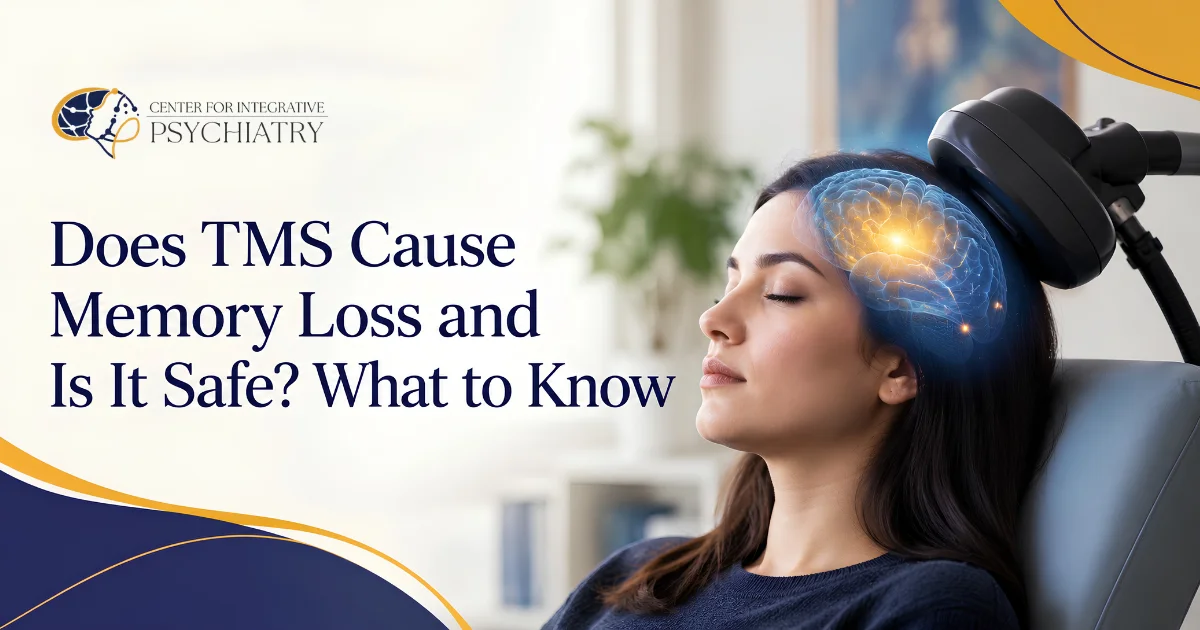
In sharp contrast, TMS is an outpatient, non-convulsive procedure that operates without sedation. Patients sit comfortably in an ergonomic chair, remain awake and alert throughout the visit, and can converse normally with clinicians. The magnetic field focuses strictly on surface layers of the prefrontal cortex, leaving hippocampal and temporal memory structures completely untouched.
Numerous neuropsychological studies have tracked cognitive functioning before, during, and after magnetic stimulation protocols. Rather than finding cognitive deficits, researchers routinely observe improvements in executive functioning, working memory, and mental processing speed. In many cases, what patients thought was memory loss before treatment was actually pseudodementia, a common cognitive fog caused by severe clinical depression itself.
For a broader explanation of how the treatment works, its potential benefits, and its limitations, read this comprehensive guide to TMS treatment benefits, risks, and applications.
Is TMS Safe and Can It Cause Brain Damage?
TMS is exceptionally safe, FDA-cleared, and non-invasive, with over two decades of robust clinical safety data. It cannot cause brain damage because the magnetic field strength is comparable to a standard MRI scan and does not destroy tissue, require general anesthesia, or induce seizures during routine clinical application.
When evaluating whether is tms safe for regular clinical use, regulatory agencies and international medical boards look at structural brain integrity. So, can tms cause brain damage over repeated sessions? The definitive medical answer is no. Magnetic pulses pass harmlessly through the scalp and skull, stimulating neurons without heating brain tissue, breaking cellular structures, or altering physical anatomy.
Because the treatment is localized, it completely bypasses the systemic side effects associated with oral psychiatric medications:
- No systemic metabolic side effects, such as unintended weight gain or blood sugar fluctuations.
- No gastrointestinal distress, nausea, or dry mouth commonly linked to daily antidepressants.
- No sexual dysfunction or emotional blunting that often leads patients to discontinue prescription drugs.
- No physical dependence, withdrawal symptoms, or chemical tolerance over prolonged treatment courses.
The most serious potential risk of TMS is a seizure, but clinical safety data confirms this occurs in fewer than one in thirty thousand treatment sessions. This rate is equal to or lower than the seizure risk associated with many conventional antidepressant medications.
What Does a TMS Device Do and How Does Deep TMS Work?
A TMS device delivers targeted magnetic pulses to stimulate underactive neurons in the brain's prefrontal cortex, which regulates mood and emotion. In Deep TMS, specialized helmet-based coils reach deeper and broader neural networks than standard surface coils, promoting neuroplasticity and restoring healthy communication across complex mood pathways.
To understand what does a TMS do during an appointment, think of it as targeted physical therapy for underactive neurological circuits. In individuals struggling with clinical depression, functional brain imaging shows reduced metabolic activity and sluggish blood flow in the left dorsolateral prefrontal cortex. TMS uses a cushioned electromagnetic coil placed gently against the scalp to deliver rapid, rhythmic pulses that activate these dormant neuronal pathways.
As technology has evolved, modern practices often utilize deep neurostimulation methods to enhance clinical outcomes. Understanding how does deep tms work involves looking at the specific coil architecture inside the treatment helmet:
- Specialized H-shaped coils generate an electromagnetic field that penetrates up to four centimeters beneath the skull surface.
- The deeper field reaches structural networks responsible for motivation, reward anticipation, and emotional resilience without requiring higher electrical intensity.
- Broader stimulation cushions reduce the likelihood of targeting errors, ensuring consistent activation across varying patient head shapes.
- Sessions typically last between twenty and thirty minutes, allowing patients to resume normal routines immediately afterward.
Repeated stimulation may influence neuroplasticity, the brain's ability to adapt and strengthen connections. For more information about the available approaches and clinical applications, see the comprehensive overview of transcranial magnetic stimulation.
Common Side Effects: Does TMS Hurt and Does It Make You Tired?
TMS does not hurt, though patients usually feel a light tapping or tingling sensation on their scalp during stimulation. While mild post-treatment fatigue can occur as the brain adapts to new neural activity, it is temporary. Most individuals return to work and daily activities immediately after each session.
Patients frequently ask, does tms hurt when the magnetic coil begins firing? During the first few sessions, the magnetic pulses cause a localized tapping sensation that some describe as similar to an electric toothbrush or a light woodpecker tap against the scalp. Because the treatment stimulates minor scalp muscles, mild facial twitching can occur during active pulses, but it ceases the instant the machine pauses.
Another frequent inquiry is, does tms make you tired after an appointment? Mild mental fatigue is a recognized and normal response during the initial two weeks of care. Much like physical exhaustion after working out unconditioned muscles at the gym, your brain is actively building new neural pathways and processing heightened metabolic activity.
When side effects do occur, they are generally mild, confined to the treatment site, and resolve quickly without medical intervention:
- Mild, temporary scalp tenderness around the coil placement site during the first week.
- Light tension headaches that respond promptly to over-the-counter pain relievers like acetaminophen or ibuprofen.
- Brief facial muscle tightness during active pulse delivery that subsides as nerves habituate.
- Transitory fatigue in the afternoon, which typically diminishes as the body adjusts to the treatment rhythm.
Because there is zero grogginess or sedation involved, patients can drive themselves to and from the clinic without any driving restrictions.
Before and After TMS Therapy: What Changes Can You Expect?
Before and after TMS therapy, patients generally shift from persistent emotional numbness, brain fog, and severe apathy toward restored mental clarity, mood stability, and motivation. Because the treatment stimulates neuroplasticity, clinical improvements often build progressively over several weeks, leading to sustained remission from treatment-resistant depression.
Assessing the before and after tms therapy trajectory requires recognizing that neuroplastic change is cumulative rather than instantaneous. Patients rarely wake up transformed after a single visit; instead, changes emerge subtly across several clinical phases. Family members and colleagues frequently notice early shifts, such as improved posture, genuine smiles, and spontaneous conversation, before the patient consciously registers relief.
A course of TMS involves repeated sessions over a period determined by the treatment protocol and clinical needs. If you are planning treatment, learn how many TMS sessions are typically needed to understand why the number and frequency of appointments can vary.
Patients who respond to treatment may experience changes such as:
- Noticeable lifting of depressive heaviness, emotional apathy, and persistent morning dread.
- Restoration of cognitive executive functioning, including sharper focus, faster decision-making, and improved memory recall.
- Renewed physical energy and more consistent, restorative sleep patterns without daytime sedated haze.
- Significant reduction in generalized anxiety, chronic irritability, and somatic physical tension.
- Enhanced responsiveness to concurrent psychotherapy, as a regulated brain processes behavioral insights more effectively.
Real-world registry data indicates that roughly two-thirds of individuals with medication-resistant depression experience significant symptom reduction, with approximately half achieving full clinical remission. To understand the practical treatment process, read what happens before and after TMS therapy.
Advanced and Integrated TMS Therapy at Texas CIP
For individuals seeking advanced, compassionate neuromodulation care in Texas, the Center for Integrative Psychiatry provides an elevated standard of patient-centered TMS therapy in Dallas. We recognize that true emotional recovery requires combining advanced neuroscience with whole-person medical care rather than relying on one-size-fits-all protocols.
Under the medical leadership of experienced psychiatric physicians, the specialized TMS therapy program at Texas CIP offers cutting-edge brain stimulation in a calming, boutique clinical environment. Every patient journey begins with an unhurried, comprehensive diagnostic assessment to confirm candidacy, evaluate anatomical targeting, and tailor pulse parameters to individual neurophysiology. The multidisciplinary psychiatrists in Dallas ensure your neuromodulation sessions integrate seamlessly with existing therapy and medical regimens.
The clinical advantage at Texas CIP incorporates multiple whole-person benefits:
- Dual-trained psychiatric clinicians who personalize coil positioning and stimulation thresholds with clinical precision.
- Calming, private treatment suites designed to help you relax, listen to music, or watch media during your daily stimulation sessions.
- Comprehensive integrative care plans that address sleep hygiene, nutritional factors, and nervous system health alongside magnetic neurostimulation.
- Convenient physical clinic locations in Coppell and North Dallas, supported by secure telehealth consultations across the entire state of Texas.
By pairing modern neurotechnology with compassionate clinical oversight, Texas CIP helps patients overcome treatment-resistant conditions and achieve lasting cognitive and emotional freedom.
Restoring Clarity and Reclaiming Your Well-Being
Navigating treatment options for chronic mood conditions can feel overwhelming, but you do not have to settle for treatments that cause cloudiness, fatigue, or memory loss. Transcranial Magnetic Stimulation offers a clinically validated, gentle alternative that protects your memory while systematically reactivating your brain's natural capacity for joy and focus. With the right clinical guidance, restoring your cognitive vitality and emotional balance is well within reach.
If you are ready to explore how magnetic brain stimulation can help you move past chronic depression and reclaim your clarity, reach out to our caring team today. Contact us and take the next proactive step by choosing to schedule a TMS consultation online.
Medical Disclaimer
The information provided in this article is for educational and informational purposes only and does not constitute formal medical or psychiatric advice, diagnosis, or treatment. Always consult a qualified physician, psychiatrist, or licensed healthcare provider regarding any mental health condition or therapeutic intervention. If you are experiencing thoughts of self-harm or a psychiatric emergency, please dial 988 for the Suicide & Crisis Lifeline or visit the nearest hospital emergency room immediately.
Frequently asked questions
- Why do people confuse TMS with ECT regarding memory loss?
- People frequently confuse TMS with ECT because both are clinical brain stimulation therapies used for treatment-resistant mood disorders. However, while ECT utilizes electrical currents under general anesthesia to induce whole-brain seizures that can disrupt memory formation, TMS uses focused magnetic pulses without anesthesia, completely avoiding memory-related brain regions.
- Who is an ideal candidate for TMS therapy?
- An ideal candidate is an adult experiencing major depressive disorder or obsessive-compulsive disorder who has not achieved adequate symptom relief or has experienced intolerable side effects from standard antidepressant medications and psychotherapy.
- How long do the cognitive and mood benefits of TMS last?
- Clinical follow-up studies show that the positive mood and cognitive benefits of a standard TMS treatment course typically last twelve months or longer for the majority of responders. Periodic booster sessions can be scheduled if symptoms ever begin to re-emerge over time.
- When do patients typically begin noticing improvements from TMS sessions?
- Most patients begin observing positive shifts in energy, sleep quality, and mental clarity between the third and fourth weeks of regular daily sessions. Because neuroplasticity develops gradually, cumulative therapeutic gains continue to solidify through the final weeks of care.
- Where can Texas residents receive specialized TMS treatment?
- Residents throughout North Texas can access physician-led TMS therapy at Texas CIP clinic locations in Coppell and North Dallas. In addition, patients statewide can connect with the clinical team for preliminary psychiatric evaluations and ongoing integrative care via secure telehealth.
This article is for education and general information. It isn't a substitute for individual medical advice, diagnosis, or treatment from a qualified clinician.
Webmaster
Articles on this blog are educational resources from the Center for Integrative Psychiatry, a multidisciplinary clinic offering evidence-based psychiatry, therapy, TMS, and integrative care for Texans since 2015. They are not medical advice — always talk with your own clinician about your care.
Meet the CIP team